
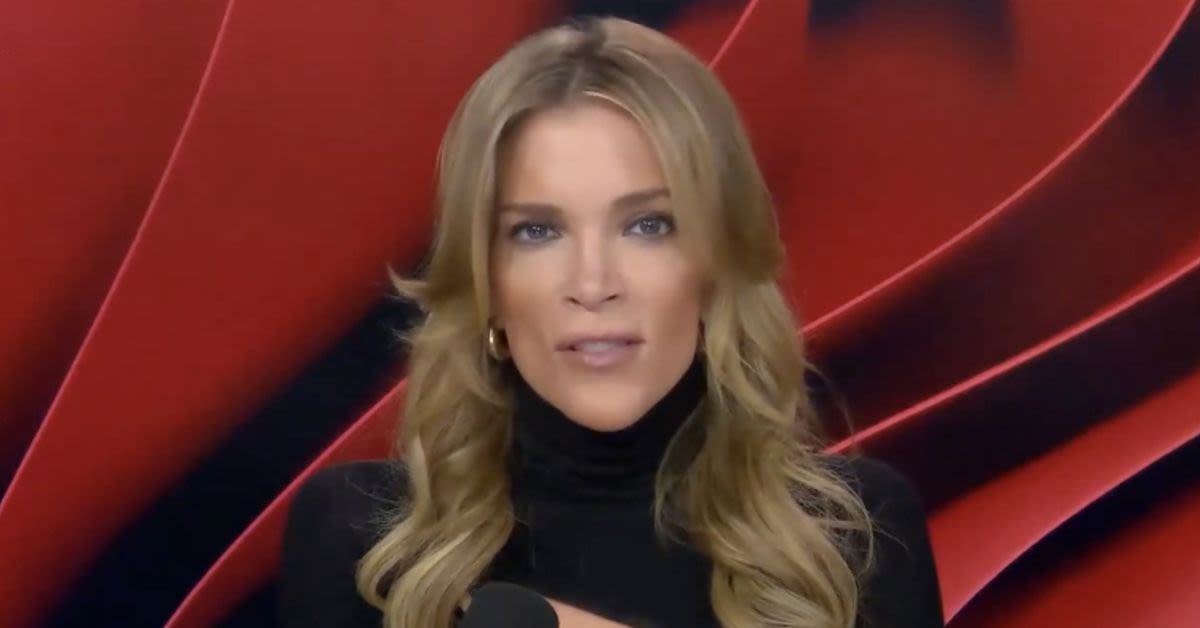
President Donald Trump forcefully rebuked political commentator Megyn Kelly after she asserted on her SiriusXM program that U.S. service members killed in the current conflict with Iran "did not die for the United States."
According to RedState, Kellys remarks came as reports indicated that six American troops have been killed so far in the joint U.S.-Israeli Operation Epic Fury, the mission that eliminated Supreme Leader Ayatollah Ali Khamenei and dozens of senior regime officials. The President, who has framed the campaign as vital to preventing a nuclear-armed Iran, appeared incensed by Kellys suggestion that the fallen were sacrificed for foreign interests rather than for American security.
Kellys commentary, which effectively reduced the sacrifice of American troops to a proxy service for other nations, struck many conservatives as a profound insult to the dead and to the Commander-in-Chief. Her framing played directly into a familiar narrative from the isolationist left and segments of the populist right, implying that U.S. foreign policy is driven more by foreign capitals than by American national interests.
"My own feeling is no one should have to die for a foreign country," Kelly said on Monday. "I dont think those four (updated to six) service members died for the United States. I think they died for Iran or for Israel." She reiterated the point in a social media clip: "No one should have to die for a foreign country. I don't think those service members died for the United States. I think they died for Iran or for Israel... No one is crying that the Ayatollah is dead, but our government's job is not to look out for Iran or Israel."
For many on the right, such rhetoric does more than question policy; it undermines the honor of those who volunteered to wear the uniform and follow lawful orders. Whether one supports Operation Epic Fury or not, claiming that American troops died for Israel rather than in defense of the United States effectively accuses the President of subordinating U.S. sovereignty to foreign powers.
In an interview with journalist Rachael Bade of The Inner Circle, Trump dismissed Kellys critique and suggested she revisit basic history. Megan was opposed to me for years when I ran the first time, and nothing stopped me, he said. And so, you know, some people are against and they always come back. She came all the way back. But now I guess she maybe doesnt like the idea of this war, but I do because I have to keep nuclear weapons out of the hands of the Iranians.
Trump made clear he believes the core of the MAGA movement stands with him on confronting Tehran, not with media personalities second-guessing his decisions from the sidelines. He explicitly contrasted his stance with that of Kelly and former Fox News host Tucker Carlson, both of whom have sharply criticized the administrations actions against Iran.
Carlson, as relayed by ABCs Jonathan Karl, denounced Operation Epic Fury as absolutely disgusting and evil." His comments highlight a growing rift between some high-profile conservative commentators and the broader Republican base that still prioritizes peace through strength and a hard line against hostile regimes.
The President, however, insisted that strategic necessity outweighs media backlash. I have to do whats right, number one and you cant have Iran getting a nuclear weapon. Thats predominant to me, he told Bade.
He also underscored that the movement is defined by his agenda, not by cable or podcast personalities. I think that MAGA is Trump MAGAs not the other two, Trump confidently shot back. MAGA wants to see our country thrive and be safe. And MAGA loves what Im doing every aspect of it This is a detour that we have to take in order to keep our country safe and keep other countries safe, frankly.
Regarding Carlsons broadsides, Trump was blunt about their relevance to his decision-making. The President said Carlson can say whatever he wants; it has no impact on me.
On Monday, Trump formally notified Congress of the legal and strategic basis for the strikes against Iran, reinforcing that the operation is rooted in his constitutional duties. "I directed this military action consistent with my responsibility to protect Americans and United States interests both at home and abroad and in furtherance of United States national security and foreign policy interests," he explained.
He emphasized that military force followed repeated but futile diplomatic efforts to curb Tehrans aggression. "Despite my Administration's repeated efforts to achieve a diplomatic solution to Iran's malign behavior, the threat to the United States and its allies and partners became untenable."
Login