
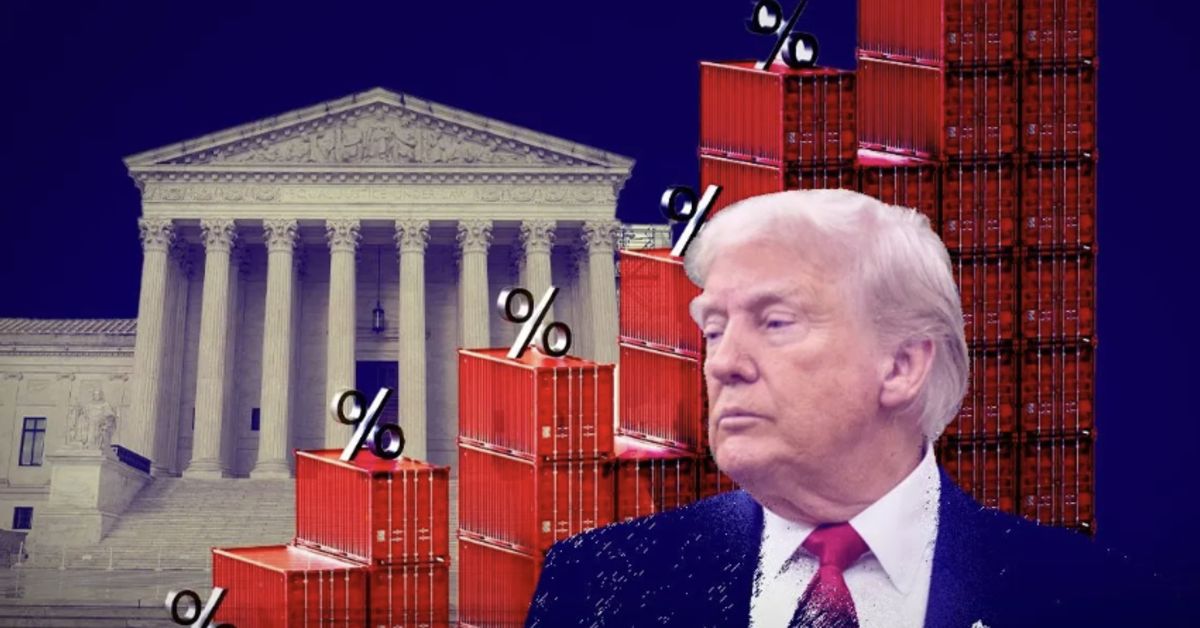
A federal appeals court refused a Trump Administration bid to postpone the impact of a Supreme Court ruling that struck down key tariffs championed by President Donald Trump.
According to Gateway Pundit, the U.S. Supreme Court recently invalidated President Trumps tariffs in a 63 decision, holding that he lacked authority to impose them under the International Emergency Economic Powers Act (IEEPA). The justices made clear that the high courts decision only invalidates Trumps tariffs under the IEEPA, leaving other statutory tools for trade enforcement intact.
In a split that alarmed many conservatives, Chief Justice John Roberts joined Amy Coney Barrett and Neil Gorsuch in siding with the Courts three liberal justices. Conservative Justices Samuel Alito, Clarence Thomas, and Brett Kavanaugh dissented, backing President Trumps broader view of executive power in trade matters.
The Trump Administration had requested a 90-day delay in implementing the ruling, but the Federal Circuit Court of Appeals denied that request. This follows a May ruling by the Court of International Trade in New York, which held that President Trump exceeded his authority under the International Emergency Economic Powers Act of 1977.
The order halts Trumps 30% tariffs on China, his 25% tariffs on some goods imported from Mexico and Canada, and the 10% universal tariffs on most goods coming into the United States. It does not, however, affect the 25% tariffs on autos, auto parts, steel or aluminum, which were subject to Section 232 of the Trade Expansion Act a different law than the one Trump cited for his broader trade actions, CNN reported last year. Last August, the United States Court of Appeals for the Federal Circuit further narrowed presidential latitude on trade by rejecting President Trumps authority to impose sweeping tariffs in a 74 decision.
The latest fallout includes private-sector pushback, with FedEx filing a lawsuit last week seeking to recover duties it says were unlawfully collected. Plaintiffs seek for themselves a full refund from Defendants of all IEEPA duties Plaintiffs have paid to the United States, the lawsuit said, underscoring how judicial resistance to Trump-era trade policy is now colliding with businesses that benefited from his America First agenda.
Login