
Democrats furious over Operation Epic Fury, the joint U.S.-Israeli strikes that shattered much of Irans command structure, are once again accusing a Republican president of overstepping his authority while ignoring the long history of decisive executive action in wartime.
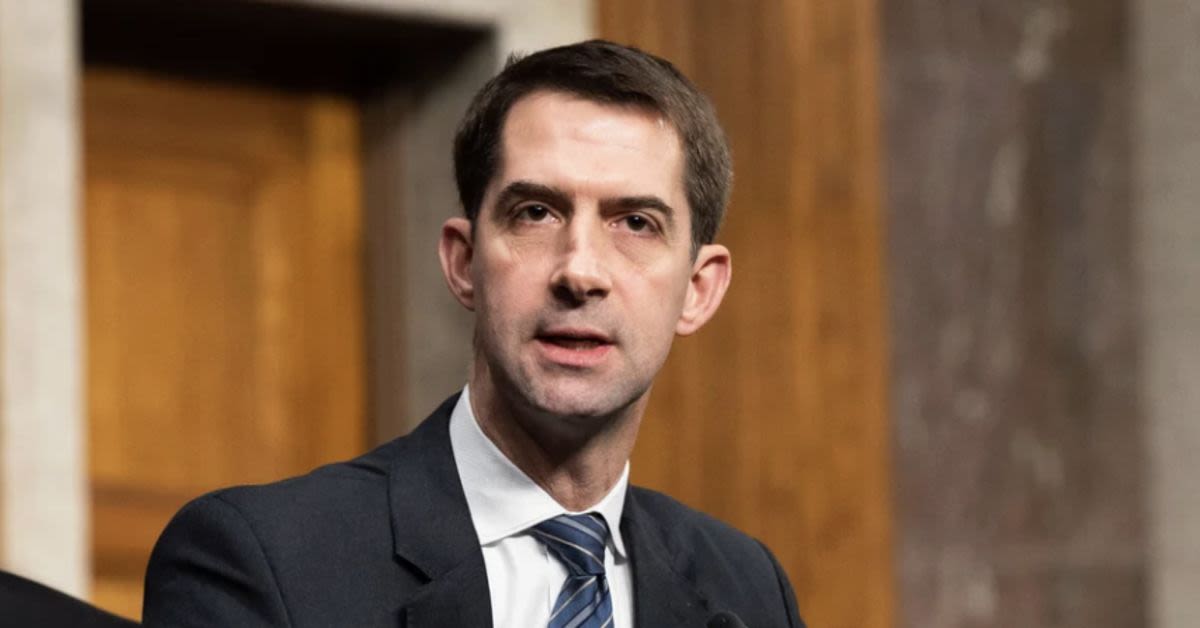
According to RedState, Democrats have been whining and hitting CNN at every opportunity to denounce the mission as illegal and to insist it be halted until Congress can vote on authorizing it. Their outrage, however, runs headlong into both constitutional reality and historical precedent, as Sen. Tom Cotton (R-AR) reminded viewers while pointing to examples ranging from former President Barack Obamas intervention in Libya to Thomas Jeffersons campaign against the Barbary pirates in the early 19th century.
Cotton argued that the Constitution clearly empowers the president to act swiftly in defense of the nation, particularly when facing an imminent threat. President Trump has the inherent power under our Constitution, and as a commander in chief, to use military force to keep our nation safe, he said, emphasizing that this authority extends to neutralizing the vast missile arsenal that Iran has and was expanding much bigger than our missile defenses.
The Arkansas senator underscored that such operations are not some novel invention of the Trump era but rather a continuation of a long-established pattern of executive action. Weve had presidents conduct this kind of operations, going back to the beginning of our republic, Cotton noted, adding pointedly, For that matter, conduct them in the Middle East Thomas Jefferson struck the Barbary Pirates just off the coast of Libya more than 200 years ago, without a vote in Congress.
Cotton then turned to a more recent and politically inconvenient example for Democrats: Obamas 2011 intervention in Libya. And speaking of Libya, Barack Obama toppled Muammar Gaddafi in Libya 15 years ago without a vote of Congress, even though he was a de facto American ally by that point, he said, highlighting the double standard in the lefts current outrage.
For Cotton, the key distinction is not the process but the target. The difference is that President Trump is attacking a 47-year implacable enemy, he argued, contrasting Irans long record of hostility toward the United States with Gaddafis status at the time as a regime that had, at least partially, come in from the cold.
The historical parallel Cotton invoked is instructive. In the early 1800s, the Barbary piratesMuslim state?sanctioned corsairswere notorious for seizing American and European ships and enslaving their crews unless paid tribute, a form of state-backed extortion that humiliated young nations like the United States. Then-President Thomas Jefferson, despite his skepticism about the cost of maintaining a navy, decided that enough was enough and that American power had to be asserted.
As one historical account describes it, A demand from the pasha of Tripoli for greater tribute and his dramatic declaration of war on the United States (May 14, 1801) coincided with a decision by U.S. Pres. Thomas Jeffersons administration to demonstrate American resolve. Despite his opposition to the expense of maintaining a navy, Jefferson dispatched an American naval squadron to Tripolitan waters. By means of a special Mediterranean Fund, the navywhich had been partially dismantled and was perhaps nearing extinctionactually increased in size.
Jefferson did eventually secure congressional approval, but only after he had already deployed forces to the region, underscoring that presidents have long acted first when American interests were at stake and sought legislative backing later. The First Barbary War dragged on until 1805, when a peace treaty on terms favorable to the United States was negotiated, helping cement Americas reputation as a rising power that would not be bullied or blackmailed.
The U.S., under Jeffersons command, sent its fledgling Navy and Marines into actionthe first overseas military deployment in American history, another account notes. In 1805, a daring plan emerged to strike the heart of the Barbary States. That willingness to project force abroad in defense of American lives and commerce laid the groundwork for the robust national defense posture conservatives continue to champion today.
Fast-forward two centuries, and a Democratic president exercised similar unilateral authority in the same region. The 2011 military intervention in Libya occurred during the Arab Spring uprisings and challenged the four-decade rule of Muammar Gaddafi, one summary of the conflict explains, noting that it was executed under President Barack Obama and involved deploying United States military assets.
Far from being a minor episode, the Libyan campaign marked a significant foreign policy moment, demonstrating a willingness to use force on humanitarian grounds, as the conflict quickly escalated from a civil uprising to an international military campaign. Obama, notably, did not seek congressional approval for the operations, a fact that drew far less sustained outrage from the same Democrats now demanding that Trump be shackled by legislative process before acting against a sworn enemy of the United States.
The ongoing debate over when a president must seek congressional authorization for the use of force is unlikely to be resolved anytime soon, but the stakes are not academic. In a world of missile salvos, terror proxies, and rapidly unfolding crises, a commander in chief who is forced to wait on a gridlocked Congress risks leaving the nation exposed at its most vulnerable moments.
Presidents sometimes must act with speed and resolve, and tying their hands in the name of process can amount to gambling with American securitysomething conservatives argue the country cannot afford. Or, as the record of recent history suggests, if Democrats truly believe such unilateral action is illegitimate, they might start by asking some hard questions of Barack Obama.
Login