
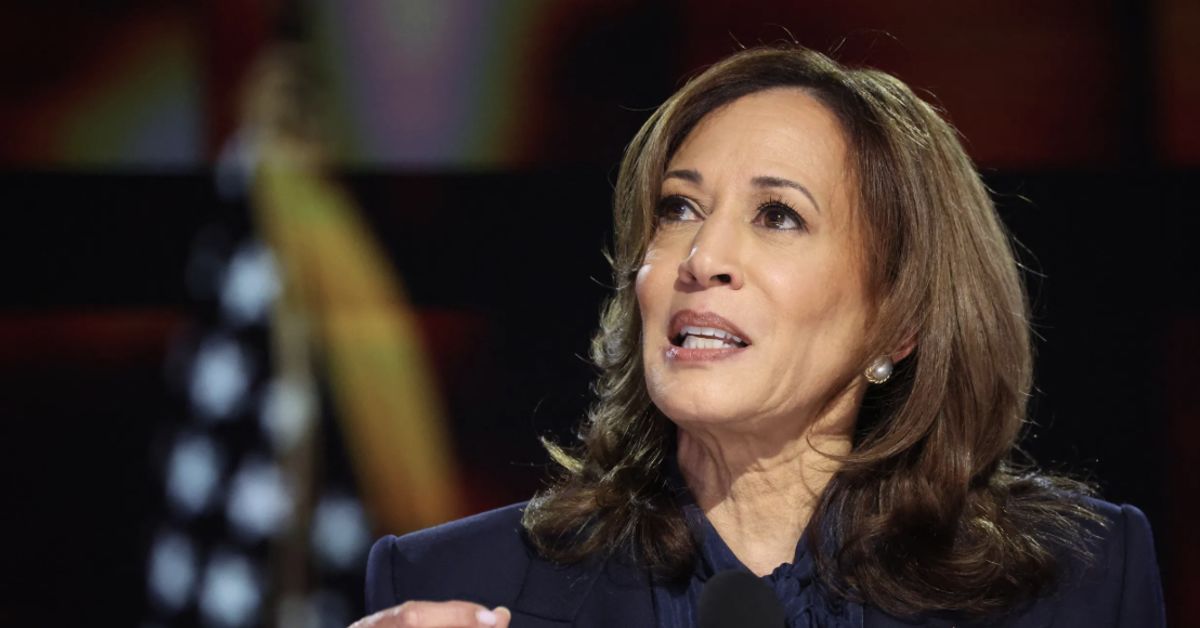
Former Vice President and 2024 Democratic presidential nominee Kamala Harris has stepped squarely into a volatile Texas Senate primary, throwing her weight behind one of the partys most polarizing figures.
Her decision to endorse Democratic Rep. Jasmine Crockett for the U.S. Senate nomination in Texas, rather than the more conventional choice of state Rep. James Talarico, marks a sharp break from the direction favored by much of the Democratic establishment.
According to Western Journal, Harris recorded a robocall for Texas voters that began, Texas has the chance to send a fighter like Jasmine Crockett to the United States Senate, a message that went out as early voting wrapped up on Friday ahead of Tuesdays primary.
She went further, declaring, Jasmine has the experience and record to hold Donald Trump and his billionaire cronies accountable, before closing with the familiar progressive refrain, Its time to turn Texas blue.
The endorsement is not entirely surprising given Crocketts past role as national co-chair of Harris 2024 presidential campaign, a credential Crockett has eagerly promoted on the trail even if it is hardly a selling point in a right-leaning state. What is striking, however, is Harris willingness to intervene so directly in a high-stakes primary on behalf of a candidate Republicans openly hope to face in November, rather than backing the lower-profile Democrat who might pose a more serious threat in a general election.
On the Republican side, the race to replace long-serving Sen. John Cornyn has already fractured the party, with the incumbent facing a serious challenge from his right. Cornyn, widely viewed by grassroots conservatives as a career politician with RINO-adjacent tendencies, is locked in a three-way contest that also includes Texas Attorney General Ken Paxton and U.S. Rep. Wesley Hunt, making a May 26 runoff almost inevitable if no candidate clears 50 percent.
Paxton, who has consistently polled in second place, is widely expected to make that runoff and is the clear favorite of populist conservatives who see him as a fighter against federal overreach and progressive overreach in the courts. Yet even many on the right acknowledge that Paxton carries what might be politely described as character issues, stemming from long-running allegations about his conduct in office and in his personal life, vulnerabilities Democrats would eagerly exploit in a general election.
From a purely strategic standpoint, Democrats might prefer to face Paxton, calculating that his baggage could alienate swing voters even in a red-leaning state like Texas. That calculation becomes far less reliable if their own nominee is someone like Crockett, whose public persona and record place her well to the left of the states political center and far outside the comfort zone of many moderate Texans.
Crockett has built a reputation in the House of Representatives as a firebrand more interested in viral moments than in persuasion, a style that delights progressive activists but alarms party strategists focused on winning statewide. Her Senate campaign has doubled down on that approach, including a campaign announcement video that critics argue showcased more theatrics than substance and underscored her unelectability in a state that has repeatedly rejected high-profile progressives.
Her unscripted remarks have not helped her cause, as she has become known for rhetorical missteps and verbal gaffes that Republicans are already cataloging for future attack ads.
The Democrats arent sending their best, in other words, one conservative critic observed, capturing a sentiment that many on the right share about Crocketts candidacy and, by extension, Harris decision to elevate it.
By contrast, James Talarico has largely avoided the spotlight, allowing him to present as a relatively generic Democrat despite holding positions that are still well to the left of the median Texas voter.
That relative anonymity has been an asset, enabling party operatives and liberal media allies to shape his image as a fresh, reasonable alternative, even to the point of manufacturing a minor controversy around a planned appearance on Stephen Colberts fading CBS late-night show.
That episode, which was spun to suggest that Trumps Federal Communications Commission was somehow afraid of Talarico, was in reality a dispute tied to equal-time rules that gave Crockett more reason to complain than anyone else. Nonetheless, the carefully staged dust-up served its purpose: It raised Talaricos profile, cast him as a victim of supposed conservative censorship, and signaled that the Democratic establishment saw him as the safer bet in November.
For Crockett supporters, the message from party elites seemed clear until this week: keep quiet, accept that the insiders had chosen their preferred candidate, and hope for a consolation prize down the line.
Harris late-breaking decision to go all Leeroy Jenkins, as some observers have put it, by endorsing Crockett at the eleventh hour cuts directly against that script and injects fresh chaos into an already unpredictable race.
The move has produced an unusual alignment of interests between Harris and Republicans, particularly those associated with the National Republican Senatorial Committee, which reportedly encouraged Crockett to enter the race in the first place. If Democrats insist on nominating a candidate who proudly embraces the far-left label in a state that has repeatedly rebuffed such figures, conservatives are more than happy to let them.
For Ken Paxton, the development may be especially welcome, as a Crockett nomination would likely blunt some of his own vulnerabilities by giving voters a stark ideological contrast rather than a referendum on his personal controversies. In a general election framed as a choice between a flawed but hard-charging conservative and a proudly progressive culture warrior determined that Its time to turn Texas blue, many Texans may decide that whatever Paxtons imperfections, the alternative is far worse.
Harris endorsement thus raises a broader question about the Democratic Partys priorities: Is the goal to win competitive states by nominating candidates who can appeal beyond the activist base, or to double down on ideological purity even at the cost of winnable seats? As Texas voters head to the polls on Tuesday, the answer may determine not only the shape of the Senate race but also whether Democrats have learned anything from their repeated failures to flip the Lone Star State, or whether they remain content to hand Republicans yet another advantage in a year when control of the Senate is very much in play.
Login