
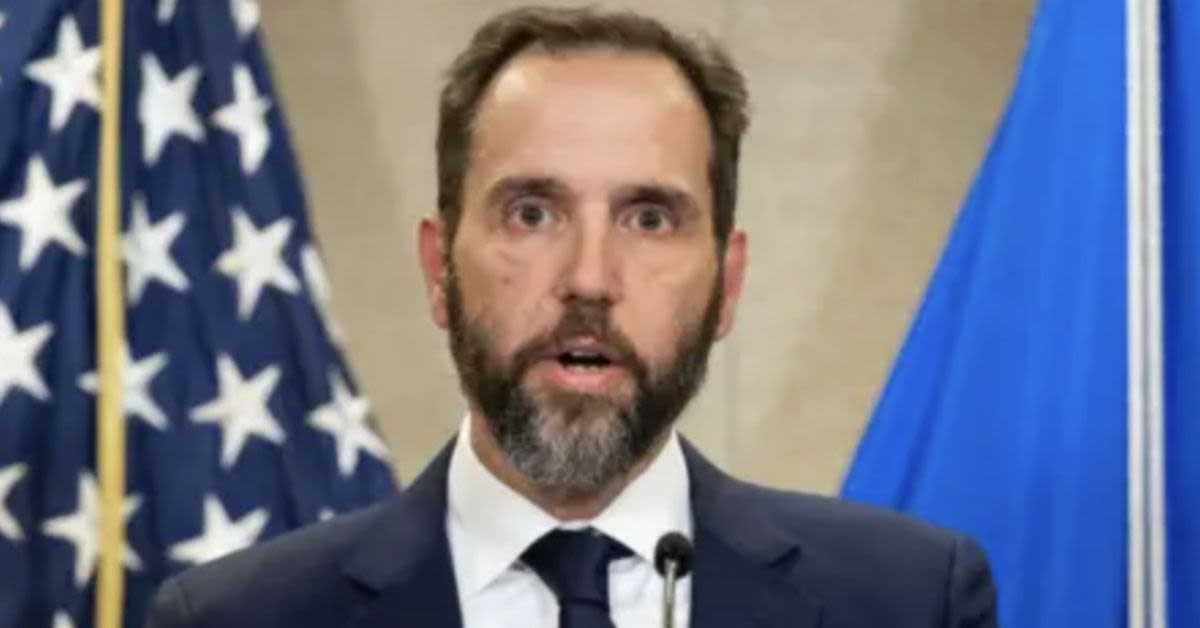
An eminent constitutional scholar is sounding the alarm over Special Counsel Jack Smiths secret acquisition of private citizens phone records in his ongoing campaign against Donald Trump, warning that such tactics should alarm us all.
.
According to WND, the criticism comes from a highly regarded law professor whose legal and constitutional analysis is widely sought and who has previously helped shape congressional thinking on separation-of-powers battles. His concerns were triggered by recent revelations that Smith, appointed during Joe Bidens presidency to spearhead several high-profile prosecutions of the former president, quietly obtained sweeping telephone metadata in 2022 and 2023, long before any charges were resolved and in cases that ultimately collapsed.
Smith has already been at the center of a Washington scandal, one that remains unresolved, after it emerged that he had used court orders to obtain the phone records of numerous Republican members of Congress. That controversy has now deepened with reports that he also targeted the phone data of Susie Wiles, now serving as White House chief of staff, and Kash Patel, now director of the FBI, at a time when both were private citizens with no public office.
The professor, Jonathan Turley, did not mince words about what these revelations signify for civil liberties and the rule of law. It is only the latest example of the abuse of the investigatory powers by Special Counsel Jack Smith, Turley said, arguing that the pattern reflects a broader willingness to weaponize federal law enforcement against political opponents.
Turley framed Smiths conduct as part of a long-standing tendency to push legal boundaries far beyond their intended limits. He wrote, Former Special Counsel Jack Smith has long operated under Oscar Wildes rule that the only way to get rid of a temptation is to yield to it. Over the last few months, the public has learned of a wide array of secret orders targeting members of Congress, Trump allies, and others. Now, the administration has learned that FBI Director Kash Patel and White House Susie Wiles were also targeted by Smith in 2022 and 2023 when they were private citizens.
Smiths record, Turley noted, is marred by aggressive theories that have not withstood judicial scrutiny. He reminded readers that Smith secured a conviction against former Virginia Gov. Robert McDonnell, only to have the U.S. Supreme Court including its liberal justices unanimously overturn the verdict, a rare and stinging rebuke for a federal prosecutor.
His tendency to stretch the law to the breaking point also did not play well with juries in high-profile cases, as in his case against John Edwards, which ended in acquittal, Turley wrote, underscoring that Smiths penchant for overreach has repeatedly failed when subjected to impartial review. For conservatives wary of politicized prosecutions, these reversals reinforce concerns that Smiths current efforts are driven less by law than by ideology.
The latest controversy centers on Smiths use of sealed court orders to obtain phone records while simultaneously barring the targets from being notified. Not only did such records reveal potentially confidential sources, ranging from journalists to whistleblowers, but Smiths gag order prevented Congress from responding to check the abusive demand, Turley said, arguing that the secrecy effectively neutralized any institutional oversight that might have curbed excesses.
Turley stressed that the targeting of Wiles and Patel, as private citizens, represented an escalation in both scope and audacity. He charged that Smith worked hand in glove with the Biden administration to keep the surveillance hidden from public view, remarking, It took a year into the new administration for these orders to be uncovered.
The records sweep, Turley added, intruded into privileged legal communications. The spied-on calls included confidential discussions between Wiles and her attorney, a breach that strikes at the heart of attorney-client privilege and raises profound questions about whether Smith respected basic constitutional safeguards in his zeal to pursue Trump-world figures.
There is much we still do not know, Turley said. On its face, these orders appear consistent with the earlier abusive demands. Smith had virtually no basis for targeting Republican members and Trump allies. It was a fishing expedition in which Smith simply compiled lists of every well-known ally of President Trump. For many on the right, that description fits a broader pattern of Democrats using prosecutorial power to intimidate and monitor political adversaries rather than to enforce neutral laws.
Turleys assessment of the newly disclosed files is scathing. The recently disclosed files from these investigations are an indictment of Smith himself. He was given a historic mandate to investigate a former president. Rather than exercise a modicum of restraint to show the public that this was not a partisan effort, Smith yielded to his worst temptations in targeting a long list of Republicans. In Turleys view, a once-rare and grave authority investigating a former commander in chief was squandered on partisan score-settling.
He further argued that Smiths conduct dovetailed with a broader politicization of the justice system under the Biden administration. Smith struggled to release damaging information (and even schedule a trial) on the very eve of the 2024 presidential election. Every action that Smith took only magnified his agenda to influence the election. He became a prosecutor consumed by his antagonism toward Trump and his unchecked power.
Nothing was sacred for Smith, Turley continued. His demands in the investigation from the courts included a wholesale attack on free speech values. That charge resonates strongly with conservatives who have watched Big Tech censorship, speech-policing bureaucracies, and now prosecutorial tactics converge against dissenting voices on the right.
Turley also placed responsibility squarely on Attorney General Merrick Garland, faulting him for failing to rein in Smith and defend constitutional norms. In his view, Garlands refusal to impose meaningful oversight allowed a politically charged special counsel to operate with near-impunity, eroding public trust in the Department of Justice and confirming fears that federal law enforcement has become an instrument of partisan warfare rather than a guardian of equal justice under law.
The unfolding revelations about secret subpoenas, gag orders, and surveillance of private citizens underscore why many Americans, particularly conservatives, see the lawfare against Trump and his allies as a direct threat to civil liberties and democratic accountability.
As more details emerge about Smiths tactics and Garlands passivity, the central question is no longer whether lines were crossed, but how far a politicized justice system has strayed from its constitutional moorings and whether anyone in power is willing to restore the limits that once protected citizens from exactly this kind of abuse.
Login