
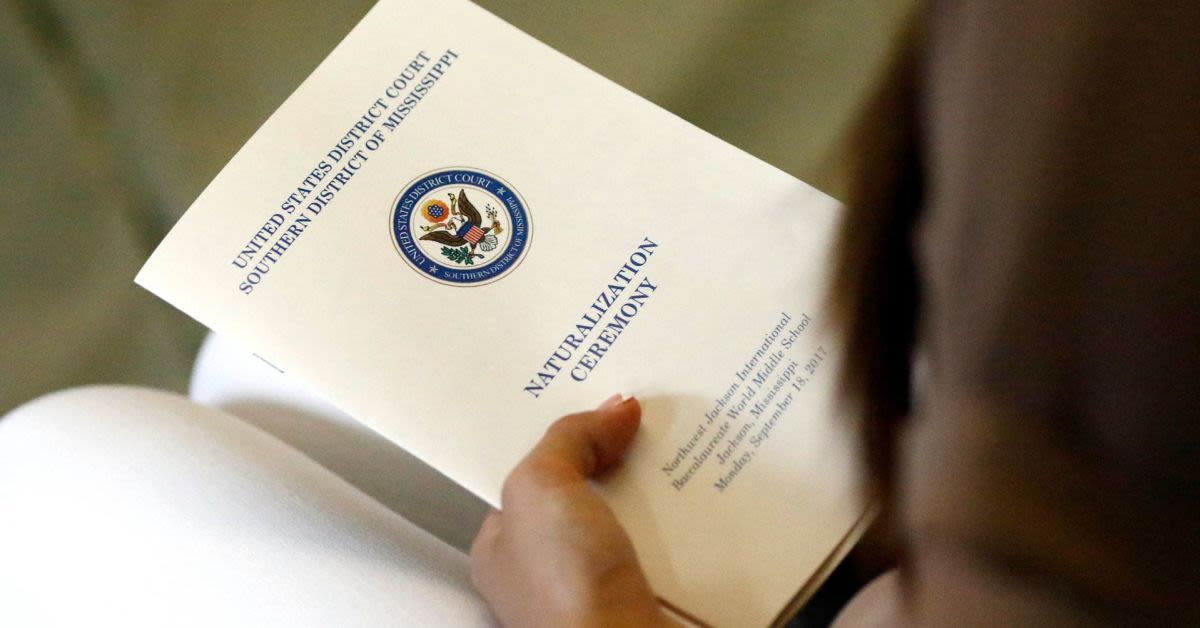
The Trump administration has moved to revoke the U.S. citizenship of a former Florida mayor, accusing him of engineering an elaborate, years-long immigration fraud scheme that allegedly began with an illegal entry into the country and culminated in his rise to public office.
According to Conservative Daily News, federal officials announced that the Department of Justice and the U.S. Attorneys Office for the Southern District of Florida have filed a civil denaturalization complaint in the U.S. District Court in Miami against Philippe Bien-Aime, also known as Jean Philippe Janvier. Prosecutors assert that the Haiti-born former mayor exploited two distinct identities to obtain immigration benefits and, ultimately, U.S. citizenship, despite having been ordered removed from the country years earlier.
This Administration will not permit fraudsters and tricksters who cheat their way to the gift of U.S. citizenship, declared Assistant Attorney General Brett A. Shumate of the Justice Departments Civil Division in a statement underscoring the administrations hard line on immigration integrity. The passage of time does not diminish blatant immigration fraud.
U.S. Attorney Jason A. Reding Quiones for the Southern District of Florida emphasized that the allegations strike at the heart of the nations legal and civic framework. United States citizenship is a privilege grounded in honesty and allegiance to this country, Reding Quiones said, stressing that the complaint portrays a calculated effort to subvert those principles.
The complaint alleges that this defendant built his citizenship on fraud using false identities, false statements, and a sham marriage to evade a lawful removal order, he continued, highlighting the breadth of the alleged deception. The fact that he later served as an elected mayor makes the alleged deception even more serious, because public office carries a duty of candor and respect for the rule of law. If proven, we will ask the Court to revoke a status that was never lawfully obtained. The rule of law requires nothing less.
The governments filing states that Bien-Aime first entered the United States using a fraudulent photo-switched passport under the name Jean Philippe Janvier, a tactic that allowed him to assume another persons identity. In 2001, immigration authorities placed him in removal proceedings under that alias and secured a removal order, which he initially appealed before withdrawing the appeal on the claim that he had returned to Haiti.
Prosecutors now contend that he never left the United States and instead remained in the country under a new identity, complete with a different name and date of birth. Under this second persona, authorities allege, he married a U.S. citizen to obtain lawful permanent resident status, even though he was already married to a Haitian citizen, rendering the American marriage invalid and fraudulent in the eyes of immigration law.
Federal officials argue that Bien-Aimes naturalization was illegally procured on multiple grounds, beginning with the fact that he remained subject to a final removal order. That order, they say, legally disqualified him from naturalization and barred immigration authorities from granting him permanent resident status in the first place, making every subsequent benefit he received legally defective.
The same removal order, according to the complaint, also prohibited U.S. Citizenship and Immigration Services from considering or approving his naturalization application, yet he was ultimately sworn in as a citizen in 2006 under the Bien-Aime identity. During both his adjustment-of-status and naturalization interviews, prosecutors allege, he provided false and misleading information under oath, including denials that he had ever been subject to a removal order, denials that he had lied to U.S. officials, and misrepresentations about his children and prior residences.
Investigators reportedly uncovered the alleged scheme through fingerprint comparisons submitted under both of his identities, a forensic link that pierced the dual personas. The match surfaced through the Historic Fingerprint Enrollment project, a joint initiative between the Justice Department and U.S. Citizenship and Immigration Services designed to identify individuals who obtained immigration benefits through deception, and if the court agrees that he illegally procured naturalization, Bien-Aime stands to lose his U.S. citizenship.
His attorney, Peterson St. Philippe, told NBC Miami that they are reviewing the governments filing and will respond through the appropriate legal channels. That measured response suggests a contested legal battle ahead, one that will test how aggressively the federal government can unwind citizenship when it claims the original grant was tainted by fraud.
On his campaign website, Bien-Aime portrays a very different personal narrative, stating that he first moved to Canada before eventually settling in the United States, where he built a career in the automotive industry and launched his own business in 2006. He went on to win election to the North Miami City Council in 2013 and later became mayor in 2019, stepping down in 2022 to pursue a seat on the Miami-Dade County District 2 Commission, a race he lost to community activist Marleine Bastien.
Bien-Aimes political biography, which emphasizes entrepreneurial success and local leadership, now stands in stark contrast to the federal governments depiction of a man who allegedly gamed the immigration system from the outset. For conservatives who have long warned that lax enforcement and identity fraud undermine both border security and the sanctity of citizenship, the case underscores why rigorous vetting, enforcement of removal orders, and a zero-tolerance approach to sham marriages and false documentation are essential to preserving the rule of law and the integrity of American self-government.
Login