
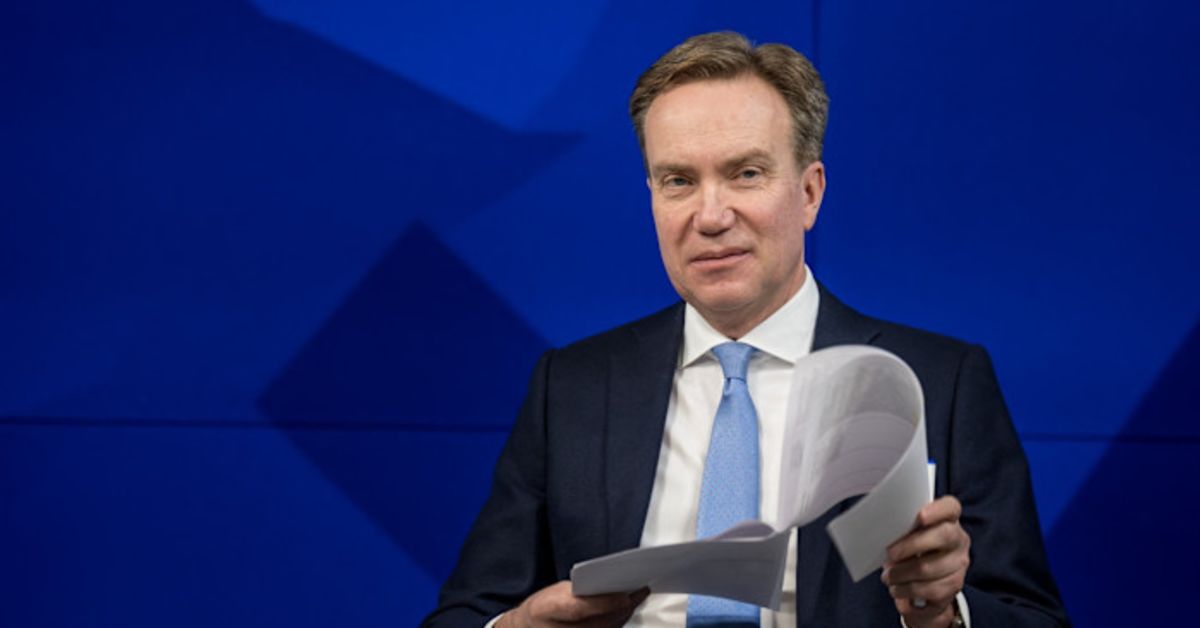
The head of the World Economic Forum, long a symbol of elite globalism through its annual Davos gathering, has stepped down after newly released Jeffrey Epstein emails exposed his personal links to the convicted sex offender.
According to Breitbart, Brge Brende, a former Norwegian foreign minister who has served as President and CEO of the WEF for more than eight years, announced his resignation on Thursday, saying that after careful consideration he had concluded his continued leadership had become a distraction from the organizations work. The move comes just weeks after the U.S. Department of Justice released a tranche of Epstein-related emails that have already triggered a wave of resignations and investigations across Europe and beyond.
The WEFs most recent Davos summit, held in January, underscored the organizations status as a magnet for political, financial, and corporate elites, even as it remains synonymous in the public mind with private jets, luxury excess, and a detached globalist agenda. This years gathering was further jolted by the presence of U.S. President Donald Trump, who challenged the Davos orthodoxy by delivering a speech centered on tariffs and national economic sovereignty, effectively parking his tanks on the globalist lawn.
French newspaper Le Figaro reported that scrutiny of Brende intensified after the Justice Departments email release a month ago, which showed the Norwegian diplomat had met Epstein three times and exchanged multiple messages with him between 2018 and 2019. These contacts occurred well after Epstein had served a prison sentence for child sex offenses and while he was repeatedly in the headlines over fresh allegations of abuse involving young women.
Brende has insisted he was unaware of Epsteins criminal history and has claimed their meetings were strictly business-related, a defense that many observers find difficult to reconcile with the public record. Their final meeting reportedly took place just months before Epsteins death in a U.S. prison, a timing that further undermines the notion that any serious due diligence was exercised by a man leading one of the worlds most influential policy forums.
Far from suggesting a distant or purely transactional relationship, the emails point to a more familiar rapport between the two men. The Financial Times noted that Brende wrote to Epstein, thx for a very interesting dinner Youre a brilliant host. Warmly, Borge, and in another message added, Missing you Sir. Borge.
Additional messages said to have emerged from the archive reportedly show Brende and Epstein discussing the Middle East and arranging future meetings, indicating that their engagement extended beyond a single social encounter. For an organization that claims to champion transparency, ethics, and stakeholder capitalism, such undisclosed ties to a notorious predator raise serious questions about judgment and accountability at the highest levels.
In his formal statement on Thursday, Brende said: After careful consideration, I have decided to step down as President and CEO of the World Economic Forum. My time here, spanning 8 years, has been profoundly rewarding. We have seen a record number of partners join us, and we have had a very successful Annual Meeting in Davos behind us, where we engaged with governmental leaders from all over the world like never before. I am grateful for the incredible collaboration with my colleagues, partners, and constituents, and I believe now is the right moment for the Forum to continue its important work without distractions.
Swiss businessman Alois Zwinggi has been appointed as Brendes interim successor, a move clearly designed to project stability as the WEF confronts a reputational crisis of its own making. Yet the choice of an internal figure will likely do little to reassure critics who see Davos as the nerve center of an unaccountable global elite insulated from the consequences of its decisions.
WEF co-chairs Andr Hoffmann and Larry Fink responded to the resignation by praising Brendes significant contributions to the World Economic Forum. They also pointed to an internal review, saying that the law firm hired to conduct an audit into the Epstein matter had found no additional concerns beyond what has been previously disclosed.
The WEFs decision to investigate itself over Brendes Epstein links has done little to dispel suspicions that the organization is more interested in damage control than genuine transparency. For many on the right, this episode reinforces long-standing concerns that globalist institutions operate by one set of rules for the powerful and another for everyone else.
Brendes fall is only the latest consequence of the Epstein email disclosures, which have already led to the arrests of Britains disgraced former royal Prince Andrew Mountbatten-Windsor and former business minister, European Commissioner, and ambassador to Washington Lord Mandelson. In Norway, police have raided the home of former Prime Minister and Nobel Peace Prize committee chair Thorbjorn Jagland over Epstein-related concerns, underscoring how deeply the scandal has penetrated the European establishment.
The reckoning has been slower to unfold in the United States, where powerful figures have long enjoyed a protective media and institutional shield, particularly on the left. Even so, former Clinton Treasury Secretary Larry Summers announced this week that he is resigning his teaching post at Harvard, having already stepped down from his role at OpenAI after being named in earlier batches of Epstein emails.
With the WEF now drawn directly into the scandal and key Democratic figures facing renewed scrutiny, the pressure is mounting for a fuller accounting of how deeply Epsteins network penetrated the global ruling classand whether the public will ever be allowed to see the full truth.
Login