
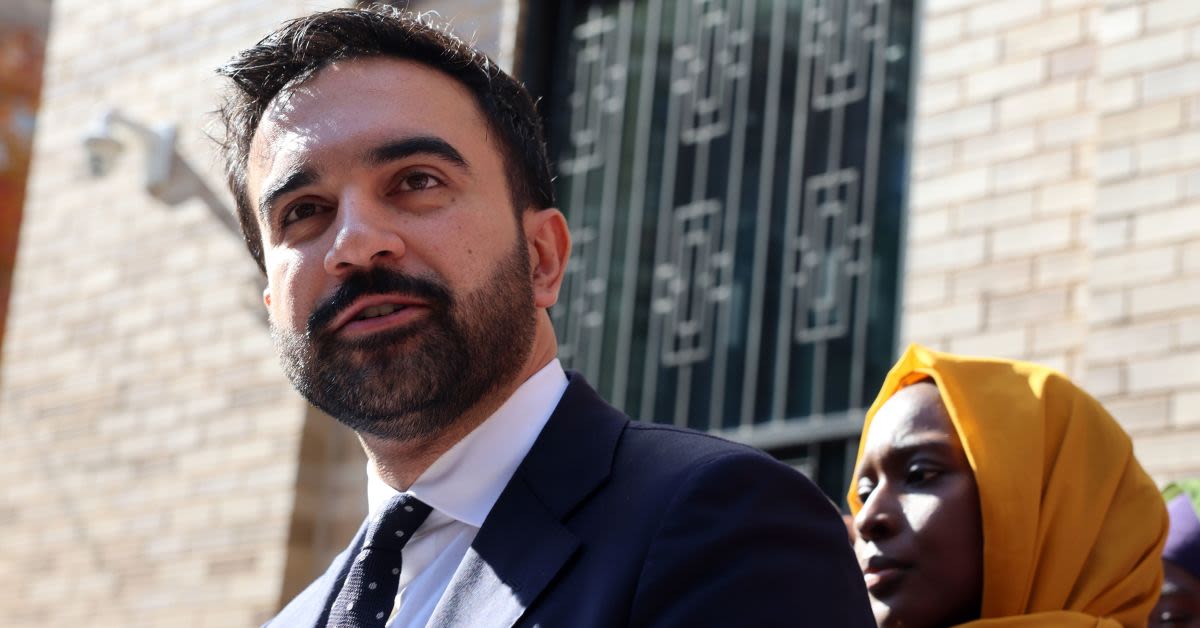
Democratic Mayor Zohran Mamdani of New York City has managed to undercut even the lowest expectations of his leadership.
In a recent appearance at a Queens mosque, the self-described socialist did more than pander to a favored constituency; he placed himself in the middle of a religious gathering where worshipers openly prayed for the killing of the infidels by your sword. According to Western Journal, the episode was captured in a video clip posted to X, formerly Twitter, in which Mamdani enthusiastically aligned himself with the congregation at the Al Khoei Islamic Center.
It is a privilege to be here with you once again, Mamdani told the group in the clip, presenting himself as a proud symbol of religious representation in public office. After touting himself as the citys first Muslim mayor, he proceeded to offer a Ramadan-themed appeal for what he called the warmth of collectivism, a phrase that fits neatly with his broader ideological commitment to left-wing, collectivist politics.
And to do so together, the mayor said of having joined the group for Friday prayer, it is a reminder that in this month of Ramadan, as we find moments of reflection, of recommitment, moments of community, that we always do so together. The statement, heavy on repetition and light on clarity, amounted to a circular celebration of togetherness for its own sake, a familiar hallmark of progressive rhetoric that prizes vague unity over concrete principle.
That meandering remark was followed by a more grounded reminder from Iman Dakmak-Rakka, who told Mamdani that you work not just for Muslims but for all of humanity and all of the residents of New York City. In that brief interjection, the imam articulated a basic civic truth that many progressive officials seem to forget: public office is a trust on behalf of all citizens, not a platform for sectarian or ideological favoritism.
Then the tone of the event shifted dramatically as an imam-led prayer moved from general piety to explicit militancy. I ask Allah to send blessings upon Muhammad and the family of Muhammad, a translated version of the prayer read, and to make me among those who await you (the Mahdi), follow you, and support you against your enemies, and among those who are martyred before you, among the ranks of your loyal ones.
The Mahdi refers to an Islamic messianic figure whose return, in some interpretations, is associated with apocalyptic struggle and violent confrontation with unbelievers. At that point, the video was clearly edited, indicating the passage of an unknown amount of time, leaving viewers unable to determine whether the subsequent petitions were directed specifically to the Mahdi or to another figure.
Either way, the words that followed left little doubt about the underlying intent of the prayer. Through your hands comes the relief for the believers, the imam said, and the killing of the infidels by your sword.
Unless the editing of the video removed crucial qualifying context, Mamdani now faces serious questions about why he chose to attend, endorse, and remain present at a religious service that invoked divine sanction for the slaughter of non-believers. The socialist mayor has already antagonized property owners with threats of higher taxes and irritated ordinary residents by imposing bureaucratic hurdles such as requiring two forms of identification for volunteer emergency snow shovelers.
But Mamdanis participation in a gathering where such a prayer was offered is not merely another example of bad policy or petty mismanagement; it touches the core of Americas constitutional order. It forces citizens to confront a difficult question: what are the limits of religious freedom when a religious practice openly calls for violence against those outside the faith?
One way to frame the dilemma is through a historical analogy. In 1860-61, eleven Southern states claimed a constitutional right to secede from the Union, insisting that their withdrawal was lawful and consistent with the very document they were abandoning.
At the risk of revisiting the Civil War, that argument has always seemed paradoxical: how could a constitution logically contain a mechanism for its own destruction? The same tension arises herewhether a principle designed to protect peaceful worship can be stretched to shield those who literally pray for the violent death of their fellow citizens.
The American commitment to religious liberty is profound, but it is not a suicide pact. Nothing in law, logic, or morality forces a free society to pretend that calls for the killing of the infidels by your sword are just another benign expression of faith, and New Yorkers have every right to demand that their mayor understandand respectthat distinction.
Login