
A Houston-area Antifa cell is under criminal investigation by the Texas attorney general for alleged involvement in doxing and materially supporting terrorism, underscoring growing concerns about organized far-left extremism operating inside the United States.
According to The Post Millennial, the group calling itself the Screwston Anti-Fascist Committee has cultivated a substantial online footprint, using social media and web platforms to disseminate radical propaganda, identify and target private citizens and law enforcement officers, and sell branded merchandise to finance its operations.
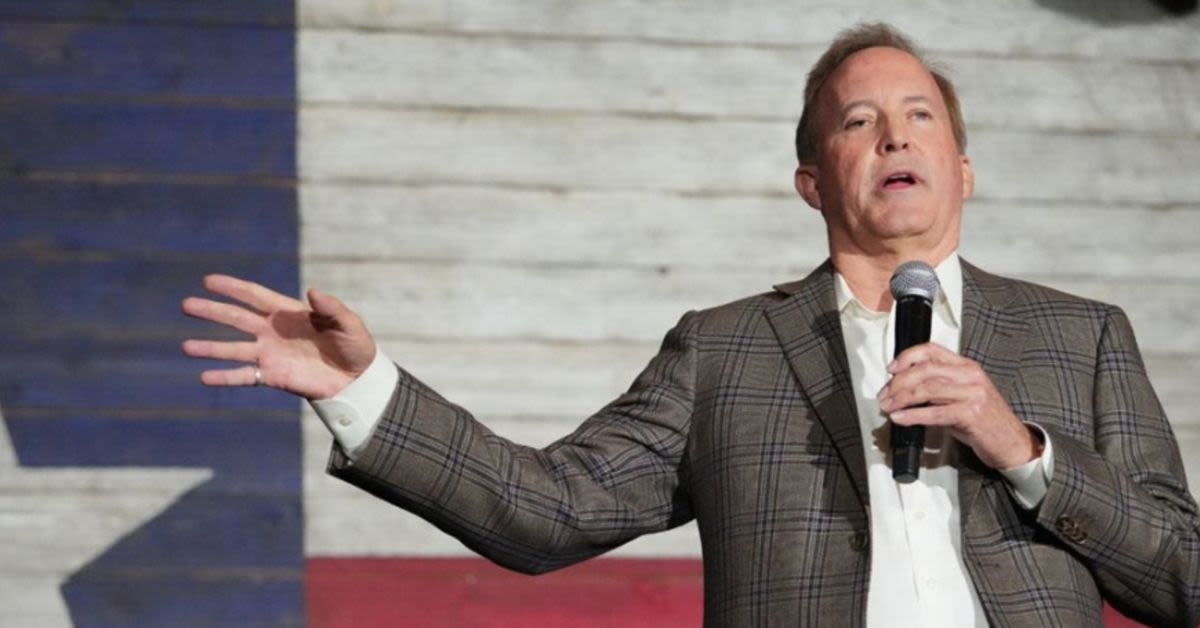
Texas Attorney General Ken Paxton, a Republican who is also running for the U.S. Senate, has now moved to bring the full weight of state authority to bear on the organization, signaling that Texas will not treat Antifa as a harmless idea but as a potentially violent network.
Radical leftists have engaged in coordinated efforts to militantly attack our nation and undermine the rule of law, Paxton said in a statement earlier this month, directly linking Antifa-aligned groups to a broader campaign against American institutions.
Screwston and related groups have illegally doxed Texans and encouraged violent terrorism against fellow citizens.
He further vowed that the state would not hesitate to use every available legal mechanism to confront the threat.
These deranged traitors will face the full force of law. No stone will be left unturned, and no tool will be left unused.
The Screwston Anti-Fascist Committee brands itself with a variation of the Antifa iron front logo, a symbol that has become synonymous with militant far-left street movements.
The three diagonal arrows, once associated with Germanys Social Democrats during the Weimar Republic, have been repurposed by contemporary Antifa networks as a badge of organized confrontation and revolutionary agitation.
Paxtons press release alleges that members of the Screwston Antifa cell were involved in the July 2025 ambush at the Prairieland ICE facility, an attack in which a local police officer was shot in the neck and which authorities have described as an act of terrorism.
Eighteen suspects tied to the broader North Texas Antifa network have been charged at the federal and/or local level, highlighting the extent to which Antifa is operating as a coordinated structure rather than a loose collection of protesters.
On February 18, Screwston Antifa issued a public statement responding to Paxtons announcement, insisting that it is protected by the Constitution even as it openly rejects the legitimacy of the American legal system and the nation-state itself.
Our organization is being targeted by Texas Attorney General Ken Paxton This investigation by Paxton is a blatant act of intimidation against progressive and leftist organizations by the far right, the group wrote, framing the probe as political persecution rather than a response to alleged criminal conduct.
The Screwston Anti-Fascist Committee maintains our right to protest and organize.
The groups rhetoric underscores a familiar pattern on the radical left: invoking constitutional protections while simultaneously advocating for the dismantling of the very system that guarantees those rights.
Screwston Antifas statement concluded with a link expressing solidarity with the Prairieland terror suspects, aligning the group publicly with individuals accused of terrorism and attempted murder.
Seven co-defendants have already pleaded guilty in federal court to providing material support to terrorism in what has been described as the first federal Antifa terrorism case in U.S. history, and they admitted to organizing behind an Antifa ideology.
Nine additional co-defendants began a federal trial this week in Fort Worth on terrorism, attempted murder, and related charges, further illustrating the gravity of the allegations surrounding the network.
A mistrial was declared last week on the first day of proceedings after a defense attorney engaged in misconduct during jury selection, delaying but not derailing the effort to hold the accused accountable.
For years, left-wing commentators and sympathetic media outlets have insisted that Antifa is merely a non-organized idea, a spontaneous reaction to so-called fascism rather than a structured movement.
Yet Screwston Antifa repeatedly refers to itself as an organization, raises funds, sets membership criteria, and coordinates activities all hallmarks of a disciplined militant operation rather than a loose, leaderless protest culture.
The group has also boasted of its role in direct actions, including a claim of responsibility for vandalizing a billboard shortly after the October 7, 2023 terror attacks in Israel.
Such acts, while often dismissed by progressives as property damage, fit into a broader pattern of escalating tactics that normalize lawlessness and political intimidation.
Screwston Antifa has been open about financially backing extremist militant startups, treating radical activism as something akin to a venture portfolio.
During the violent 2020 BLM-Antifa riots, the group launched what it called a Houston Militant Funding Initiative, explicitly designed to channel resources to other revolutionary actors.
We have made a lot of money selling shirts, the group announced, openly celebrating the success of its merchandise-driven fundraising model.
Much of these funds are fed back into printing costs and our own group fund. We do, however, want to pass on some of our excess funds to other militant pro-revolutionary groups in the Houston area.
The application rules for this funding initiative required that recipient groups operate on the ground, refuse any cooperation with law enforcement, and work toward revolution by any means necessary, including the abolition of the U.S. nation-state and the capitalist mode of production.
Such criteria reveal a clear ideological commitment not just to protest but to systemic overthrow, aligning the group with openly anti-American and anti-capitalist objectives.
This was not an isolated episode of radical patronage.
After the Prairieland terror attack, Screwston Antifa moved quickly to raise funds for the suspects, according to its online postings, reinforcing its role as a financial and ideological hub for militant activity.
The group appears to generate revenue primarily by selling propaganda merchandise emblazoned with violent imagery, including depictions of police vehicles engulfed in flames and graphics glorifying attacks on Immigration and Customs Enforcement.
It also markets trans-themed merchandise bearing its logo, blending identity politics with revolutionary branding to appeal to niche activist subcultures.
Screwston Antifa has been photographed tabling at the San Antonio Anarchist Bookfair, where it displayed extremist anti-government literature alongside its merchandise.
Such events serve as recruitment and radicalization venues, allowing the group to network with like-minded activists and normalize anti-police and anti-state messaging in ostensibly community spaces.
The groups online store uses WooCommerce as its payment gateway for PayPal, Venmo, and Google Pay, integrating seamlessly into mainstream financial infrastructure despite its extremist posture.
WooCommerce, Venmo, and Google have been contacted for comment, raising questions about whether major tech and payment platforms will continue to facilitate transactions for organizations accused of aiding terrorism.
In its Points of Unity section, which outlines its core beliefs, Screwston Antifa explicitly rejects democratic processes in favor of direct confrontation and violence.
Our organization does not and will never endorse political candidates of any kind, nor will we promote the act of voting as a solution to our problems, the group wrote, dismissing electoral politics as irrelevant to its revolutionary aims.
Fascism cannot be defeated through voting, it must instead be fought directly in the streets. The election of political representitives [sic] is not aligned with our goals or mission.
This open contempt for representative government and embrace of street-level conflict stands in stark contrast to the lefts frequent claims that it is defending democracy against authoritarianism.
Screwston Antifa openly advertises that it sells merchandise to raise funds for its activities, treating commerce as a tool for subversion rather than productive enterprise.
Its model exemplifies how radical groups exploit free-market mechanisms and digital platforms while working to dismantle the very economic and political systems that make those tools possible.
The group is listed as a contributing author on Its Going Down, an extremist Antifa-aligned online collective that has published communiqus claiming responsibility for acts of political violence and terrorism.
In January 2020, a claim of responsibility for an attempted train derailment near Bellingham, Washington, was posted on the site, and far-left militants Ellen Reiche and Samantha Brooks were later federally convicted, underscoring the real-world consequences of the ideology promoted there.
Screwston Antifa maintains an email address hosted by Riseup.net, a Seattle-based anarchist technology collective that provides encrypted communications services to vetted allied groups.
Much of Riseups infrastructure is located outside the United States, complicating compliance with subpoenas in criminal investigations and potentially shielding extremist networks from lawful scrutiny.
The group has maintained a steady presence at anarchist book fairs across Texas, where it solicits funding and distributes extremist literature to sympathetic audiences.
These events function as incubators for radicalization, offering ideological materials and personal connections that can move individuals from passive agreement to active participation in anti-government extremism.
At the San Antonio Anarchist Bookfair, one of Screwstons tabling stickers read, Arm trans women; Disarm cops, a slogan that fuses identity politics with explicit calls for the arming of civilians against law enforcement.
The group also distributed a pamphlet titled 9 Theses on Insurgency, reflecting a broader Antifa strategy of using short ideological texts and incremental radicalization tactics to push sympathizers toward direct action, a model that has also been employed by the Muslim Brotherhood.
In September of last year, President Donald Trump announced in an executive order that his administration would treat Antifa as a domestic terrorist organization, a move that signaled a sharp break from the lefts tendency to downplay or excuse Antifa violence.
A subsequent White House roundtable included journalists, such as this author, who have reported extensively on violent left-wing movements, indicating that federal policymakers were actively seeking input from those documenting the threat.
The U.S. State Department has already designated four Europe-based militant Antifa groups as Foreign Terrorist Organizations over their involvement in assaults, shootings, and bombing attacks.
That precedent raises the question of whether domestic Antifa cells with similar tactics and ideology could eventually face comparable designations or enhanced scrutiny under federal law.
As Texas authorities press forward with their investigation, the case is likely to intensify the national debate over how far the government should go in confronting far-left extremism, and whether the country will continue to tolerate groups that openly reject democracy, glorify violence, and work to dismantle the American constitutional order under the guise of anti-fascism.
Login