
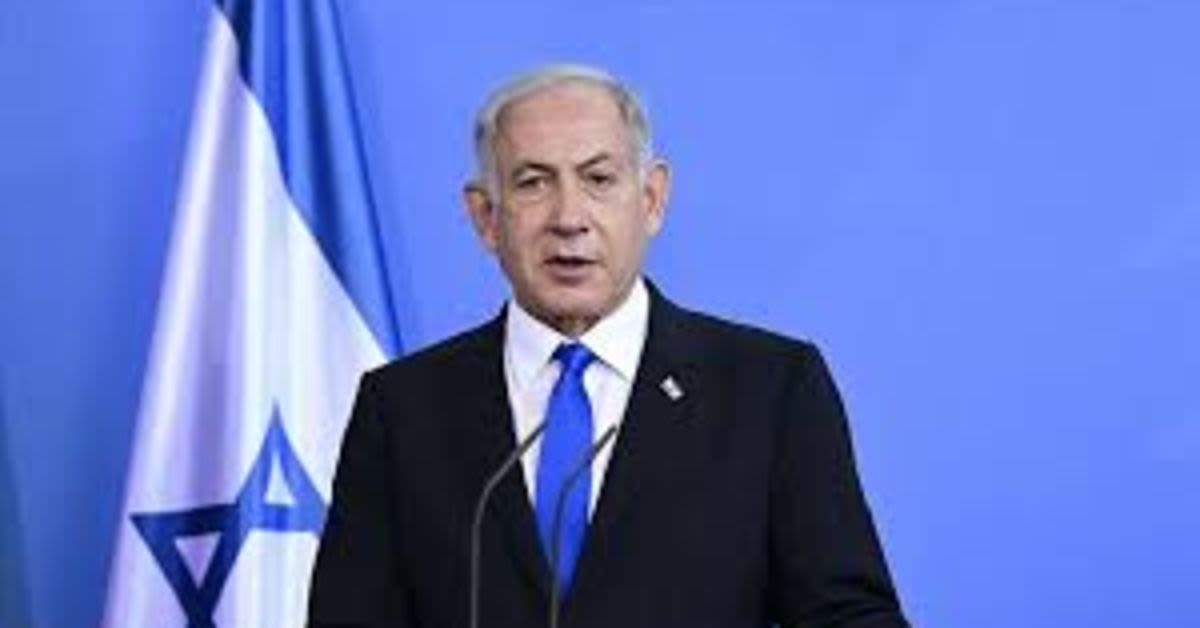
Israels Prime Minister Benjamin Netanyahu warned that the Iranian regime would face a force they cannot even imagine if it dares to launch an attack on the Jewish state, as American military assets poured into the region and tensions mounted across the Middle East.
According to Breitbart, Netanyahu delivered his stark warning during a special session of the Knesset, Israels parliament, where he described the current moment as very complex and challenging days and cautioned that no one knows what tomorrow will bring. Speaking with the gravity of a leader facing a potential multi-front crisis, he said he had sent a direct and unmistakable message to Tehran that any strike on Israel would be met with devastating consequences.
He stressed that if Iran commits perhaps the most serious mistake in its history by attacking Israel, the response would be overwhelming and decisive. We will respond with a force they cannot even imagine, he declared, underscoring that Israel would not hesitate to use its full military capabilities to defend its citizens and sovereignty.
Netanyahu urged Israelis to stand shoulder to shoulder, insisting that this is not a time for partisan infighting or political score-settling but for national unity in the face of a hostile regime openly threatening annihilation. He framed the moment as a test of Israels resilience and cohesion, calling on the public to rally behind the government and the Israel Defense Forces (IDF).
The prime minister noted that he had just returned from a summit with U.S. President Donald J. Trump, describing the coordination between Jerusalem and Washington as closer than at any point in recent memory. He highlighted the deepening ties between the IDF and the U.S. military, portraying the alliance as a critical pillar of deterrence against Iran and its terror proxies.
Israel has never been stronger, Netanyahu said, emphasizing both the countrys military readiness and its strategic partnerships with the United States and other allies. His comments came as visible signs of American support appeared on the ground and in the skies over the region.
Earlier in the day, Boeing KC-135 refueling aircraft and C-17 Globemaster transport planes were documented landing at Ben Gurion Airport, a rare and highly symbolic show of U.S. logistical muscle on Israeli soil. At least two of the refueling planes reportedly arrived from Al Udeid Air Base in Qatar, the largest American military installation in the Middle East and a key hub for U.S. air operations.
At sea, the USS Gerald R. Ford the worlds largest aircraft carrier was tracked near the island of Crete after being dispatched to the eastern Mediterranean earlier this month. The Ford is moving to join the USS Abraham Lincoln, which is already deployed in the region, forming a powerful carrier presence within striking distance of Iran and its regional proxies.
Regional security assessments now count more than 200 U.S. fighter jets positioned across the Middle East, dramatically increasing Washingtons ability to project force. Defense analysts monitoring open-source flight and naval data report that over 85 aerial refueling tankers and more than 170 cargo aircraft have surged into the theater since mid-February.
This buildup represents the largest concentration of American naval and air power in the Middle East since the 2003 Iraq war, though notably without a comparable ground deployment. The posture suggests a strategy focused on deterrence, rapid strike capability, and support for allies rather than large-scale occupation or regime-change operations.
Further evidence of heightened alert emerged in Lebanon, where the United States scaled back its embassy presence in Beirut to essential staff only. Roughly 50 employees and family members were evacuated as a precautionary measure, though officials stressed that the embassy remains operational and continues to provide core services.
Inside Israel, the civilian sector is bracing for the possibility of missile barrages and mass-casualty incidents, with hospitals accelerating emergency preparations. Soroka Medical Center in Beersheba previously struck by a ballistic missile in June 2025 has conducted large-scale simulations and refined patient transfer protocols to ensure it can function under wartime conditions.
Wolfson Medical Center in Holon has relocated departments and cleared underground areas to create protected treatment zones in the event of sustained rocket or missile fire. In Tel Aviv, Assuta Medical Center has opened a fortified underground complex capable of accommodating approximately 200 patients, designed to maintain continuity of care even under direct threat.
Municipal authorities across the country have also reviewed emergency readiness, updating civil defense procedures and communication channels. Several cities have confirmed that public shelters will automatically open in the event of an attack, reflecting a sober recognition that the home front could again become a primary target.
All of this unfolds as renewed talks between Washington and Tehran are scheduled for Thursday in Geneva, with the diplomatic track narrowing under the shadow of military escalation. Trumps special envoy Steve Witkoff and senior adviser Jared Kushner are expected to meet Iranian Foreign Minister Abbas Araghchi, in discussions Israeli officials increasingly view as a last-ditch effort after earlier rounds failed to yield tangible results.
On Monday afternoon, President Trump publicly rejected media narratives suggesting that senior Pentagon officials had warned him against taking military action. Numerous stories from the Fake News Media have been circulating stating that General Daniel Caine is against us going to War with Iran, Trump wrote on Truth Social, dismissing the reports as 100% incorrect.
Trump said Joint Chiefs Chairman Gen. Dan Caine believes that if military action is ordered, it would be easily won, pushing back on portrayals of a reluctant or divided military leadership. He emphasized that he alone will decide whether to strike, asserting his constitutional role as commander in chief against what he described as media distortions.
I am the one that makes the decision, the president wrote, making clear that ultimate authority rests with the elected civilian leadership, not unelected bureaucrats or anonymous sources. He added that while he prefers a negotiated outcome, if we dont make a Deal, it will be a very bad day for that Country, a pointed warning to Tehran about the costs of intransigence.
His remarks followed media reports detailing Pentagon assessments of potential risks associated with a prolonged campaign, including casualties and the possibility of broader regional escalation. No final decision has been announced, leaving both allies and adversaries to weigh whether Washingtons show of force is primarily deterrent or a prelude to action.
Meanwhile, inside Iran, new anti-regime protests were reported at multiple universities in Tehran following the reopening of campuses, signaling persistent domestic unrest. Footage circulating online showed clashes between students and Basij militia forces, underscoring the regimes internal vulnerabilities even as it postures abroad.
Netanyahu ended his address with a sober reflection on the uncertainty that now hangs over the region, while insisting that Israel is ready for whatever may come. No one knows what tomorrow will bring, he said. But we are prepared for any scenario.
Login