
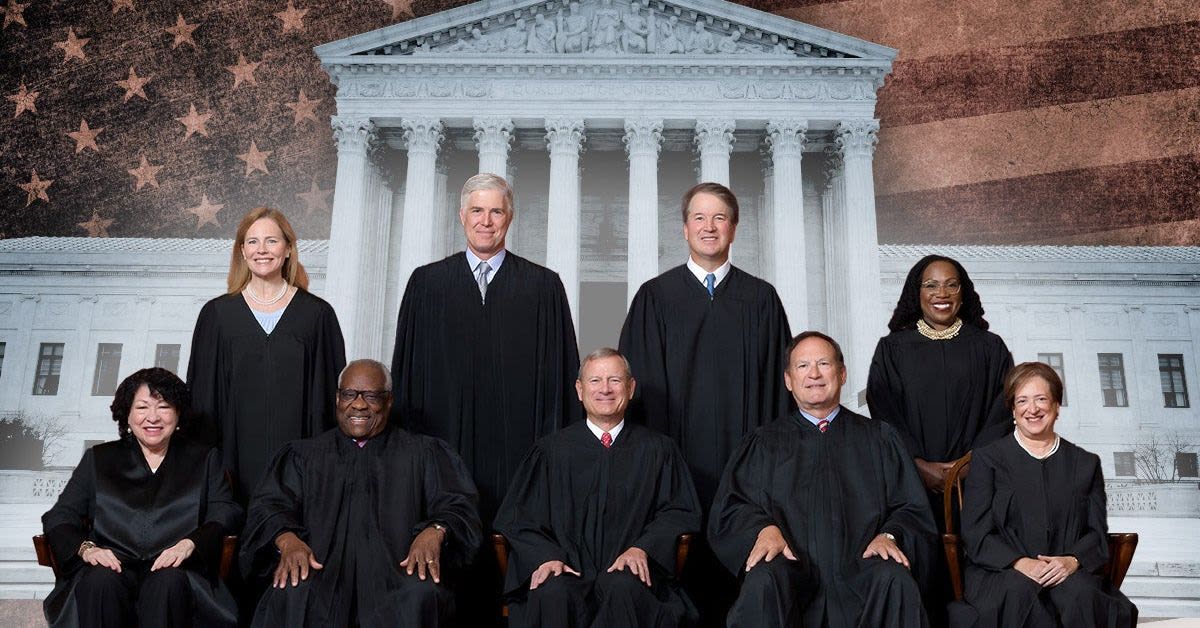
The Supreme Courts latest ruling against President Donald Trumps use of emergency powers to impose tariffs has opened a new front in the legal and political battle over presidential authority in trade policy.
In a decision that will likely be celebrated by globalists and regulatory activists but deeply troubling to advocates of a strong executive and robust American leverage in trade, the Court struck down tariffs Trump implemented under the International Emergency Economic Powers Act (IEEPA), sharply curbing a tool long used to defend U.S. economic interests, according to The Post Millennial. Justice Brett Kavanaugh, joined in dissent by Justices Clarence Thomas and Samuel Alito, warned that the ruling not only "greatly" restricts Trumps "tariff authority going forward," but is also "likely to generate other serious practical consequences in the near term."
Kavanaugh cautioned that the fallout will not be confined to legal theory, but will hit the federal governments balance sheet and the broader economy. "One issue will be refunds. Refunds of billions of dollars would have significant consequences for the U.S. Treasury," he wrote, underscoring the fiscal shock that could follow.
He noted that the majority opinion offered no guidance on how to unwind years of tariff collections. "The Court says nothing today about whether, and if so how, the Government should go about returning the billions of dollars that it has collected from importers. But that process is likely to be a 'mess, as was acknowledged at oral argument," Kavanaugh added, highlighting the administrative chaos likely to ensue.
The dissent stressed that the ruling could force the United States to pay back enormous sums to importers, regardless of how those costs were ultimately borne. In Kavanaughs words, the US could be required to refund "billions of dollars to importers who paid IEEPA tariffs, even though some importers may have already passed on costs to consumers or others."
Beyond the immediate financial implications, Kavanaugh warned that the decision risks destabilizing hard?won trade arrangements that have strengthened Americas negotiating position. "A second issue is the decisions effect on the current trade deals. Because IEEPA tariffs have helped facilitate trade deals worth trillions of dollarsincluding with foreign nations from China to the United Kingdom to Japan, the Courts decision could generate uncertainty regarding various trade agreements. That process, too, could be difficult."
At the heart of the dispute is a basic question of statutory interpretation that, in Kavanaughs view, the majority badly mishandled. He wrote that the case "presents one straightforward question of statutory interpretation: Does Congresss explicit grant of authority in IEEPA for the President to 'regulate importation' of foreign goods in declared national emergencies authorize the President to impose tariffs? The answer is a clear yes."
Kavanaugh grounded his argument in decades of practice in which presidents of both parties have used similar statutory language to impose tariffs and other trade measures. He pointed to historical precedent under Presidents Richard Nixon and Gerald Ford, noting that Ford was able to "impose money exaction on foreign oil imports" following the Supreme Courts decision in Federal Energy Administration v. Algonquin, issued just a year before IEEPA was enacted.
"For both the Nixon tariffs and the Ford tariffs upheld by this Court in Algonquin, the relevant statutory provisions did not specifically refer to 'tariffs' or 'duties,' but instead more broadly authorized the President to 'regulate importation' or to 'adjust the imports,'" Kavanaugh explained, arguing that Congress knew exactly what it was doing when it adopted similar language. "Therefore, when IEEPA was enacted in 1977 in the wake of the Nixon and Ford tariffs and the Algonquin decision, Congress and the public plainly would have understood that the power to 'regulate importation' included tariffs."
From this perspective, the majoritys narrow reading of presidential authority under IEEPA looks less like textual fidelity and more like judicial activism that undercuts the executives ability to respond swiftly to economic threats. "If Congress wanted to exclude tariffs from IEEPA, it surely would not have enacted the same broad 'regulate importation' language that had just been used to justify major American tariffs on foreign imports," Kavanaugh wrote, suggesting that the Court has effectively rewritten the statute.
The dissent also exposed what Kavanaugh described as a logical inconsistency in the position taken by the plaintiffs and accepted by the Court. He observed that both "acknowledge that IEEPA authorizes the President to impose quotas or embargoes on foreign importsmeaning that a President could completely block some or all imports," yet "they say that IEEPA does not authorize the President to employ the lesser power of tariffs, which simply condition imports on a payment."
"As they interpret the statute, the President could, for example, block all imports from China but cannot order even a $1 tariff on goods imported from China," Kavanaugh wrote, underscoring how the ruling strips away a calibrated tool while leaving intact far more drastic options. He continued, "That approach does not make much sense. Properly read, IEEPA does not draw such an odd distinction between quotas and embargoes on the one hand and tariffs on the other. Rather, it empowers the President to regulate imports during national emergencies with the tools Presidents have traditionally and commonly used, including quotas, embargoes, and tariffs."
For conservatives who believe in a strong but constitutionally grounded executive capable of defending American workers and industries, Kavanaughs dissent reads as a warning that the Court has weakened a vital instrument of national policy.
The decision now raises pressing questions about how the government will manage the "mess" of potential refunds, how existing trade deals "worth trillions of dollars" will be affected, and whether Congress will step in to restore the clear authority that, as Kavanaugh argues, it already granted when it empowered presidents to "regulate importation" in times of national emergency.
Login