
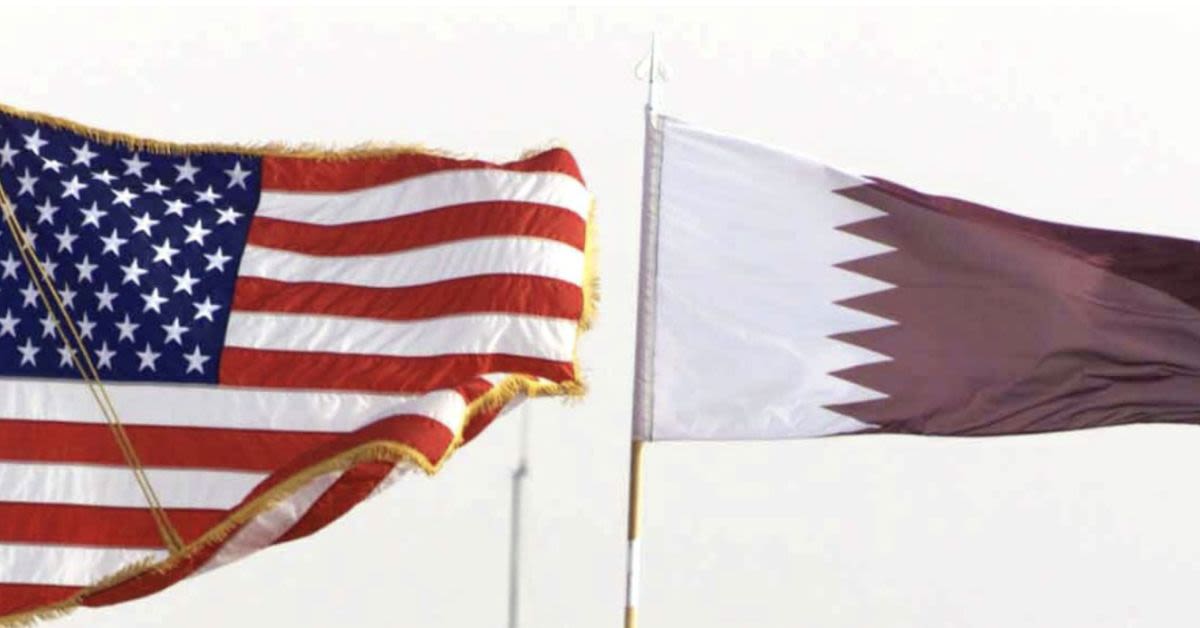
Qatar has dramatically escalated its financial footprint in American higher education, more than tripling its funding of U.S. colleges and universities between 2024 and 2025 and cementing its status as the largest foreign patron of the nations academic institutions.
According to the Washington Free Beacon, Department of Education disclosure records show that the Gulf monarchy boosted its higher-education outlays from $396 million in 2024 to $1.2 billion in 2025, an unprecedented year-over-year surge. This spike coincides with Qatars broader lobbying and influence-buying campaign in the United States and signals that the regime has no intention of curbing its higher-education spending even as Congress probes its role in fueling anti-Israel and anti-Semitic agitation on American campuses.
The reported $1.2 billion figure reflects only part of 2025, meaning the final tally is likely to climb even higher and widen Qatars lead over second-place China as a foreign funder of U.S. universities. For critics of foreign influence, the numbers underscore how a small but wealthy authoritarian state is leveraging its energy riches to shape the intellectual climate at elite American institutions that already lean heavily to the left.
The sharp increase in Qatari money appears to be driven by a series of massive contracts with U.S. universities that have established satellite campuses in Doha and elsewhere in the emirate. Carnegie Mellon University, which operates a campus in Doha, disclosed a staggering $936 million contract from Qatar last May, while Cornell University, which runs a medical branch in the country, reported a $163 million contract in January 2025.
Texas A&M University, another institution with a Doha campus, announced a $24 million deal with Qatar in the same month, adding to a long-running financial relationship that has drawn scrutiny from lawmakers and alumni alike. Arizona State University and Harvard University each reported contracts exceeding $1 million last year, while Duke University and Bard College disclosed both contracts and gifts in the high six-figure range, illustrating how Qatari money reaches deep into the American academic establishment.
Over the years, the five largest beneficiaries of Qatari funding, according to the Department of Education, have been Cornell, Carnegie Mellon, Georgetown University, Texas A&M, and Northwestern University, in that order. These institutions, many of them already influential in shaping U.S. foreign policy thinking, now find themselves increasingly dependent on a regime that backs Islamist movements and censors political dissent at home.
News of Qatars intensified funding push comes after several years of mounting scrutiny over its influence operations in the United States and its longstanding support for extremist groups. Qatar is widely believed to be one of Hamass principal financial backers and offered the groups leaders asylum after the Oct. 7, 2023, terrorist attacks on Israel, a move that has only deepened concerns about Dohas role in radicalizing discourse on Western campuses.
Those concerns are no longer theoretical for some students. A Carnegie Mellon student filed a lawsuit against the university in 2023, alleging that the schools financial ties to Doha contributed to a campus culture permissive of anti-Semitism, and a judge recently validated the gravity of that worry, writing that "Qatar and its affiliates could be a source of antisemitic influence upon CMU."
At Northwestern University, which has taken in $737 million from Qatar since 2008 and runs a satellite campus in Doha, the contractual strings attached to that money are explicit and troubling. Its agreement with the Qatari government bars students and faculty from criticizing the regime, and as the House Education and Workforce Committee revealed in a September hearing, Qatar Foundation staffers circulated talking points on "diplomatic role and mediation efforts in Palestine/Gaza and Afghanistan along with reactions from international politicians" immediately after Oct. 7.
Qatari influence has had similarly far-reaching implications at Georgetown University, home to the powerful Walsh School of Foreign Service. The Free Beacon reported in June that Georgetown allows Qatars Hamas-friendly government to wield outsized influence over key programs, and that Qatari royal Sheikh Abdulla Bin Ali Al-Thani sits on the universitys governing Board of Directors, raising obvious questions about academic independence and ideological bias.
The Gulf states reach is not confined to higher education; its influence operations extend into K-12 classrooms, where it has promoted "social justice" curricula aligned with progressive narratives rather than traditional civic education.
Suggested lesson plans include the controversial 2005 Palestinian film Paradise Now, which depicts two Palestinian friends plotting a suicide bombing in Israel and has been widely criticized for its sympathetic portrayal of terrorists, a troubling choice for American schoolchildren.
Over the past year, Qatar has broadened its soft-power strategy beyond classrooms and lecture halls, targeting influencers across the political spectrum with lavish hospitality. The regime has flown podcasters, social media personalities, lawmakers, and celebrities to Doha on all-expense-paid junkets, an effort that appears designed to sanitize its image, mute criticism of its ties to Hamas, and normalize its growing sway over American institutions that should be accountable first and foremost to U.S. citizens, not foreign monarchies.
Login