
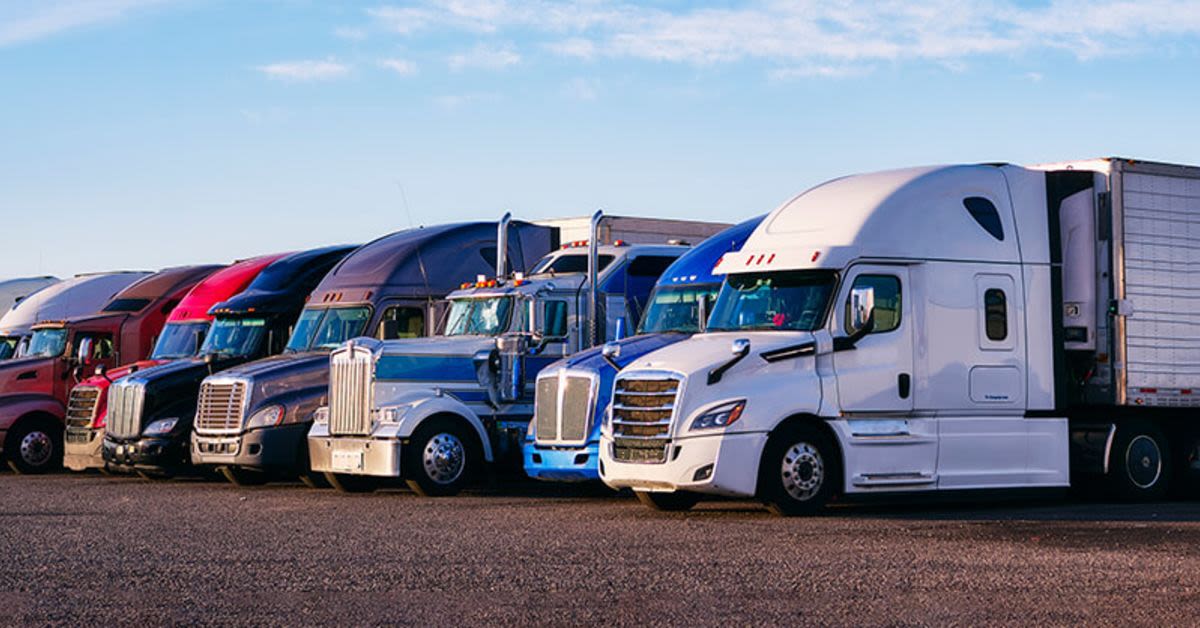
Illegal immigrants are increasingly ending up behind the wheel of 80,000-pound commercial trucks, a development made possible by a gaping regulatory loophole and compounded by an industry hollowed out by weak training standards, depressed wages, and years of federal indifference.
According to Western Journal, California has become a focal point of this crisis because of the way it regulates or fails to regulate commercial driver training for non-domiciled applicants. While the state operates larger, more formal driving schools for those seeking commercial drivers licenses, a carve-out in state law has allowed a sprawling network of small, low-budget private programs to flourish with almost no meaningful oversight.
Under California statute, any private trucking school that charges $2,500 or less in tuition is exempt from licensing and regulation by the Bureau for Private Postsecondary Education, effectively creating a regulatory gray zone in which nearly 200 such schools can operate and issue credentials with minimal accountability to the public or to law enforcement.
This permissive environment has not gone unnoticed by those who represent working truckers and who have watched the profession steadily erode. Lewie Pugh, executive Vice President of the Owner?Operator Independent Drivers Association (OOIDA), told the Daily Caller News Foundation that the problem in California is only one manifestation of a broader failure of federal trucking oversight. He argued that even the basic federal Entry-Level Driver Training (ELDT) requirements, touted as a safety reform, are so weakly enforced that substandard programs continue to churn out underprepared drivers whether foreign nationals or American citizens who are then unleashed on the nations highways in vehicles capable of catastrophic damage.
We looked at this whole CDL thing back in, I think its 91, 92. Theyre supposed to make this all universal, Pugh told the DCNF. Everybody had the same license, passed the same training, same thing. But the problem was we passed the licensing rule that the states did the app[lication]. But we never really did anything with the training. Thats the problem. In his view, Washington created a paper standard for licensing but never followed through with rigorous, uniform training requirements, leaving states and private operators to fill the vacuum in ways that often prioritize volume and profit over competence and safety.
Pugh was particularly scathing about Californias tuition threshold that effectively invites operators to stay under $2,500 to avoid scrutiny. I think Californias crazy for a $2,500 tuition unless you want it to be regulated. Sure, no matter if its free, it should be regulated. But the thing is, it really needs to be regulated at a federal level to begin with and come down. Because again, most people get CDLs and get trucking. They cross state lines. They go out of the United States. So we need something more tangible for that, more teeth into it. I mean, they started what they call the Entry Level Driver Training Program in 2022, Pugh said. Thats the first thing ever that youve ever really had to do anything to become a trucker. But even thats a joke.
The ELDT program, launched in 2022 and heralded by regulators as a long-overdue step toward professionalizing the industry, is described by Pugh as fundamentally hollow. Under the current system, an applicant simply completes an online registration, locates a trainer listed on the federal Training Provider Registry a trainer who needs only minimal qualifications and then relies on that trainer to attest that the required topics have been covered, often with little or no genuine behind-the-wheel instruction. I mean, so for example, I have 25 years experience traveling miles without a truck. I could be a trainer. I could take you tomorrow. You could fill out the paperwork on the Entry Level Driver Training. I can fill out to be your trainer, Pugh said. We [could] start on Saturday. On Sunday, I can go down through and check mark. Ive taught you everything, hand it back.
The practical test that follows, he added, is hardly a meaningful barrier to entry for someone who has been rushed through a perfunctory course. And if you can go past the maneuverability test, driving around a cone, youre a truck driver. I mean, thats how simple it is and how easy it is, Pugh added. So the trucking school not only can train you, but they can test you. You think theyre going to fail you after you give them a bunch of money? Theyre going to pass you. So its just a bad system all the way around. In other words, the same entity that profits from enrolling students is often the one that decides whether they are competent, a classic conflict of interest that conservatives have long warned against in other sectors of government-sanctioned credentialing.
Californias approach to non-domiciled commercial drivers licenses CDLs issued to foreign nationals who are not permanent residents of the state has now drawn intense scrutiny from federal regulators. The Federal Motor Carrier Safety Administration (FMCSA) has uncovered what it called systemic policy, procedural, and programming errors in the states handling of these licenses, raising serious questions about who is being cleared to operate heavy trucks on American roads.
Federal audits revealed that California had issued CDLs to foreign nationals who were plainly ineligible, including individuals whose legal presence in the United States had already lapsed and others whose license validity periods were extended far beyond the expiration of their work authorizations.
These violations did not remain abstract bureaucratic failures; they translated into real?world danger. The lax system allowed unqualified drivers, including illegal immigrants, to legally operate massive commercial vehicles, and some of those drivers have been involved in serious crashes in which innocent motorists were killed. For critics of the Biden administrations broader immigration policies, the California CDL scandal is yet another example of how a permissive attitude toward illegal presence in the country can intersect with weak regulatory enforcement to produce deadly consequences for law-abiding citizens.
Yet Pugh is adamant that the non-domiciled CDL issue, while alarming, is only the latest symptom of a much deeper and older structural breakdown in the trucking sector. He traces the roots of the crisis to decades of policy choices and industry practices that have driven experienced American drivers out of the profession and replaced them with a revolving door of poorly trained newcomers.
This all stems to a much bigger problem thats been going on in trucking for years and decades, about were not training people. Were not preparing them for a career or a positive thing, Pugh said. Were treating them like a disposable commodity, pretty much, with drivers. Thats all because weve preached for years and years and years about this driver shortage that theres never been. We have a turnover problem, but not a shortage.
The narrative of a perpetual driver shortage has been used for years by large carriers and their allies to justify importing more labor, loosening standards, and resisting reforms that would raise costs. Thats led us down this path of getting people behind the wheel of trucks or letting people start trucking companies overnight with really no looking into them or finding anything else, Pugh added. So with that all being said, thats led us to where we are now. And its the reason we have all these people, because weve taken a career that used to be a very well-paying, middle class job, and weve just ran it to the bottom on a race to the bottom to where nobody in our country even wants to do it. From a conservative perspective, this is a textbook example of how distorted labor markets, combined with regulatory failure, can hollow out a once?solid path to the middle class for blue?collar Americans.
Major trucking companies now routinely report annual turnover rates exceeding 90 percent, a figure that would be unthinkable in most other industries. Pugh insists this is not evidence of a genuine shortage of willing workers, but rather the result of a deliberate business model that treats drivers as interchangeable and expendable. Drivers are typically paid by the mile, not by the hour, which means that time spent waiting at shippers or receivers often for hours on end is unpaid, even though federal hours of service rules still count that time against the drivers legal workday. I mean, can you imagine where you work if youve turned over 90 percent of your staff, your workers every year, how ineffective youd be? But seeing trucking, thats the business model theyve found to follow because it puts profits over people. It puts profits over safety, Pugh told the DCNF. And thats why were seeing these accidents.
Real wages for truck drivers, when adjusted for inflation, have stagnated or declined since the 1970s, even as the demands of the job long hours away from home, increased regulatory burdens, and heightened traffic congestion have intensified. Pugh argues that this relentless pressure to keep labor costs low has created a vicious cycle: poor pay and harsh working conditions drive experienced drivers out, which in turn incentivizes carriers and training schools to recruit ever more inexperienced workers through the easiest possible pathways, including the non-domiciled CDL programs now under federal scrutiny. For conservatives who value work, family stability, and domestic opportunity, the degradation of trucking from a respectable, family-supporting career into a low-margin, high-turnover grind is a stark indictment of both corporate short-termism and federal mismanagement.
There have been some recent efforts, largely under Republican leadership, to rein in the most dangerous aspects of the non-domiciled CDL system. The Trump administration imposed emergency restrictions on such licenses and levied sanctions against California for its failures, while a new English proficiency requirement included in a government funding bill has begun to address concerns about communication barriers that can compromise safety on the road. Industry advocates, however, caution that these steps, while welcome, are only partial remedies and do not address the underlying structural problems of training quality, enforcement, and compensation that continue to plague the sector.
The Owner-Operator Independent Drivers Association has been pressing federal officials to go much further in tightening Entry-Level Driver Training standards and in policing the training providers themselves. In an October 2025 letter to Congress and the U.S. Department of Transportation, OOIDA called for mandatory, verifiable behind-the-wheel training hours for all new drivers and urged the FMCSA to move more aggressively to remove non-compliant or inadequate programs from its Training Provider Registry, especially those linked to drivers involved in preventable fatal crashes.
Such reforms would move the system closer to what many conservatives advocate: clear, enforceable standards that prioritize public safety and professional competence over bureaucratic box-checking and industry convenience.
The association has also praised recent moves by the current Transportation Department leadership to tighten oversight of non?domiciled CDLs. The OOIDA described Transportation Secretary Sean Duffys actions on non-domiciled CDLs as an important step toward safer highways and a stronger, more professional trucking industry. Whether these measures, combined with potential reforms in upcoming highway reauthorization bills, will be sufficient to reverse decades of wage stagnation, reduce chronic turnover, and impose consistent training standards across all fifty states remains uncertain, but the stakes for motorists and for American workers are high.
For now, the picture that emerges is of a critical industry caught between federal agencies that have been slow to act, state governments like California that have carved out loopholes in the name of cost and access, and large carriers that have built a business model on churning through drivers rather than cultivating a stable, skilled workforce.
Illegal immigrants and other unqualified drivers slipping through the cracks of this system are not the root cause but a predictable byproduct of policies that have devalued both safety and the American worker. Until Washington is willing to confront the entrenched interests that benefit from cheap, disposable labor and lax oversight, and until states are held to account for exploiting regulatory gray areas, Americans will continue to share the road with 80,000.pound rigs operated by drivers who never should have been licensed in the first place.
Login