
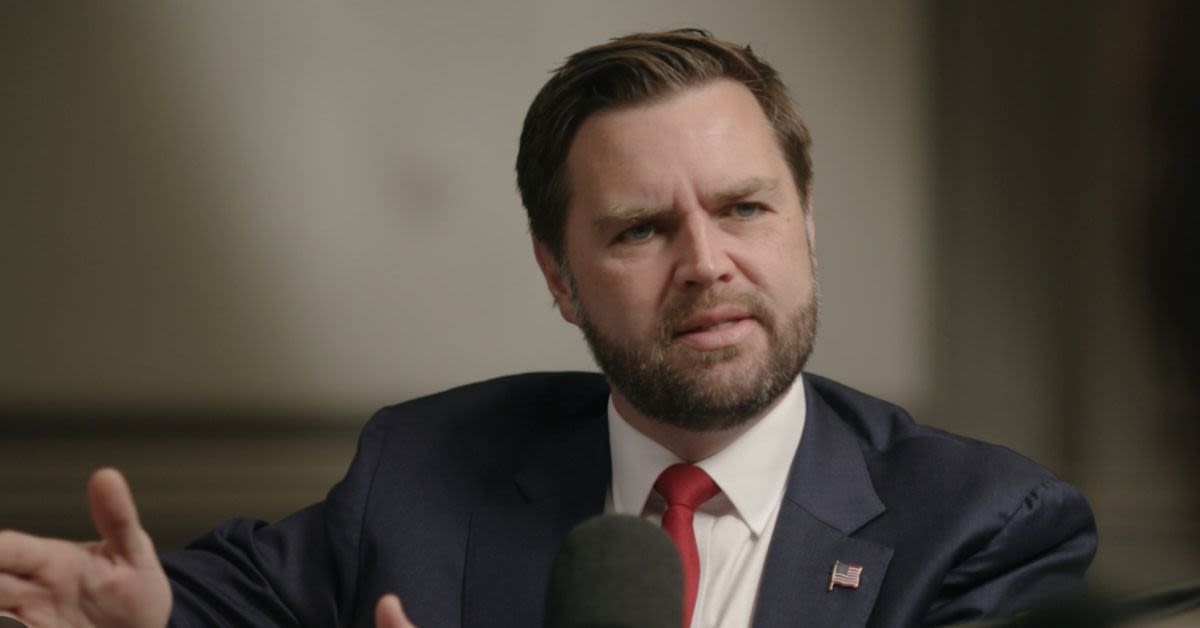
Vice President JD Vance is signaling that if American taxpayers are expected to underwrite the defense of Greenland, then the United States should receive tangible returns for that commitment.
Speaking to reporters during a visit to Armenia, Vance emphasized that "it's very early in the Greenland talks," but made clear that the Trump administrations interest in the vast Arctic territory is rooted in hard security calculations, according to Fox News. He stressed that, "We've been working quite a bit on this over the last few weeks, but it's just very simple. Greenland is very important to the national security of the United States of America."
Vance argued that Washington has for too long shouldered disproportionate burdens in regions where allies have failed to invest adequately in their own defense. "I do think that some of our allies have under-invested in Arctic security, and if we're going to invest in Arctic security, if we're basically going to pay a lot of money and be on the hook for protecting this massive landmass, I think it's only reasonable for the United States to get some benefit out of that, and that's going to be the focus of the negotiations here over the next few months," he said.
President Donald Trump has framed Greenland as a strategic necessity rather than a diplomatic curiosity, tying it directly to his broader national security agenda. In mid-January, he declared that the U.S. needs Greenland "for the purpose of national security" and linked it to his ambitious defense vision.
"It is vital for the Golden Dome that we are building. NATO should be leading the way for us to get it. IF WE DONT, RUSSIA OR CHINA WILL, AND THAT IS NOT GOING TO HAPPEN!" Trump said, underscoring his longstanding warning that adversarial powers are aggressively seeking footholds in the Arctic. A week later, he announced progress with NATO leadership, stating, "Based upon a very productive meeting that I have had with the Secretary General of NATO, Mark Rutte, we have formed the framework of a future deal with respect to Greenland and, in fact, the entire Arctic Region."
Trump later wrote that, "This solution, if consummated, will be a great one for the United States of America, and all NATO Nations," presenting the prospective arrangement as a win-win for the alliance, not just Washington. His approach reflects a familiar conservative theme: allies should step up, and collective security must not become a one-way subsidy from American citizens to foreign governments.
Denmark, however, has pushed back firmly on any suggestion that its sovereignty is up for discussion, even as it welcomes deeper NATO involvement in the Arctic. Danish Prime Minister Mette Frederiksen responded to Trumps "framework" announcement by stressing that, "Security in the Arctic is a matter for the entire NATO alliance. Therefore, it is good and natural that it is also discussed between NATO's Secretary General and the President of the United States. The Kingdom of Denmark has long worked for NATO to increase its engagement in the Arctic," according to a statement issued in Danish.
She added that Copenhagen has been in constant contact with NATO leadership over the matter and drew a clear red line on territorial control. "We have been in close dialogue with NATO and I have spoken to NATO Secretary General Mark Rutte on an ongoing basis, including both before and after his meeting with President Trump in Davos. NATO is fully aware of the position of the Kingdom of Denmark. We can negotiate on everything political; security, investments, economy. But we cannot negotiate on our sovereignty," she asserted.
Greenlands own leadership appears more open to a pragmatic, negotiated path that could balance local interests with U.S. strategic needs. Greenlandic Foreign Minister Vivian Motzfeldt said earlier this month that, "We are pursuing a diplomatic solution through negotiations" with the U.S. and that she is "hopeful and optimistic that we will find common ground that respect our red lines," according to Reuters, suggesting that while Copenhagen draws hard boundaries, Nuuk is looking for a formula that preserves sovereignty while leveraging Americas security umbrella and economic clout.
Login