
When California Sen. Adam Schiff announces he has exciting news, experience suggests it is anything but, yet his latest political move in the Golden State is drawing attention precisely because of what it reveals about the Democratic Partys priorities in a state already buckling under progressive governance.
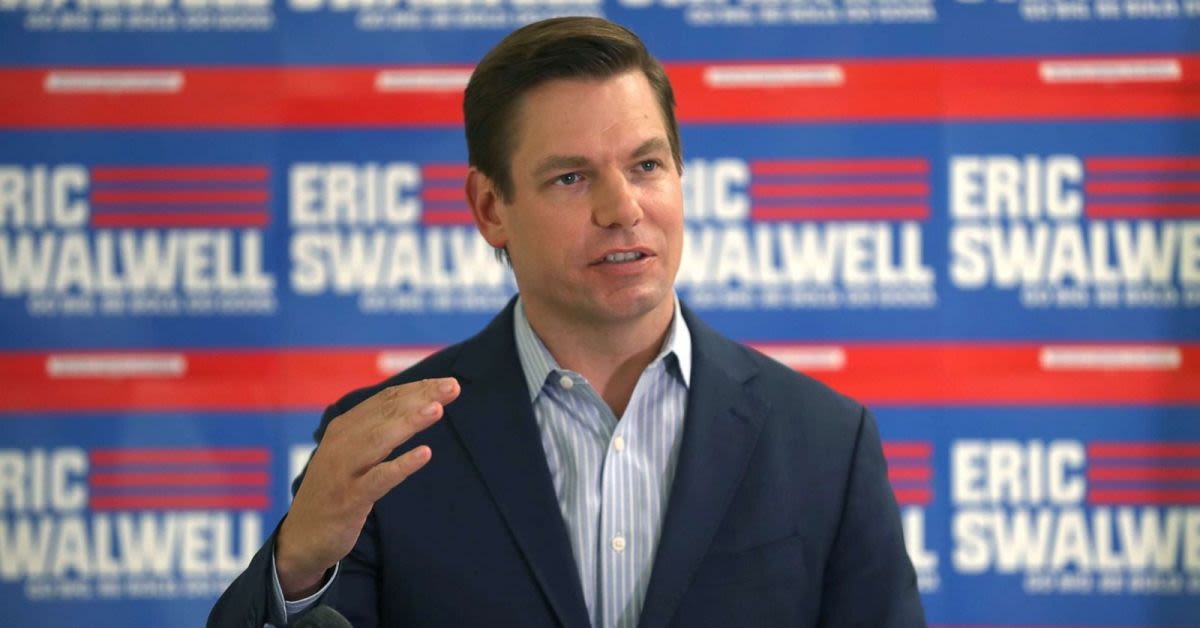
According to Western Journal, Schiff has now thrown his support behind fellow California Democrat and longtime ally in the Trump-era Russiagate saga, Rep. Eric Swalwell, endorsing him to succeed term-limited Gov. Gavin Newsom, who is widely seen as harboring presidential ambitions. In a statement released Monday, Schiff declared that Swalwell will take on anyone, including the president, to protect our values, our rights, and our freedoms.
Schiff, who built his national profile by relentlessly pursuing President Donald Trump, framed the endorsement as a continuation of that crusade. I worked closely with Eric when we needed to investigate Donald Trump in his first term and hold him accountable, Schiff said in a short video promoting Swalwells gubernatorial bid.
He went on to praise Swalwells role in the Democrats second impeachment effort against Trump, tying the congressmans political identity directly to that partisan spectacle. And Ive seen Eric in action when he helped lead the impeachment trial of Donald Trump after the president incited the violent mob on January 6, Schiff continued. What I saw then and what I know now, Eric is fully prepared to get things done for the Golden State.
Schiff closed his pitch with a sweeping assurance that many conservatives would find darkly ironic, given Californias current condition under one-party rule. The Golden State will be in good hands with Eric Swalwell, and I hope youll join me in supporting his campaign, he concluded.
The endorsement suggests one of two strategic calculations inside the Democratic camp. The first is that party leaders may be trying to consolidate early around Swalwell to avoid a fractured jungle primary that could, in a nightmare scenario for Democrats, send two Republicans to the general election if the left-leaning vote splinters among multiple candidates.
That field is already crowded with prominent Democrats, including former U.S. Rep. Katie Porter, former Health and Human Services Secretary Xavier Becerra, San Jose Mayor Matt Mahan, billionaire activist Tom Steyer, former Los Angeles Mayor Antonio Villaraigosa, and others. In such a system, even in deep-blue California, a divided Democratic electorate could theoretically open a path for two Republicans to emerge from the primary if the progressive vote is sufficiently diluted.
The Washington Examiner reported that a poll released Monday showed Swalwell edging ahead of Porter for the first time, a notable shift given that she had long been considered the favorite on the Democratic side. Porters standing has been eroded by what NFL draft analysts might politely label character red flags, controversies that have piled up and undermined her image as a progressive reformer.
With the primary not scheduled until June, some Democratic strategists may see an early coalescing behind a single candidate as a way to avoid further damage and confusion. From that perspective, rallying behind someone not named Katie Porter as soon as possible might seem like the least-bad option, even if it feels to some like getting a pot of boiling potatoes dumped in your lap.
Yet Swalwell is hardly a clean alternative, and that leads to the second possible explanation for Schiffs endorsement: Both men share similar vulnerabilities and a common history of partisan excess. In 2023, after Republicans regained control of the House, then-Speaker Kevin McCarthy removed Schiff and Swalwell from the House Intelligence Committee, along with Rep. Ilhan Omar of Minnesota, who has a long record of anti-Semitic remarks.
For Schiff and Swalwell, part of the justification was their use of the Intelligence Committee as a megaphone to promote the now-discredited narrative of collusion between Trump and Russia during the 2016 election. They repeatedly implied they had seen damning classified evidence that never materialized, using their positions to fuel a media frenzy rather than to provide sober oversight.
A document declassified last summer by the FBI added a more serious allegation to that record. A former congressional staffer claimed that Schiff and Swalwell had leaked classified information in an effort to discredit Trump, apparently assuming that the Constitutions Speech and Debate Clause would shield them from consequences.
That revelation drew public scrutiny, and rightly so, given the gravity of mishandling classified material for partisan gain. It underscored a pattern in which both men appeared more interested in political theater than in the responsible exercise of the sensitive authority entrusted to members of the Intelligence Committee.
Swalwells troubles do not end there, and one of the most troubling episodes goes directly to national security. In 2020, Axios reported that he had been at least an acquaintance of a Chinese intelligence operative who had developed extensive ties with local and national politicians, including Swalwell, and that those ties included romantic or sexual relationships.
The alleged spy, known as Christine Fang or Fang Fang, reportedly targeted up-and-coming politicians as part of Beijings long-term influence operations. In the roughly five-and-a-half years since that report surfaced, Swalwell has conspicuously failed to answer a basic question: whether he had a romantic or sexual relationship with Fang.
That silence has not gone unnoticed, particularly on X, where users have repeatedly highlighted the unresolved nature of the scandal. For a man now seeking to govern the nations most populous state, the refusal to fully address such a serious allegation speaks volumes about accountability and transparency.
Both Schiff and Swalwell have also faced questions about whether their primary residences are actually in California rather than in or around Washington, D.C. For voters already skeptical that coastal elites are more interested in Beltway cocktail parties than in the daily struggles of ordinary citizens, such questions reinforce the perception of a political class detached from the people it claims to represent.
As the younger generation might have put it a decade and a half ago, this is a case of real recognizing real, with one scandal-plagued partisan warrior endorsing another. Whether that mutual admiration society will resonate with California Democrats is another matter entirely.
Porter, for all her flaws and ideological extremism, can at least claim she actually lives in the state she wants to govern. She can also credibly say she has never rutted with a Chinese spy, a depressingly low bar that nonetheless now appears relevant in a California Democratic primary.
The office of governor, unlike a backbench seat in Congress, demands serious leadership on issues such as crime, homelessness, taxation, education, and the states ongoing exodus of businesses and families. Swalwell, by contrast, has built a reputation as an unserious figure who masks his deficiencies behind the anonymity of being one of 214 House Democrats and the amplification of a friendly media ecosystem.
His decision to announce his gubernatorial run on Jimmy Kimmel Live! only underscored that image, choosing a late-night comedy stage over a serious policy forum. It was a venue and host that, as critics noted, could have only been more apt if Kimmel broke down in tears.
Whether Schiffs endorsement meaningfully shifts the race remains to be seen, but it certainly clarifies the ideological and ethical stakes. It raises the question of whether a man who rode the Russiagate hoax to higher office is in any position to tell Californians who should lead them next.
What is unmistakable is that this is not a minor contest over a symbolic post; it is about who will be tasked with repairing or further damaging the most populous and, in many respects, most broken state in the union. For voters who still believe in accountability, competence, and basic national security standards, the spectacle of one discredited partisan warrior elevating another may serve less as a recommendation than as a warning.
Login