
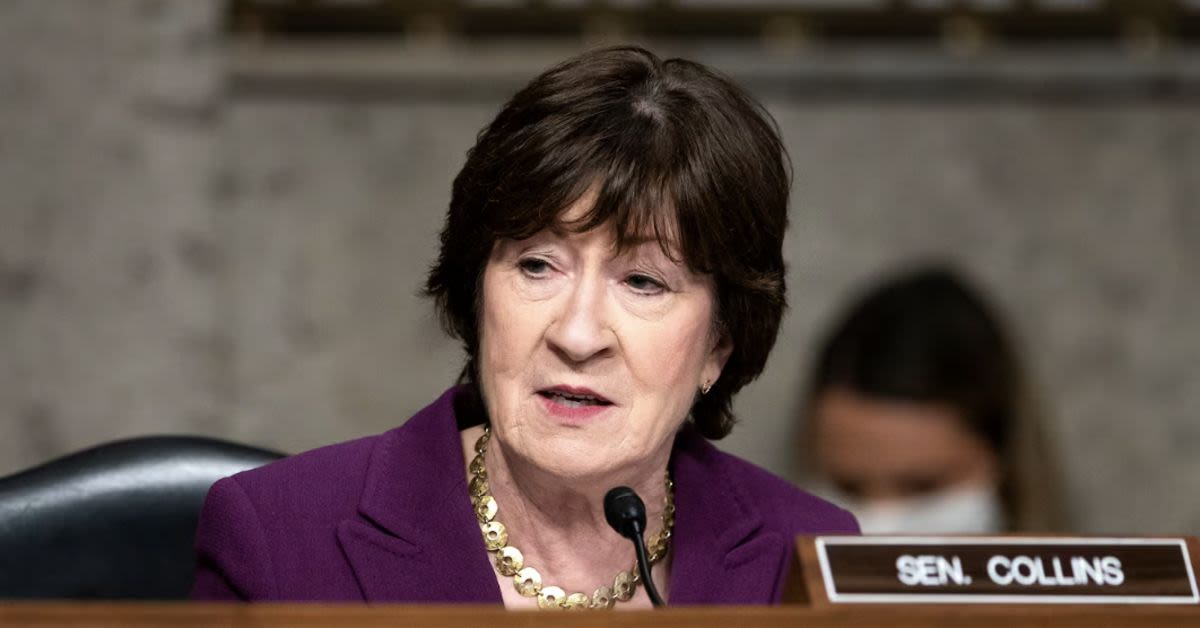
Sen. Susan Collins of Maine has formally declared that she will seek a sixth term in the U.S. Senate, setting the stage for a high-stakes 2026 contest in one of the nations most closely watched swing states.
The 73-year-old Republican, long branded a moderate in a blue-leaning state, made her intentions unmistakably clear on social media, writing, "GOOD NEWS! I am ALL-IN for 2026," in a post on X, the platform formerly known as Twitter. According to Fox News, the announcement instantly reshaped the early contours of the 2026 Senate map, where Democrats are desperate to reclaim a chamber they have recently lost and conservatives are determined to hold the line against an increasingly aggressive progressive agenda.
Collins underscored her decision in a lighthearted campaign-style video, pulling a sneaker from a shoebox and declaring, "This is perfect for 2026, because I'm running." The imagery signaled that, despite her age and long tenure, she intends to run an active, retail-focused campaign in a state where personal contact and local presence still matter more than national party branding.
Her re-election bid comes despite lingering resentment from some conservatives over her vote to convict Donald Trump during his second impeachment trial in 2021, a vote that took place after Trump had already left office and fell short of the two-thirds threshold required for conviction. That decision has continued to fuel criticism from the President and his most ardent supporters, even as Collins has maintained a generally conservative voting record and backed much of the Trump-era policy agenda.
Fox News Digital reported that it reached out to the White House for comment on Collins announcement but did not receive an immediate response. The silence from President Bidens team underscores how central Collins has become to both parties calculations, often serving as a pivotal vote on judicial nominations, spending bills, and national security measures.
Collins, who has represented Maine in the Senate since 1997, framed her campaign as an extension of a lifetime of service to her home state. "As a proud native of Maine, I've dedicated my life to serving our state and nation. I am deeply grateful for the unwavering support Mainers have shown me over the years. It is an honor to serve you, and I'm excited to announce my run for re-election to the U.S. Senate in 2026," she wrote in another post on X, emphasizing continuity, gratitude, and duty rather than ideological warfare.
Democrats, however, are already sharpening their attacks, with the Democratic Senatorial Campaign Committee identifying Collins as their top target in the effort to retake the Senate. The Maine Democratic Party issued a blistering statement charging that "Susan Collins has spent the last 30 years betraying Maine, from stripping Mainers affordable health care, to casting the decisive vote to confirm Supreme Court justices who overturned Roe v. Wade, to voting with Donald Trump 94% of the time."
The state partys executive director, Devon Murphy-Anderson, claimed that Collins political standing has eroded, asserting, "She now faces some of the lowest approval ratings of her career because Mainers see through her political games and fake shows of concern. In November, we will reject her at the ballot box." Such rhetoric reflects the lefts ongoing effort to paint Collins as out of step with Maine voters, even as she has repeatedly defied Democratic predictions of her political demise.
Republican leaders in Washington are lining up firmly behind Collins, highlighting her seniority and influence as assets for both Maine and the GOP. Senate Majority Leader John Thune hailed her as "a proven leader who delivers results for Maine. Ive worked closely with her and have seen firsthand her work ethic and effectiveness. We need Susan Collins in the U.S. Senate and in the fight to deliver results for Maine and America."
National Republican Senatorial Committee chair Sen. Tim Scott echoed that praise, calling Collins "a battle-tested leader whose fierce independence has led to historic wins for Maine." For conservatives, her long record of committee work, constituent services, and resistance to some of the lefts most radical proposals makes her a crucial bulwark against further expansion of federal power and progressive social policy.
Yet Collins also faces fire from the right, particularly from President Trump, who recently lashed out at her and several other GOP senators on Truth Social. Trump wrote that they "should never be elected to office again," after they supported a motion to discharge a joint resolution directing the president to block any use of U.S. armed forces against Venezuela.
The President accused those Republicans of undermining national security and executive authority, declaring, "Republicans should be ashamed of the Senators that just voted with Democrats in attempting to take away our Powers to fight and defend the United States of America." That clash highlights the ongoing tension within the GOP between traditional constitutional conservatives, who are wary of open-ended foreign military commitments, and populist nationalists who favor a more aggressive posture abroad.
Collins has also been active on domestic security and immigration enforcement issues, recently spotlighting her engagement with the Biden administration over federal operations in her state. In a January 27 post on X, she wrote that she had "spoken with the White House and with DHS Secretary Noem about the ICE operations. I asked Secretary Noem to pause the operations in both Maine and Minnesota," signaling concern for how federal enforcement actions impact local communities.
Two days later, she updated constituents on the situation, stating, "While the Department of Homeland Security does not confirm law enforcement operations, I can report that Secretary Noem has informed me that ICE has ended its enhanced activities in the State of Maine." She added that "ICE and Customs and Border Patrol will continue their normal operations that have been ongoing here for many years," a stance likely to resonate with voters who want border and immigration laws enforced without heavy-handed federal overreach in their neighborhoods.
As the 2026 race takes shape, Collins bid will test whether a seasoned, center-right Republican who champions incremental governance, local control, and institutional stability can still prevail in an era of hyper-partisan politics and ideological purity tests. With Democrats vowing to unseat her, Trump-aligned activists questioning her loyalty, and GOP leaders rallying to her defense, Maines senior senator once again finds herself at the center of a national battle over the future direction of both her party and the country.
Login