
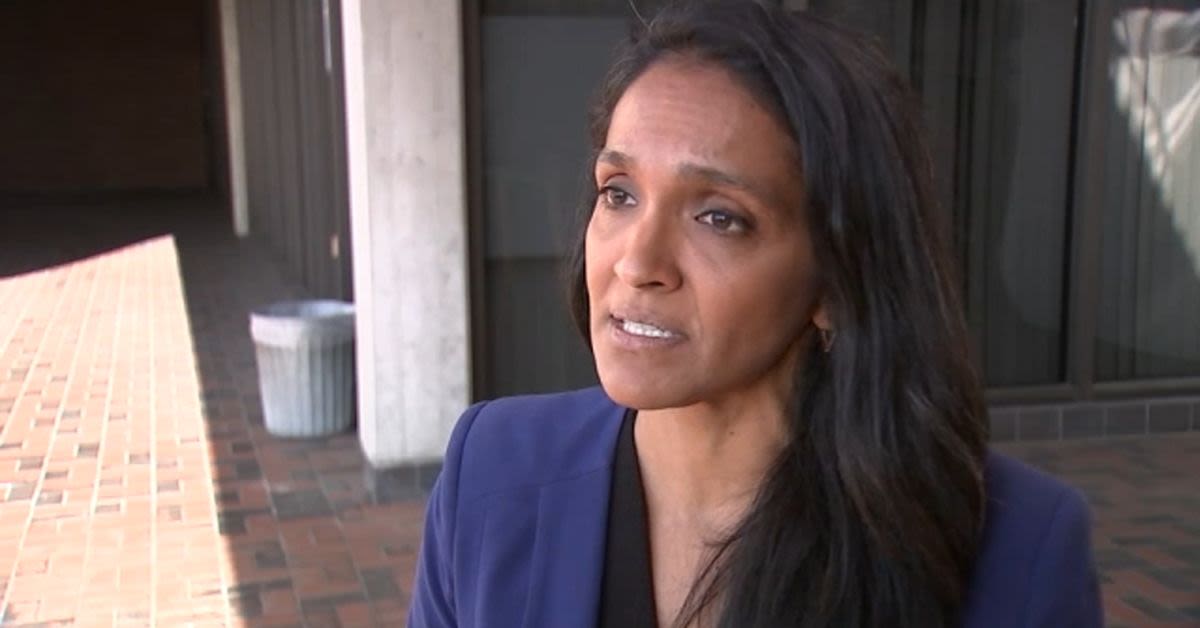
Los Angeles is poised for a stark ideological showdown in 2026 as City Council Member Nithya Raman, an avowed socialist, mounts a challenge against incumbent Democrat Mayor Karen Bass.
Raman, a member of both the Democratic Party and the Democratic Socialists of America, has launched her mayoral bid by casting herself as the accountable alternative to Bass, signaling not moderation but a further lurch to the left. According to Gateway Pundit, she is presenting her campaign as a corrective to the current administration while openly aligning herself with the hard-left flank of American politics.
Her announcement leaned heavily on familiar progressive buzzwordsaccountability, urgency, affordability, and compassionlanguage that has become standard issue for the modern Left. She also aligned herself ideologically with Zohran Mamdani, the socialist who won the New York City mayoral race, framing her candidacy as part of a broader socialist wave rather than a local reform effort.
Behind the polished rhetoric lies a worldview that has consistently failed wherever it has been imposed, from Eastern Europe to Latin America. Raman is not merely a progressive Democrat; she is an open socialist, affiliated with an organization that explicitly advocates for government control over housing, energy, and large portions of the economy.
Democrats frequently insist that democratic socialism is distinct from socialism, and that socialism itself is somehow separate from communism. History, however, offers a sobering rebuttal to that narrative.
Every communist regime began as a socialist experiment promising fairness, equity, and government accountability. The Soviet Union, Maos China, Castros Cuba, and Venezuela all launched their revolutions with pledges to uplift the masses and correct alleged market injustices.
Each instead produced shortages, corruption, repression, and economic collapse, proving that while the labels may evolve, the outcomes remain tragically consistent. The pattern is unmistakable: centralized power and state control inevitably erode freedom, prosperity, and basic competence.
Ramans own comments underscore this contradiction at the heart of her campaign. She attacks City Hall for fiscal mismanagement while championing the same tax-and-spend ideology that helped drive Los Angeles into its current budget crisis.
She concedes that voters approved higher taxes for homelessness and housing, yet admits the city has failed to deliver meaningful results. That failure is not incidental; it is the predictable consequence of socialist-style governancehigh spending, low accountability, and no real consequences for bureaucratic failure.
Los Angeles already stands as a cautionary tale of what happens when progressive theory collides with reality. Streetlights can reportedly take a year to repair, homeless encampments persist despite billions in public spending, housing prices continue to skyrocket, and public trust in local government has eroded.
Ramans answer is not to restrain government but to expand itmore centralized planning, more regulation, and more promises that this time, somehow, the same ideology will yield different results. Her campaign does not challenge the underlying model; it seeks to intensify it.
In Ramans view, Basss failure is not that she has gone too far left, but that she has not gone far enough. The contest is therefore not between moderation and extremism, but between two factions of the same failing partyone conventionally progressive, the other openly socialist.
When pressed on basic issues such as public safety, womens spaces, and fiscal responsibility, Raman reportedly deflected, hedged, or claimed she had not yet had those conversations. Socialist candidates often avoid specifics because concrete details expose the true costfinancial and socialof their agenda.
The Democratic Party once styled itself as the champion of working families and the middle class, but it is increasingly driven by activists, ideological experiments, and a preference for centralized power over local autonomy and personal responsibility. Ramans candidacy is not an aberration; it is a clear indicator of where the party is heading.
Los Angeles does not need another grand theory of government; it needs leadership that respects limits, protects taxpayers, and values results over ideology. Socialism has been tested across the globe, and each trial has ended the same way: with diminished freedom, economic decay, and broken promises.
As voters weigh Ramans bid, they would be wise to treat her campaign as a warning sign rather than a solution, and to ask whether doubling down on failed left-wing experiments is a risk this already struggling city can afford to take.
Login