
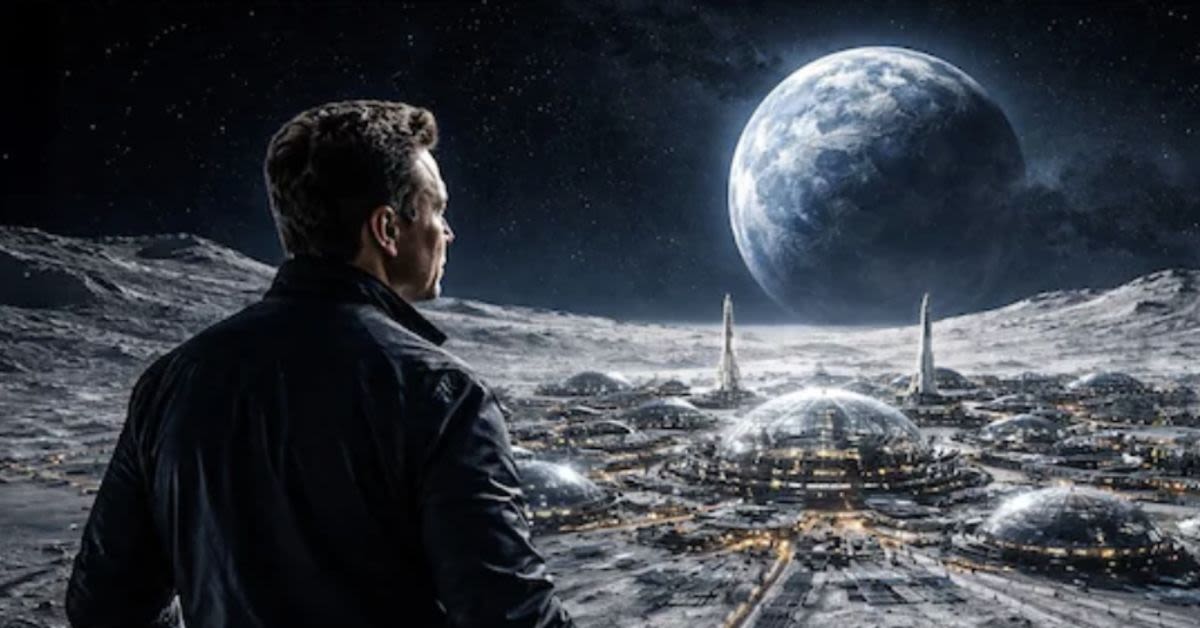
Elon Musk has announced that SpaceX is now prioritizing the creation of a self-growing city on the Moon, a project he believes could be realized in under a decade.
The billionaire entrepreneur outlined his latest vision for American-led space expansion in a post on X, signaling a strategic shift toward rapid lunar development as a means of securing humanitys long-term survival. According to Newsmax, Musk said on Sunday that SpaceX has shifted its focus to building a "self-growing city" on the Moon, which he said could be achieved in less than 10 years.
This lunar-first approach aligns with a broader conservative preference for private-sector innovation over bloated government bureaucracy, putting a U.S.-based company at the forefront of a new space race rather than leaving the field to rival powers such as China.
Musk framed the initiative not as a vanity project, but as a civilizational safeguard in an increasingly unstable world. "That said, SpaceX will also strive to build a Mars city and begin doing so in about 5 to 7 years, but the overriding priority is securing the future of civilization and the Moon is faster," Musk added in an X post.
His comments underscore a two-track strategy: move quickly to establish a sustainable presence on the Moon while laying the groundwork for a more ambitious Martian settlement. For many on the right, this kind of bold, market-driven vision stands in stark contrast to the regulatory paralysis and climate alarmism that dominate progressive policy circles.
The concept of a self-growing city suggests a settlement designed to expand using local resources, advanced manufacturing, and minimal dependence on Earth-based supply chains. Such an approach reflects a classic free-market principle: build systems that can sustain themselves, innovate continuously, and reduce reliance on taxpayer-funded lifelines.
Musks timelineless than 10 years for a functioning lunar city and 5 to 7 years to begin constructing a Martian onewill undoubtedly face skepticism from establishment voices who have long underestimated private spaceflight. Yet his record with SpaceX, from reusable rockets to commercial crew missions, has repeatedly embarrassed government pessimists and vindicated those who argue that American ingenuity thrives when Washington steps aside.
As geopolitical tensions rise and adversarial regimes pour resources into space capabilities, the idea of a robust U.S.-aligned presence on the Moon is no longer science fiction but strategic necessity. Musks declaration that the overriding priority is securing the future of civilization and the Moon is faster captures a growing sentiment that the West cannot afford to cede the high ground of space to authoritarian competitors, and that the path forward will be blazed not by sprawling federal agencies, but by risk-taking entrepreneurs willing to bet on freedom, technology, and the promise of the American-led frontier.
Login