
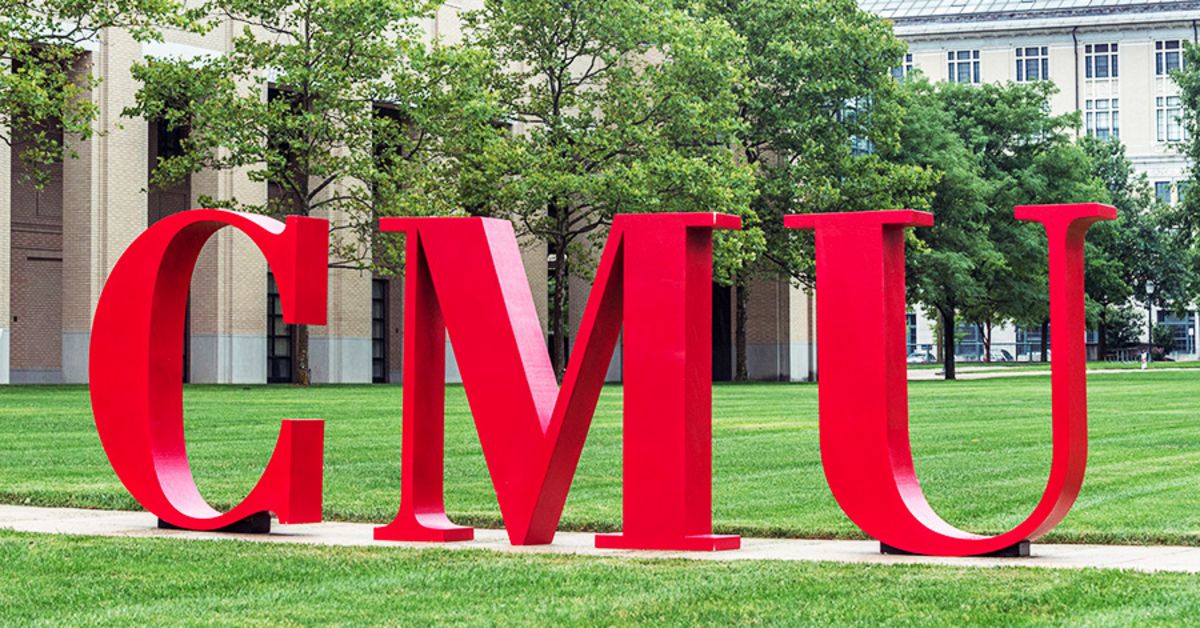
Carnegie Mellon Universitys chief diversity official, already embroiled in a federal anti-Semitism lawsuit, once held a senior role with a Palestinian organization now sanctioned by the U.
S. government for its efforts to target Israeli citizens through international courts.
According to The Washington Free Beacon, Elizabeth Rosemeyer, the assistant vice provost for Diversity, Equity, and Inclusion and Title IX coordinator at Carnegie Mellon, previously served as an "international liaison" for the Palestinian Centre for Human Rights (PCHR), a Gaza-based group with longstanding ties to extremist networks. At Carnegie Mellons Pittsburgh campus, Rosemeyer is charged with overseeing efforts "to prevent and effectively respond to all forms of discrimination," a mandate that now sits uneasily alongside her past work for an organization the State Department has formally penalized.
Years before joining the university, Rosemeyer worked for PCHR in the Gaza Strip from July 1996 to July 1997, according to her LinkedIn profile, where she says she drafted grant proposals and communications for "funders, constituents and international media." PCHR, founded in 1995 by Raji Sourani, a former member of the U.S.-designated terrorist group Popular Front for the Liberation of Palestine (PFLP), was sanctioned by the State Department in September for its collaboration with the International Criminal Court "to investigate, arrest, detain, or prosecute Israeli nationals, without Israels consent."
Rosemeyers background is poised to take on new significance in a lawsuit brought by former student Yael Canaan, who alleges that Carnegie Mellon has cultivated an environment hostile to Jewish students. In that case, Rosemeyer is not a peripheral figure but a central actor whose conduct, and now her past affiliations, are under scrutiny.
Canaan, who attended Carnegie Mellon from 2018 to 2022, says that architecture professor Mary-Lou Arscott subjected her to overtly anti-Semitic comments, including a suggestion that she undertake a class project examining "what Jews do to make themselves such a hated group." Rather than addressing the alleged misconduct, Canaan claims, the universitys civil-rights machinery failed her at every turn.
According to the complaint, Rosemeyer, who joined Carnegie Mellon in 2018, brushed aside Canaans concerns and "aggressively discouraged Canaan from filing a formal complaint" against Arscott. That alleged response, Canaan argues, reflects not an isolated failure but a broader institutional culture in which Jewish students are treated as acceptable targets rather than protected minorities.
Canaan further contends that Qatar, the Hamas-aligned Gulf monarchy that has poured more than $1 billion into Carnegie Mellons Doha campus, helped shape that culture. In her telling, Qatari money did not come with neutral intentions but instead encouraged the university to adopt an "antisemitic organizational culture motivating it to unlawfully discriminate against her and harass her."
Carnegie Mellon has broadly denied the allegations, yet the litigation has already forced the university to acknowledge facts that raise serious questions about foreign influence over its civil-rights apparatus. "Notably, CMU concedes that Qatari interests partially fund the position of Elizabeth Rosemeyer, because she serves both CMUs Main Campus and its Doha campus as Assistant Vice Provost for DEI and Title IX Coordinator," district judge W. Scott Hardy wrote in a Dec. 5 opinion, the Wall Street Journal reported.
Hardy, a Trump appointee, ordered the university to turn over detailed financial information about Qatari support to Canaans legal team. "Qatar and its affiliates could be a source of antisemitic influence upon CMU," the judge warned, adding that the "largesse of Qatari funds supplied to CMU" could pressure the school to "abide by expectations and wishes of its generous donors."
While Rosemeyers role at PCHR has not previously been publicized, the organizations record during her tenure and beyond is well documented. In January 1997, while she was working there, PCHR issued a press statement accusing Israel of holding "hostage" the body of Hassan Abbas, a Hamas terrorist killed after attacking civilians at a Jerusalem caf.
The group has continued to echo the talking points of violent factions, including in the wake of Hamass Oct. 7 massacre in Israel. PCHR described the slaughter of 1,200 Israelis as "Palestinian armed groups engaged in an operation in response to escalating Israeli crimes against the Palestinian people," language that effectively rationalizes mass murder as a form of resistance.
PCHRs ties to the PFLP, a designated terrorist organization, are especially close and longstanding. Its founder, Raji Sourani, was denied a U.S. visa in 2012 because of his terrorist affiliations, and in 2014 PCHR and the PFLP jointly staged an "Alternative Noble [sic] Prize" ceremony in his honor.
The group has also championed figures linked to other terrorist outfits, organizing rallies for Khader Adnan, a former spokesman for Palestinian Islamic Jihad. That record raises obvious concerns about the judgment of any American university official who once served in a senior liaison role for such an organization, particularly one tasked with safeguarding civil rights and enforcing anti-discrimination rules.
For Canaans attorneys, the case is about more than one students mistreatment; it is a window into how foreign regimes with troubling records on religious freedom and civil liberties are shaping American higher education. "This case shines a light on a dangerous civil rights conflict hiding in plain sight," said Ziporah Reich, director of litigation at The Lawfare Project and an attorney for Canaan.
"Foreign governments with appalling human-rights records are funding the very offices meant to protect students civil rights. This should alarm every parent, every student, and every policymaker in this country," Reich added, underscoring a concern that resonates far beyond Carnegie Mellons campus.
What remains unknown is the extent of Rosemeyers direct dealings with Qatari officials or intermediaries tied to the regimes education initiatives. Rosemeyer and Carnegie Mellon declined to respond to requests for comment, leaving unanswered how the university reconciles its DEI mission with its reliance on funding from a state that backs Hamas and restricts basic freedoms at home.
Qatars influence campaign in American academia is hardly limited to one institution, and its reach extends into media and politics as well. The oil-rich monarchy has a long record of bankrolling universities, think tanks, and lobbyists in an effort to soften its image and deflect criticism in Congress and the press.
At Northwestern University, which also operates a campus in Doha, Qatars contract includes a clause barring faculty and students from criticizing the regime, the Washington Free Beacon previously reported. Federal records show Qatar has funneled nearly $800 million to Northwestern, raising similar questions about whether academic freedom and honest debate can survive under such financial dependence.
Northwesterns entanglements deepened last year when it hired PCHR member Mkhaimar Abusada as part of a deal with anti-Israel student groups to dismantle their campus encampments, the Free Beacon reported. That arrangement suggested that administrators were willing to appease radical activists by bringing in figures linked to organizations hostile to Israel, rather than standing firmly for viewpoint diversity and against extremism.
Qatars reach also extends into the governance of other public universities through its lobbying network. Former congressmen James Moran (D., Va.) and Tom Davis (R., Va.), recently appointed by Democratic governor Abigail Spanberger to the board of visitors at George Mason University, have lobbied Congress on Qatars behalf regarding hearings on campus anti-Semitism, the Free Beacon reported.
In a bid to counter mounting criticism, the Qatari embassy recently retained William Bennett, who served as secretary of education under President Ronald Reagan, to help rehabilitate its image. Bennett was hired "to publicize the fact that Qatari higher education efforts do not support radical Islamist movements or positions," and in a column last year he insisted that Qatar does not bankroll anti-Semitic campus protests, accusing Israels allies of "using antisemitism to wage a politically motivated campaign against Qatar."
The unfolding case at Carnegie Mellon now sits at the intersection of these broader trends: a DEI bureaucracy partially funded by a foreign monarchy aligned with Hamas, a senior civil-rights official with a history at a terror-linked NGO, and a Jewish student alleging systematic discrimination.
As courts probe the money trail and universities face growing scrutiny from lawmakers and the public, the central question is whether American higher education will continue to outsource its values to regimes and organizations fundamentally at odds with the principles of individual liberty, equal treatment, and genuine pluralism that it claims to uphold.
Login