
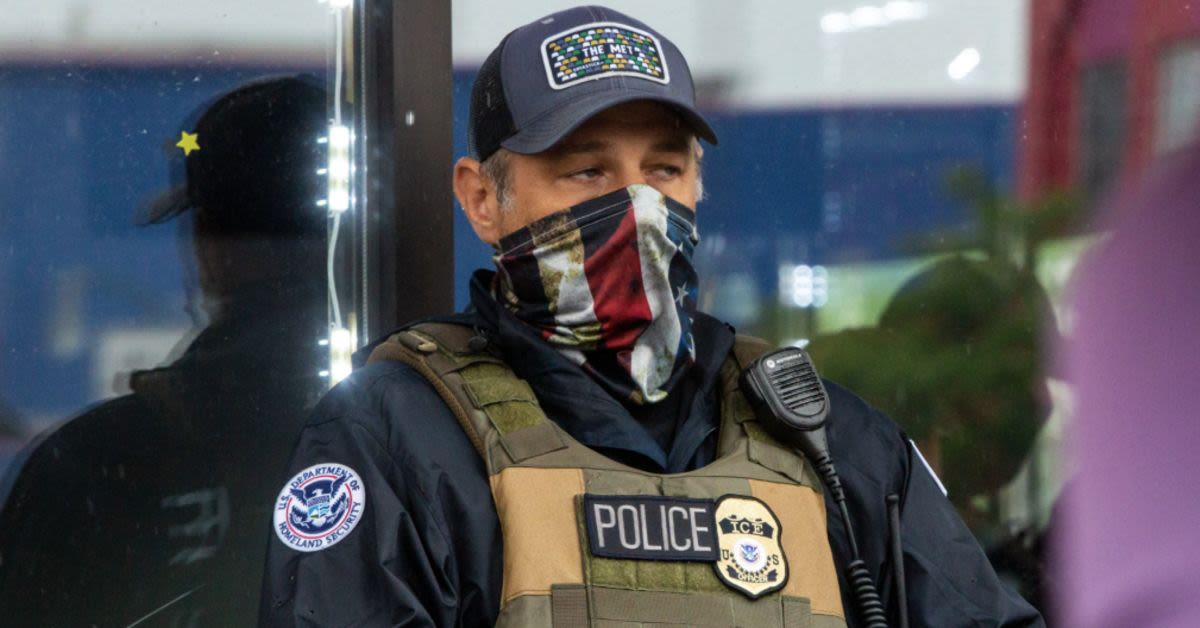
Immigration enforcement in Minnesota has become more hazardous and needlessly complex because key local jails refuse to cooperate with federal authorities by honoring Immigration and Customs Enforcement (ICE) detainers.
According to RedState, this breakdown in cooperation means ICE agents are forced off the secure grounds of county facilities and into neighborhoods to locate and arrest criminal aliens who could have been safely transferred from jail custody. Instead of a straightforward handoff behind bars, agents must now conduct operations in public spaces, increasing the risk of confrontation with organized anti-ICE activists and heightening danger for officers, bystanders, and even the suspects themselves.
That reality has driven the need for additional federal personnel on the ground, not to escalate enforcement, but to secure areas and manage the hostility that progressive politicians have helped inflame.
Democratic leaders in Minnesota, including Governor Tim Walz and Minneapolis Mayor Jacob Frey, have spent years stoking suspicion and anger toward ICE, turning routine law enforcement into a political flashpoint. Their rhetoric has encouraged local resistance to federal immigration law, even when that resistance directly undermines public safety and shields criminal offenders from timely removal.
The contradictions in this posture were laid bare when Frey appeared on CNNs The Arena with Kasie Hunt, where he was confronted with his own sides record under a Democratic administration. Hunt reminded him that During the Obama years, the Hennepin County Jail actually had a policy where they let an ICE agent keep an office there and allowed them to talk to immigrants. "Do you think it's good policy for the jails to follow an ICE detainer and hand someone over if they've committed pic.twitter.com/bkxezC3pLb.
Hunt elaborated on that point, noting, The Hennepin County Jail actually had a policy where they let an ICE agent keep an office there and allowed them to talk to immigrants, underscoring that such cooperation was once uncontroversial for Democrats. She further observed that the policy has clearly been under a Democratic president what now the Trump administration is asking for, highlighting the partisan double standard at work.
In other words, what was acceptable and even routine under Barack Obama suddenly became intolerable once Donald Trump took office, despite the underlying missionremoving criminal aliens from American communitiesremaining the same. The resulting friction and public disorder in Minnesota are not the product of federal overreach, but of state and local officials choosing to obstruct policies they once embraced.
Hunt pressed Frey directly, asking whether he believed it was good policy for the jails to follow an ICE detainer and hand someone over if they've committed a crime. That question goes to the heart of the matter: whether local leaders will prioritize public safety and the rule of law, or continue to indulge activist demands that criminal offenders be shielded from federal authorities.
Frey, clearly caught off guard, tried to sidestep the issue rather than defend his record. And while I don't have full expertise in how the operations at the jail are conducted, again, that's not our jurisdiction. What I would say there are mechanisms for doing this lawfully, he replied, attempting to distance himself from a problem his own rhetoric helped create.
That evasiveness does little to change the reality that Frey and his allies have fueled anti-ICE agitation, making it harder for agents to do their jobs safely and efficiently. When even CNN is challenging Democratic officials over their refusal to cooperate with federal immigration enforcement, it is a sign that the political ground is shifting beneath them.
Under mounting pressure from the Trump administration, there are signs that common sense is beginning to reassert itself in Minnesota. Border Czar Tom Homan announced that ICE would be able to scale back some of the extra agents deployed to the state because local authorities were now offering unprecedented cooperation.
More officers taking custody of criminal aliens directly from the jails, means less officers on the street doing criminal operations, Homan said. This is smart law enforcement, not less law enforcement. His remarks echo precisely the point Hunt raised: what worked under Obamaquiet, coordinated transfers from jailsis exactly what the Trump administration sought, and what many other states already do without incident.
That renewed cooperation appears to be accompanied by more assertive action from local police in dealing with anti-ICE demonstrators who attempt to disrupt public order. Officers have reportedly moved to dismantle stunts such as the makeshift checkpoint protesters erected to block an intersection in Minneapolis, signaling a willingness to enforce the law even when activists object.
If Minnesota officials maintain this coursehonoring detainers, backing law enforcement, and refusing to let radical activists dictate policythe state could see a far more orderly and secure environment around immigration operations. The contrast between partisan grandstanding and practical cooperation is now unmistakable, and the question for Minnesotas leaders is whether they will continue to indulge ideological theatrics or finally stand with the officers tasked with keeping their communities safe.
Login