
Republicans received a stark warning this week from a New Jersey special election that suggests the Democratic Partys activist base is sprinting leftward even in once-reliably moderate suburbs.
According to Western Journal, the contest to replace now-Gov. Mikie Sherrill in New Jerseys 11th Congressional District long a GOP stronghold before recent demographic shifts has turned into a case study in progressive overreach and Democratic radicalization. Sherrill, often branded a moderate Democrat, was the first of her party to capture this historically Republican seat, but the race to succeed her now appears likely to pit a hard-left activist against a small-town Republican mayor in a district once defined by centrist sensibilities.
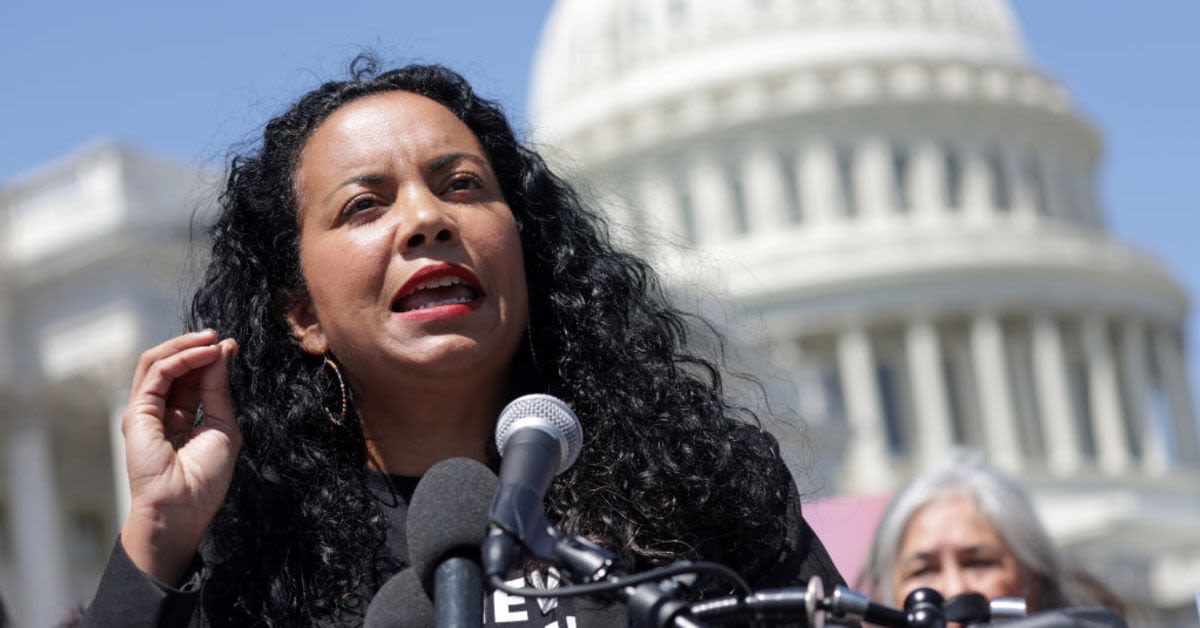
With 91 percent of the vote counted as of 3 a.m. Eastern on Friday, Analilia Mejia, a veteran of socialist Sen. Bernie Sanders second presidential campaign in New Jersey, held a narrow edge over former U.S. Rep. Tom Malinowski, according to The New York Times. Mejia, who boasts endorsements from New York Rep. Alexandria Ocasio-Cortez and Sanders himself, had 28.75 percent of the vote, or 17,647 ballots, compared with Malinowskis 27.96 percent, or 17,161 votes.
Although some mail-in ballots remain outstanding, several analysts suggested the trajectory of the race was already clear. Mejias surge, they argued, reflects either a consolidation of anti-Immigration and Customs Enforcement sentiment in swing districts or a broader embrace of anti-Israel and far-left ideology in areas that were once competitive neither of which bodes well for moderation within the Democratic Party.
Malinowski, for his part, is hardly a centrist by historical standards, but his record at least places him within the realm of traditional Democratic liberalism. That kind of normal Democrat nonsense, as critics might put it, has generally been palatable in a suburban district that has drifted leftward but has not, until now, resembled a stronghold of the Democratic Socialists of America.
Decision Desk HQ, a respected election-calling outfit, initially projected Malinowski as the winner based on early returns from Essex and Morris counties, which were expected to be strongholds for Mejia and Malinowski, respectively. A small portion of the district lies in Passaic County, which leaned toward Tahesha Way, New Jerseys former lieutenant governor and secretary of state, but only modestly; she remained in third place with 17.43 percent of the vote and was never a serious contender.
Within two hours, however, Decision Desk HQ reversed itself as the numbers shifted dramatically. As the night progressed, margins in Morris County quickly tilted toward Mejia; Mejia began winning drops by 20%-30%, representing a swing of 65 points compared to the absentee vote, the outlet explained in a post on X.
This trend reversal prompted us to re-examine our race projection and ultimately retract it. As of 9 a.m. Eastern on Friday, NJ.com still rated the contest too close to call, underscoring just how volatile the Democratic primary electorate has become in this once-stable district.
The underlying dynamics, though, are already setting off alarms on the right and should be causing some sleepless nights among old-line Democrats as well. Mejias strength among Election Day voters appears to reflect either a remarkable strategic blunder by Democratic-aligned groups or a deeper ideological transformation among the suburban wine mom demographic that has become central to the partys coalition.
The race drew national attention late last month when the United Democracy Project, a super PAC aligned with the American Israel Public Affairs Committee, began airing ads attacking Malinowski. Ostensibly, the groups concern was Malinowskis less-than-robust support for Israel, but the content of the ads focused elsewhere, according to Politico.
Instead of centering on foreign policy, the spots went after Malinowski on immigration enforcement and related issues. In 2019, Tom Malinowski voted with Trump and the Republicans to fund ICE more than $200 million for Trumps deportation force, one ad declared, a line that effectively criminalized basic border enforcement in the eyes of the Democratic left.
If the PACs objective was to elevate a more reliably pro-Israel Democrat such as Way or another establishment favorite, Brendan Gill, the strategy appears to have backfired badly. As The New York Times observed, the group is presumably no fan of Ms. Mejias, given her record and rhetoric on Israel and foreign policy.
The Times reported that Mejia stood alone on stage at a recent candidate forum when asked about a controversial United Nations report. At a forum last month, she was the only candidate to raise her hand when asked if she agreed with a United Nations report that said Israel had committed genocide against Palestinians in Gaza. If elected, Ms. Mejia would be likely to join Ms. Ocasio-Cortez and Representative Ayanna Pressley, who also campaigned with Ms. Mejia in New Jersey, in a left-leaning wing of the House known as the squad.
That possibility should concern not only pro-Israel voters but anyone wary of the hard-lefts growing influence in Congress. Yet there is an even more troubling interpretation of the results: that the AIPAC-aligned advertising barely moved the needle and that the districts Democratic base was predisposed to embrace a squad-style candidate regardless.
Longtime residents of New Jerseys 11th District describe the Democratic primary electorate there particularly in Morris County as dominated by affluent, socially liberal suburban women, the so-called wine mommies. These are not blue-collar progressives or urban activists but upper-middle-class professionals who have drifted left on cultural issues while retaining a veneer of moderation.
The cultural profile has evolved slightly over time, with some joking that many of these voters are now wine dog mommies rather than traditional parents. Yet the lifestyle markers remain the same: a comfortable suburban existence, a deep attachment to identity politics, and a tendency to treat progressive causes as a form of social signaling, even if it means flirting with radicalism.
From a conservative vantage point, the implications are stark. Either Democrats have moved so far left on immigration enforcement that a candidate hostile to ICE can plausibly win a primary in a moderate district, or they have shifted so far left across the board that a would-be squad member is now a viable standard-bearer in the suburbs.
In both scenarios, the outcome is identical: a Democratic Party increasingly defined by its most extreme voices rather than by pragmatic centrists. Neither scenario offers much comfort heading into the midterms or the 2028 presidential cycle, and if this episode does not galvanize conservatives, it is difficult to imagine what will.
There is, however, a potential silver lining for Republicans. The GOP nominee, Randolph Mayor Joe Hathaway, who faced no primary opposition, may now find himself with a genuine opening in a district that Democrats have taken for granted since Sherrills initial victory.
Hathaway has until April 16, the date of the special election to replace Sherrill, to introduce himself to voters and draw a sharp contrast between his local, grounded leadership and the ideological zeal of a candidate aligned with Ocasio-Cortez and Sanders. If suburban voters in New Jerseys 11th are finally forced to confront what their party has become, this special election could mark not just a local upset, but an early indicator of a broader backlash against progressive excess.
Login