
In an era of deep political polarization and institutional distrust, one principle remains stubbornly indispensable to self-government: accountability.
The idea is hardly complicated; if elected officials were consistently held responsible for their decisions and excesses, public confidence in Americas two-party system could begin to recover. As reported by Western Journal, that kind of trust is the necessary foundation for repairing a fractured nation, yet it is precisely what is missing from so much of modern governance and nowhere is that more apparent than in the latest controversy surrounding Baltimores Democratic mayor, Brandon Scott.
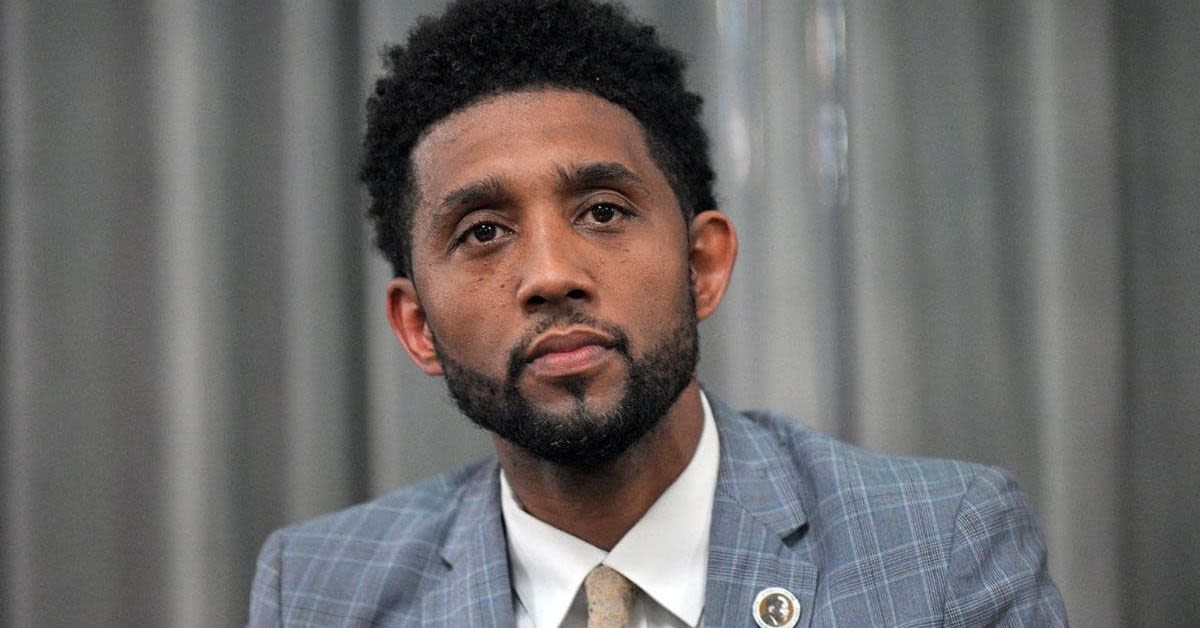
Scott, 41, is facing intense scrutiny after revelations that he is driving what appears to be one of the most extravagant taxpayer-funded vehicles in Maryland government. Records obtained by local Fox affiliate WBFF-TV show that the mayor is assigned a 2025 Jeep Grand Wagoneer, a luxury SUV more commonly associated with corporate executives than municipal leaders.
The price tag is staggering. The vehicle comes in at $163,495, which WBFF described as the priciest government-issued vehicle assigned to any current mayor, governor, county executive, or county commissioner/county council in the state.
The gap between Scotts ride and those of his peers is not marginal. Compared with other government vehicles, this SUV cost taxpayers nearly twice as much as the next-most-expensive executive option and more than three times the price of cars used by other county leaders.
Even before the mayor opened his mouth, the situation raised obvious questions about fiscal restraint, judgment, and respect for taxpayers in a city struggling with crime, poverty, and failing infrastructure. But Scott managed to make matters worse by attempting to shift blame away from himself and onto what he derisively cast as the man.
His response to legitimate inquiry quickly turned into a case study in how not to handle public accountability. Scott had previously challenged WBFF reporters to investigate the cost of other government employee vehicles a challenge the station accepted, compiling comparative data on executive transportation across the state.
So, we looked at that, and we did those numbers, and we still found that no one reaches [even] $100,000 for a vehicle, with the exception of [Police Commissioner Richard Worley], a WBFF reporter said at a recent news conference. Worley, the station noted, is assigned a $108,242 SUV, a figure that includes about $28,393 in security upgrades.
Before the reporter could even finish her question, Scott cut her off. Well just stop you right there, he interjected. We get it. We understand that your station has this, uh, severe right-wing effort underway.
The mayors dismissive tone did not end there. We get that. But you also, uh,you guys are dragging this thing out and also not including all the facts, Scott continued. Uh, a vehicle that was purchased in 2023 is not the same price as 2025. Right? You have to understand that reality when you look at these inflation calendars.
Even granting his inflation argument, the numbers still do not work in his favor. By rough calculation, a $163,459 SUV in 2025 would equate to roughly $155,000 in 2023 dollars still far beyond what other Baltimore-area officials are driving and nowhere near the sub-$100,000 range cited by WBFF.
The problem is not merely arithmetic; it is attitude. Rather than acknowledge that the optics of a $163,000 luxury SUV are terrible for a mayor of a struggling city, Scott chose to attack the motives of the journalists asking the questions and to imply that the issue was being manufactured by ideological opponents.
After several rounds of deflection and whataboutism, the reporter pressed the core issue that any accountable public servant should be prepared to address. How do you justify the cost of this to the taxpayers of Baltimore, the people who live here? she asked, cutting through the spin.
Scotts response was to escalate the rhetoric instead of clarifying the facts. Just because you didnt get the answer you wanted and your racist slant is one thing, he said, before continuing to stonewall and refusing to accept any responsibility for the cost or symbolism of his vehicle.
What makes this episode so telling is not solely the six-figure sticker price of the SUV, but the reflexive, almost casual way the mayor tried to dodge responsibility. Faced with a straightforward question about public spending, he reached for the most overused crutch in contemporary politics: accuse the questioner of bias, impugn their motives, and, if possible, brand them racist so the substance of the inquiry can be ignored.
That is the antithesis of serious leadership. Asking an elected official why he is riding in the most expensive government-issued vehicle in the state is not an attack, and it is certainly not racist; it is the bare minimum of democratic oversight in a system where the people are supposed to be in charge.
Reducing every uncomfortable question to race is not only shallow, it is corrosive. It trivializes genuine instances of racism by weaponizing the accusation for political convenience, and it sends a dangerous message that public scrutiny is illegitimate whenever it becomes inconvenient for those in power.
From a conservative perspective, the episode underscores a broader pattern in progressive governance: lavish spending justified by vague appeals to necessity, paired with moral posturing when anyone dares to ask where the money is going. Taxpayers in cities like Baltimore are expected to accept crumbling schools, unsafe streets, and high taxes, even as their leaders cruise around in vehicles that cost more than many homes in their communities.
Baltimore does not need theatrics, deflection, or identity-based smears; it needs a mayor who can look residents in the eye and explain why any given expenditure serves the public good, not personal comfort or political ego. If accountability is indeed the price of public office, Brandon Scotts handling of this controversy shows just how many politicians would rather send taxpayers the bill than pay that price themselves.
Login