
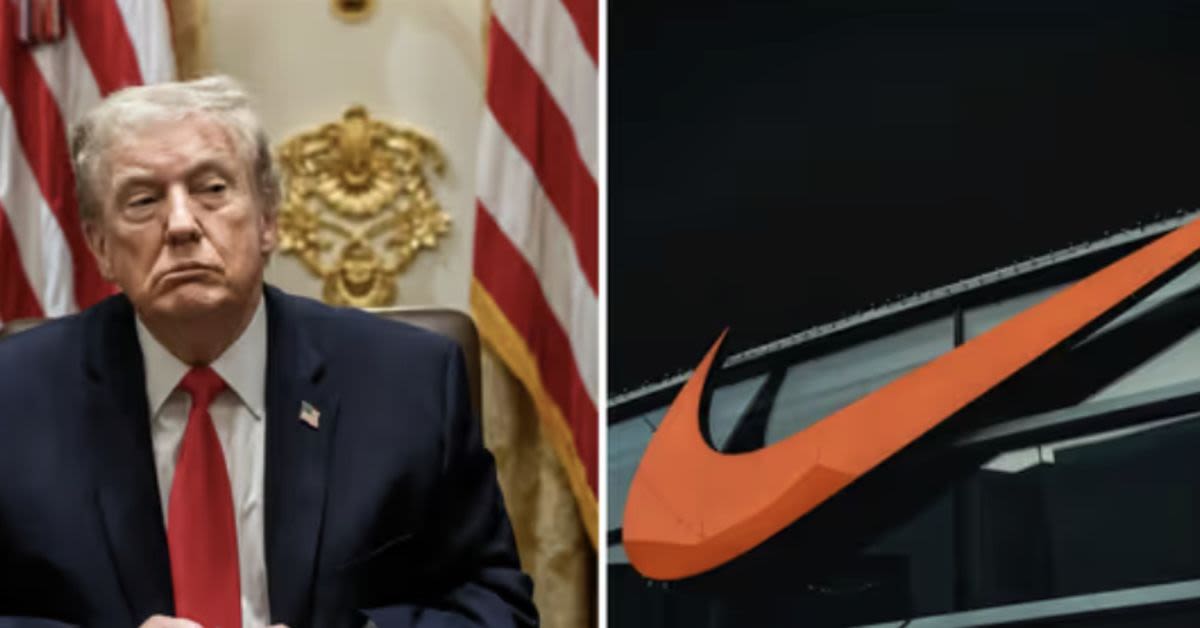
The Trump administration is moving to confront Nike over allegations that the sportswear giants much-touted Diversity, Equity and Inclusion agenda has crossed the line into unlawful discrimination against white employees.
According to Western Journal, the U.S. Equal Employment Opportunity Commission announced Wednesday that it has issued a subpoena demanding that Nike turn over extensive records tied to systemic race discrimination allegations affecting white workers. The federal agency is now formally investigating whether Nikes DEI initiatives have morphed from fashionable corporate branding into a vehicle for intentional race-based bias in the workplace.
At the heart of the inquiry is a stark charge: that Nikes internal policies and programs may have been used to disadvantage white employees and applicants in the name of equity. The EEOC is investigating Nike over DEI-related intentional race discrimination, a move that directly challenges the prevailing assumption in many corporate boardrooms that discrimination is acceptable so long as it is framed as anti-racist or inclusive.
Court filings outline the scope of the concern in unusually blunt terms, alleging that Nike may have engaged in a pattern or practice of disparate treatment against white employees, applicants and training program participants in hiring, promotion, demotion, or separation decisions, including selection for layoffs; internship programs; and mentoring, leadership development and other career development programs.
In other words, the very mechanisms that shape careers and livelihoods inside the company from who gets in the door to who climbs the ladder may have been tilted on the basis of race, with white workers pushed to the back of the line.
The subpoena seeks to uncover whether those allegations are borne out by the facts, and it does so by reaching back years into Nikes internal decision-making. The EEOCs probe and the subpoena that came with it was aimed at digging into those allegations, with some of the document requests reaching back as far as 2018.
Investigators have demanded detailed information on how layoff decisions were made, including whether race was an explicit or implicit factor when jobs were cut. They also requested records on how Nike collected and used employees race and ethnicity data, including whether that data influenced executive compensation, and they targeted 16 specific programs alleged to have restricted mentoring, leadership, or career development opportunities based on race.
When Nike did not fully comply with the subpoena, the agency chose not to simply accept partial answers or corporate spin. Instead, the EEOC escalated the matter, signaling that it is prepared to test the legality of fashionable DEI practices rather than rubber-stamp them.
The agency has now gone to federal court, filing an enforcement action to compel Nike to produce the missing information and allow the investigation to proceed without obstruction. That step transforms what might have been a quiet administrative inquiry into a high-profile legal confrontation over whether equity can be used as a pretext for open discrimination against disfavored groups.
EEOC Chair Andrea Lucas made clear in a public statement that the agency sees this as more than a routine paperwork dispute. When there are compelling indications, including corporate admissions in extensive public materials, that an employers Diversity, Equity, and Inclusion-related programs may violate federal prohibitions against race discrimination or other forms of unlawful discrimination, the EEOC will take all necessary stepsincluding subpoena enforcement actionsto ensure the opportunity to fully and comprehensively investigate, EEOC Chair Andrea Lucas said via statement.
Lucas also underscored a principle that used to be uncontroversial before the rise of identity politics in corporate America. She further noted: Title VIIs prohibition of race-based employment discrimination is colorblind and requires the EEOC to protect employees of all races from unlawful employment practices. Thanks to President Trumps commitment to enforcing our nations civil rights laws, the EEOC has renewed its focus on evenhanded enforcement of Title VII.
This clash with Nike highlights why so many Americans have grown deeply skeptical of the way DEI is marketed versus how it operates in practice. Corporations wrap these initiatives in polished language about inclusion and justice, but when policies begin sorting people by race for hiring, promotions, pay, or access to advancement, they cross a clear moral and legal boundary that civil rights law was designed to prevent.
For decades, the country struggled to establish a legal framework that treats individuals as individuals, not as representatives of a racial bloc. Reversing that achievement and reintroducing race as a central factor in employment decisions does not become virtuous simply because it is cloaked in progressive rhetoric or endorsed by elite institutions.
Inside any workplace, the consequences of race-conscious favoritism are corrosive and predictable. When employees suspect that skin color influences who is hired, who is promoted, or who is laid off, trust erodes, merit is questioned, and resentment takes root, turning colleagues into rival claimants in a permanent identity contest.
That dynamic bears little resemblance to genuine equity, even under the most generous interpretation of the term. It is better described as institutionalized division, undermining the very notion of fairness that civil rights protections were meant to secure for every American, regardless of background.
The ideological premise behind many DEI schemes only deepens the damage, because it treats discrimination not as a moral wrong but as a tool to be redirected. Under this logic, past injustices are to be balanced by new preferences, as if the solution to one form of racism is to engineer another with a different target.
That is not moral progress; it is the same poisonous idea repackaged, with a new group cast as acceptable collateral damage. If racism is wrong when it harms black employees, it is equally wrong when it harms white employees or any other group and a truly colorblind system does not need a maze of race-segmented programs to justify itself.
The stakes of the Nike case therefore extend far beyond a single corporations HR policies or public image. This is a test of whether civil rights law will remain a shield for all citizens or be selectively enforced based on which groups are currently favored by the cultural and political left.
The law is supposed to be evenhanded, and civil rights are supposed to belong to everyone, not just to those whom progressive activists deem worthy of protection at a given moment. If the Trump administration is serious about that standard, then challenging race-based corporate policies is not only appropriate but necessary because racism is still racism, no matter who it targets or how carefully it is branded as equity.
Login