
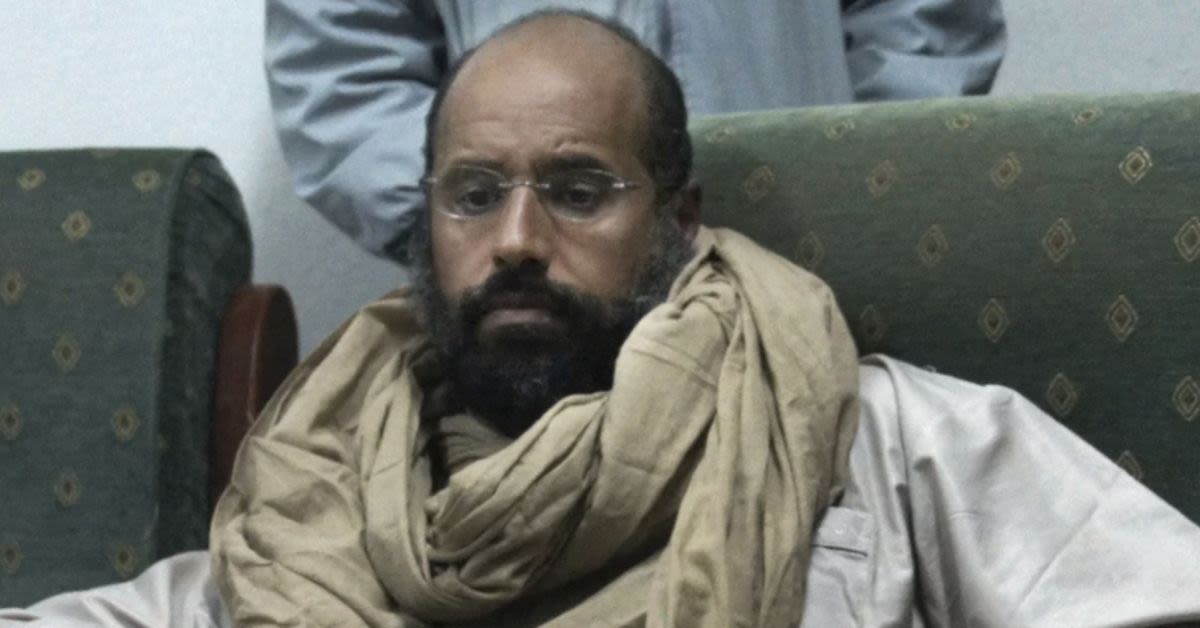
Seif al-Islam al-Qaddafi, the 53-year-old son of the late Libyan strongman Muammar al-Qaddafi and once seen as a possible stabilizing figure in the war-torn country, has reportedly been assassinated by four masked men, according to his team.
According to Fox News, the killing took place in the town of Zintan, southwest of Tripoli, with Libyas chief prosecutors office stating that Seif al-Islam was shot to death but withholding further details. The Associated Press reported that his lawyer, Khaled al-Zaidi, confirmed the death in a Facebook post, underscoring the gravity of the attack amid Libyas ongoing political chaos.
The masked men allegedly stormed Seif al-Islams residence and carried out what his team denounced as a cowardly and treacherous assassination, the AP reported, citing their statement. The same statement claimed the assailants disabled security systems, asserting that they closed the CCTV cameras at the house in a desperate attempt to conceal traces of their heinous crimes, according to the AP.
Born in 1972, Seif al-Islam was the second son of Muammar al-Qaddafi and was educated in the West, earning a Ph.D. from the London School of Economics. His Western education and diplomatic outreach once made him a key interlocutor between Libya and foreign governments, including those that later backed the NATO intervention.
Seif al-Islam, long regarded as Libyas face to the West, was often described as the most influential man in the country despite never holding a formal state position. Reuters noted that he led negotiations for Libyas abandonment of weapons of mass destruction and helped secure compensation for families of those killed in the 1988 bombing of Pan Am Flight 103.
Muammar al-Qaddafi, who had ruled Libya since 1969, was overthrown and killed in a NATO-backed uprising in 2011, a campaign widely praised by Western liberals but followed by years of bloodshed and fragmentation. The AP observed that the revolt plunged Libya into civil war, leaving the nation carved up among rival militias and armed factions, a stark reminder of the dangers of regime-change adventurism.
Later in 2011, Seif al-Islam was captured while attempting to flee to Niger and remained in custody until June 2017, when one of Libyas competing governments granted him amnesty, according to the AP. In November 2021, he announced a presidential bid aimed at restoring order, but Libyas High National Elections Committee ultimately disqualified him, the AP reported, closing off a path that some conservatives saw as a potential check on Islamist militias and foreign interference.
Login