
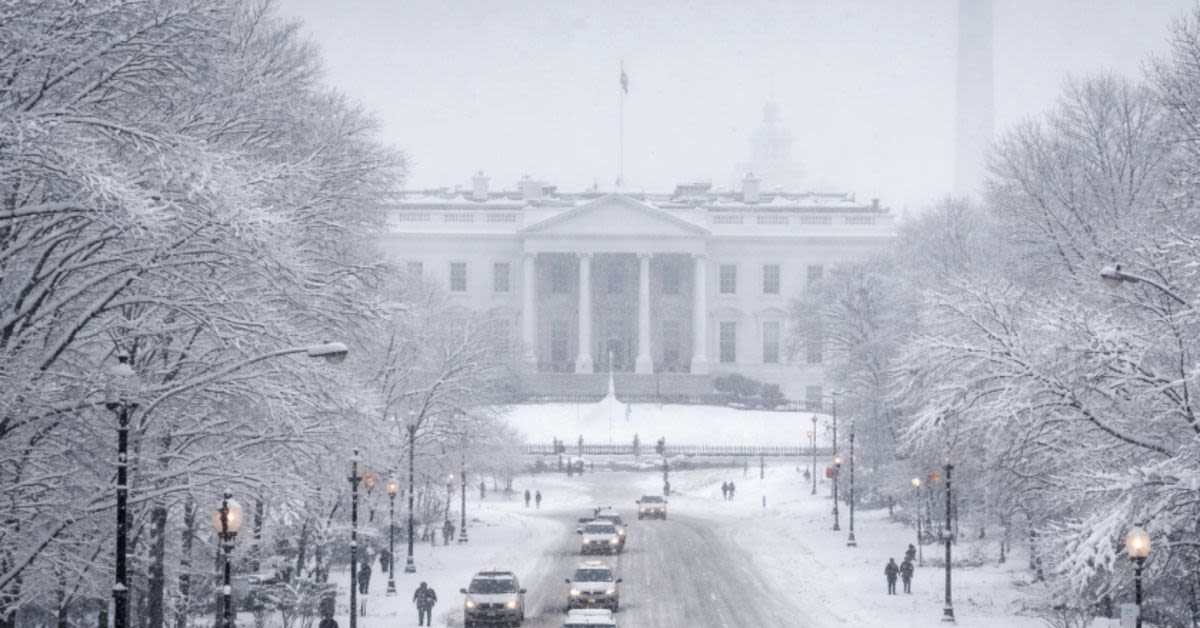
For years, legacy news organizations assured Americans that climate change would usher in "mild-ish" winters in Washington, D.C., with a climate "more like the South" than the Mid-Atlanticright up until the nations capital was gripped by its longest cold spell in more than 30 years.
According to The Washington Free Beacon, the districts temperatures stayed below freezing for nine straight days ending Feb. 2, 2026, the longest such stretch since December 1989, as even the Washington Post acknowledged. That reality sits awkwardly beside the Posts own coverage from just a few years earlier, when, in February and December 2020, it confidently told readers that "global warming" and "human-caused climate change" were transforming D.C.s winters into something "more Southern."
Back then, the Posts "climate reporter" Ian Livingston and "climate editor" Andrew Freedman framed the shift as settled science and an inevitable trend. "Thanks mostly to a combination of human-caused climate change and urbanization, winters in Washington are warming hastily and taking on an entirely new character," they wrote in a December 2020 article titled, "Washington winters are rapidly warming up and feeling more Southern."
The pair went further, insisting that the regions seasonal trajectory was essentially one-way. "Our winter climate is on a southbound journey, with nothing in the way. The frequency of bitterly cold winter days is in decline," they declared, leaving little room for the kind of deep freeze that has now materialized.
Months before that piece, another member of the Posts expansive climate team, Jason Samenow, had reached a similar conclusion. In a story headlined, "Global warming is making Washington's climate more Southern. This winter, it most resembles Atlanta's," he argued that the capitals weather was already shifting toward a warmer, Deep South profile.
"Since the winter solstice on Dec. 21, Washingtons weather has taken an excursion toward a far more southern clime," Samenow wrote, attributing the pattern to man-made warming. "Because of human-induced climate warming, winters like thischaracterized by a lack of extreme cold and spotty snowfallmay become the norm this century."
Six years on, the actual conditions in the district look very different from the "norm" these climate narratives predicted. High temperatures stayed in the 20s or lower for five straight days in late January, with overnight lows hovering near the single digits and wind chills plunging below zero.
The cold was so persistent that, had the mercury not briefly climbed into the mid-30s on Feb. 2, the below-freezing streak would have reached 10 days, a threshold not seen in Washington since 1936. Instead of a gentle slide into balmy Southern winters, residents found themselves shoveling snow and bracing against Arctic air.
The Posts climate operationonce boasting more than 30 staffers and now folded into a broader "futures" departmenthas been among the most aggressive in pushing sweeping climate claims. Yet it is hardly alone among liberal outlets in forecasting a parade of warm winters for the capital and treating those forecasts as proof of a broader climate crisis.
In November, Axios, which maintains a sizable "Energy and Climate" vertical, confidently projected a "mild-ish" winter with below-average snowfall for Washington. In a telling example of Washingtons media echo chamber, Axios based its outlook on the Posts reporting, which itself leaned on experts who said D.C. residents should not expect "loads of white stuff this winter."
Reality again refused to cooperate with the narrative, as the record cold spell brought nearly 10 inches of snow to the district and surrounding suburbs. Rather than prompting a reassessment of their earlier certainty, many outlets simply pivoted to a new storyline that still pointed to the same culprit.
Several organizations rushed to explain away the frigid blast and heavy snow as yet another manifestation of climate change. The logic was familiar: whether winters are warmer and snowless or colder and snowier, the explanation is always the same, and the policy prescriptionmore government intervention and regulationnever changes.
Inside Climate News, a progressive outlet focused on environmental issues, insisted that the winter storm was "fueled by global warming." Climate Central, a left-leaning research group frequently cited by mainstream media and known for attributing extreme weather to climate change, told its audience that "despite the size and severity of a recent U.S. winter storm, long-term trends show that the planet is overheating, winter is warming quickly, and the coldest days of the year are losing their chill."
If Washingtons winter had truly mirrored Atlantas, as the Post once suggested it would, the cold snap would have been far less severe. In Georgias capital, temperatures dipped below freezing only briefly between Jan. 31 and Feb. 1 before rebounding to 50 degrees by Monday, underscoring how far D.C.s actual experience diverged from the "more Southern" narrative.
The pattern of alarmist climate rhetoric is not confined to the nations capital. National outlets have been sounding the same apocalyptic notes for years, often with little regard for subsequent weather that contradicts their dire predictions.
The New York Times, for instance, has twice run pieces a decade apart under the same headline: "The End of Snow." The 2014 version, "The End of Snow?" by Powder magazine editor Porter Fox, at least posed the claim as a question, while the 2024 iteration by Gawker cofounder Elizabeth Spiers dropped the question mark altogether and flatly proclaimed "The End of Snow."
Spiers, who is not a meteorologist, framed her argument in personal, anxious terms. She wrote that "a few years ago, when it was in the high 60s in Brooklyn for a few days in January, I wondered if I should increase my anti-anxiety meds," using a brief warm spell as a springboard for sweeping conclusions about the climate.
Yet this past Januarys final weekend saw Brooklyns temperatures plunge into the low teens, a stark reminder that winter has not vanished from the Northeast. Even far to the south, in "subtropical" New Orleans during the height of Mardi Gras, thermometers dropped into the low 20s, with wind chills making it feel closer to single digits.
For Americans watching these swings, the disconnect between confident media predictions and lived reality raises obvious questions about the reliabilityand the ideological underpinningsof climate coverage. When every weather outcome is retroactively folded into the same narrative of impending catastrophe, skepticism is not denialism; it is a rational response to a media class that appears more committed to advancing a political agenda than to acknowledging the full complexity and unpredictability of the climate.
Login