
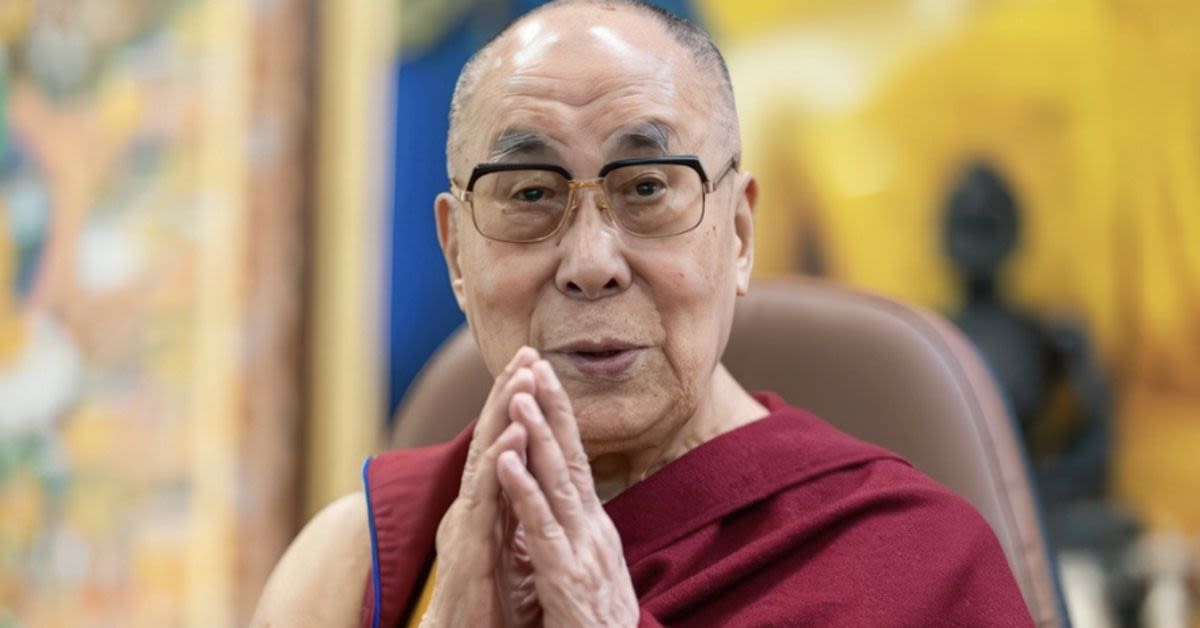
The Dalai Lamas latest honor from the American music industry has ignited a familiar clash between the Wests cultural institutions and the authoritarian sensitivities of Communist China.
The spiritual leader of Tibetan Buddhism received a Grammy Award on Sunday for narrating an audiobook of his reflections, a moment that many Tibetans viewed as a rare global acknowledgment of their embattled faith and culture. According to Breitbart, Beijing reacted with characteristic fury, using its Foreign Ministry podium to warn the Recording Academy against what it denounced as anti-China activities, underscoring how even a religious figures contemplative work can trigger the insecurities of a one-party regime.
Tibet has endured more than six decades of Chinese Communist occupation, during which the Party has repeatedly triedand failedto erase both the Tibetan people and their religious heritage. While Beijing has attempted to bury Tibets identity under the colonialist Mandarin label Xizang, it recently marked the 60th anniversary of its conquest with a lavish parade featuring a rare appearance by strongman Xi Jinping, whose rule has been defined by aggressive nationalism and systematic repression of ethnic and religious minorities.
Central to that repression has been the forced exile of the Dalai Lama, who fled Tibet in 1959 and has since lived in India, where he continues to publish spiritual works and comment on global affairs. The Chinese government brands him a separatist and has spent decades pressuring foreign governments, corporations, and international organizations to shun him, a campaign that has too often succeeded in cowing Western elites who claim to champion human rights.
On Sunday, the 88-year-old monk received his first Grammy for the audiobook Meditations: The Reflections Of His Holiness The Dalai Lama, a work centered on spiritual insight rather than politics. Responding to the honor, he issued a statement that reflected his characteristic modesty and universalist message, declaring, I receive this recognition with gratitude and humility. I dont see it as something personal, but as a recognition of our shared universal responsibility.
The Dalai Lama used the moment to reiterate themes that stand in stark contrast to the Chinese Communist Partys materialist ideology and ruthless power politics. I truly believe that peace, compassion, care for our environment, and an understanding of the oneness of humanity are essential for the collective well-being of all eight billion human beings, he said, adding, Im grateful that this Grammy recognition can help spread these messages more widely.
Beijing, however, moved quickly to politicize the award, signaling that any global platform for the Dalai Lama would be treated as a challenge to Party authority. At a regular press briefing on Monday, Foreign Ministry spokesman Lin Jian dismissed the monks spiritual stature and international respect, insisting, The Dalai Lama is not purely a religious person, and asserting, He is a political exile committed to anti-Chinese separatist activity under the disguise of religion.
Lin went further, issuing a thinly veiled warning to the Recording Academy and any other institution that might honor the Tibetan leader. The Communist Party, he said, firmly opposes relevant sides using the award as a tool to carry out anti-China activities, language that reflects Beijings long-standing effort to export its censorship and political red lines far beyond its borders.
In a telling move, Chinese authorities omitted Lins remarks about the Dalai Lama from the English-language transcript of the briefing, a familiar tactic in Beijings information management. The discrepancy highlights how the regime often tailors its messagingmore strident and ideological at home, more sanitized abroadwhile still expecting foreign entities to conform to its demands.
Outside Chinas orbit, the reaction was markedly different, especially among Tibetan exiles who have long watched the West waffle between moral rhetoric and economic appeasement of Beijing. The Hindustan Times reported a celebratory mood in McLeodganj, the seat of the Tibetan government-in-exile in India, where officials and activists hailed the Grammy as a symbolic rebuke to Chinas campaign to erase Tibetan Buddhism.
A senior exiled Tibetan official told the paper that the award sent a powerful signal to the Chinese leadership that its efforts to suppress Tibetan identity have not succeeded, and that the world still recognizes the spiritual authority of the Dalai Lama. Tibetan activist Tenzin Tsundue captured the sentiment more poetically, saying, This Grammy recognises not just the tone and tenor of the Dalai Lama, but pays tribute to the content of a voice that has become a universal inspiration for love, and adding, For the first time, the Grammys have awarded a voice that looks inward to work outward for the wellbeing of humanity.
The Dalai Lamas continued prominence is especially striking given the ferocity of Beijings campaign against Tibetan religion and culture under Xi Jinping, who is also responsible for what multiple governments and human rights organizations have labeled genocide in neighboring East Turkistan. In Tibet, the Party has rolled out a network of coercive boarding schools that remove thousands of children from their families, immerse them in Mandarin-language instruction, and indoctrinate them in communist atheism, deliberately severing their ties to their faith and heritage.
International bodies have begun to document the scale of this repression, even as many Western governments remain hesitant to confront Beijing in meaningful ways. The United Nations International Labor Organization reported last year that China has implemented widespread and state-sponsored forced labour practices in both the Xinjiang Uyghur Autonomous Region (Xinjiang) and the Tibet Autonomous Region (Tibet), noting that mass land seizures from traditional Tibetan farmers have been followed by their transfer into industrial labor schemes that amount to modern slavery.
Beyond forced labor and cultural destruction, the Communist Party has moved to seize control of the very core of Tibetan Buddhisms spiritual continuity: the recognition of reincarnated lamas, or living Buddhas, including the Dalai Lama and the Panchen Lama. While Tibetan Buddhists believe these figures reincarnate in children after death, Beijing has decreed that no such reincarnation is legitimate without state approval, effectively claiming veto power over a religious process that predates the Party by centuries.
Li Deching, deputy director of the state-run China Tibetology Research Center, made the Partys position explicit following the Dalai Lamas 90th birthday in July. The formation of the Living Buddha reincarnation system is inextricably linked to the support of the central government, he proclaimed, adding, As such, a key aspect of the system is that the final authority for approving a reincarnated successor rests with the government.
The regimes most brazen intervention came in 1995, when Chinese authorities abducted six-year-old Gedhun Choeyi Nyima, whom the Dalai Lama had recognized as the 11th Panchen Lama, the second-highest figure in Tibetan Buddhism. The boy has never been seen again, with Beijing occasionally issuing unconvincing claims that he is living a quiet, private life, while the Party installed its own handpicked Panchen Lama, a figure widely rejected by Tibetan Buddhists as a political impostor.
For conservatives who value religious liberty, national sovereignty, and resistance to totalitarian overreach, the Dalai Lamas Grammy is more than a cultural footnote; it is a reminder that soft power can still challenge hard tyranny. As Beijing seeks to dictate who may be honored, what faiths may flourish, and even who may reincarnate, the willingness of Western institutions to stand firmor to capitulatewill reveal whether the free world still believes in the principles it so often preaches.
Login