
Texas has moved to the front lines of a new biological threat as state leaders scramble to block a dangerous livestock parasite steadily advancing from Mexico toward the southern border.
According to Western Journal, Republican Gov. Greg Abbott on Thursday signed a statewide disaster declaration, activating the Texas New World Screwworm (NWS) Response Team and unlocking emergency powers to confront the looming infestation before it crosses into the United States.
Although the New World screwworm fly is not yet present in Texas or the U.S., its northward spread from Mexico toward the U.S. southern border poses a serious threat to Texas livestock industry and wildlife, Abbott said in a news release, underscoring the economic and ecological stakes for a state that anchors Americas cattle industry.
State law authorizes me to act to prevent a threat of infestation that could cause severe damage to Texas property, and I will not wait for such harm to reach our livestock and wildlife, he said, signaling a proactive posture that stands in sharp contrast to the federal governments habitual pattern of reacting only after a crisis has taken hold.
With this statewide disaster declaration, the Texas NWS Response Team can fully utilize all state government prevention and response resources to prevent the re-emergence of this destructive parasite, Abbott continued, framing the move as an essential step to protect ranchers, farmers, and rural communities.
Texas is prepared to fully eradicate this pest if need be, Abbott said, making clear that the state is prepared to do what is necessary to defend its borders and its economy, even as Washington remains preoccupied with other priorities.
The Texas Department of State Health Services noted that the screwworm was previously eradicated from the United States in the 1960s, a testament to earlier generations success in safeguarding American agriculture through science-based, targeted intervention.
However, it made a comeback in the post-pandemic world, according to the Texas Animal Health Commission, which has tracked the parasites resurgence as global travel, weakened border controls, and shifting environmental conditions have combined to reintroduce old threats.
Central American cases have quickly increased since 2023, expanding to Costa Rica, Nicaragua, Honduras, Guatemala, Belize, and El Salvador, the commission reported, painting a picture of a rapidly widening infestation moving steadily north.
The parasite was detected in Mexico in November 2024, and Progressive Northern spread of NWS has been confirmed in Mexico since the original detection, the site said, raising alarms that Texas could soon be the next front if decisive action is not taken.
The agency added that the parasite was wiped out previously using the sterile insect technique, a targeted, science-driven strategy that does not rely on heavy-handed regulation but on practical, results-oriented management. Sterile fly dispersal efforts to eradicate NWS in previously pest-free areas are underway to re-establish the biological border, the agency said, describing a method in which the natural reproductive cycle of the pest is turned against it.
The concept is that sterile flies mate with non-sterile ones, producing no offspring, gradually collapsing the parasite population without the need for sweeping bans or burdensome mandates on landowners.
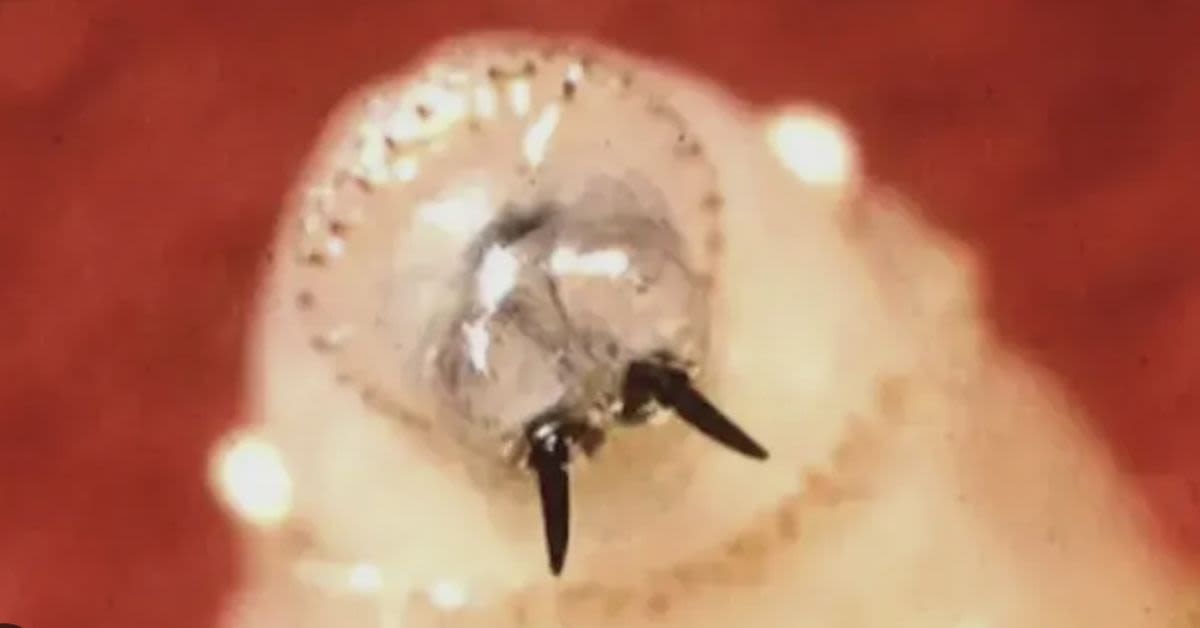
The federal Animal and Plant Health Inspection Service wrote that the name screwworm refers to the maggots feeding behavior as they burrow (screw) into the wound, feeding as they go like a screw being driven into wood, a graphic reminder of the suffering inflicted on animals when such threats are allowed to spread unchecked.
Maggots cause extensive damage by tearing at the hosts tissue with sharp mouth hooks. The wound can become larger and deepen as more maggots hatch and feed on living tissue. As a result, NWS can cause serious, often deadly damage to the animal, it wrote, highlighting the moral and economic imperative of keeping this parasite out of American herds.
Adult screwworm flies are about the size of a common housefly (or slightly larger). They have orange eyes, a metallic blue or green body, and three dark stripes along their backs, the agency added, giving ranchers and landowners the information they need to recognize the pest early and work with state authorities to stop it before it takes hold.
Login