
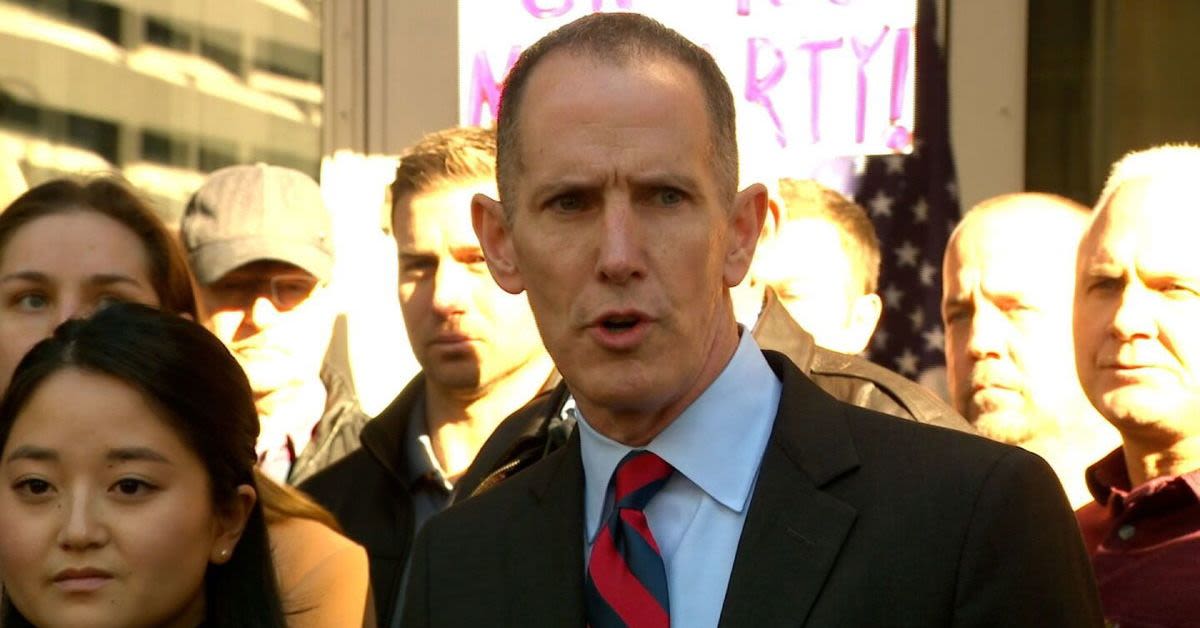
Minnesotas Republican race for governor was abruptly reshaped Monday when attorney Chris Madel, a prominent Minneapolis litigator and self-described pragmatist, announced he was ending his campaign in a surprise video message.
Madel, who had gained attention on the right for providing legal support to the ICE agent who shot and killed Renee Good, stunned many GOP activists by using his withdrawal to sharply criticize federal immigration enforcement tactics in his own backyard.
According to The Associated Press, he condemned the recent immigration operation in the Twin Cities as an unmitigated disaster, language more commonly heard from progressive critics than from a Republican hopeful in a state where the party already struggles to win statewide office.
In his video, Madel declared, I cannot support the national Republican's stated retribution on the citizens of our state, a pointed rebuke of what he portrayed as heavy-handed federal action that, in his view, punishes Minnesotans rather than protects them.
Nor can I count myself a member of a party that would do so, he added, signaling that his break is not merely with a particular policy but with the current direction of the national GOP leadership.
Madel had been part of a crowded Republican field vying to replace Democrat Gov. Tim Walz, who unexpectedly dropped his reelection bid earlier this month, opening what many conservatives hoped would be a rare opportunity to flip the governors office.
Instead of doubling down on a law-and-order message that has energized many Republican voters nationwide, Madel chose to distance himself from what he characterized as punitive federal retribution, a move likely to be welcomed by Democrats and immigration activists but viewed warily by many in his own party.
Throughout his brief campaign, Madel cast himself as a centrist problem-solver, telling voters he was a pragmatist focused on workable solutions rather than ideological purity.
Yet in explaining his decision to step aside, he argued that national Republicans have made it nearly impossible for a Republican to win a statewide election in Minnesota, implicitly blaming party strategists in Washington for alienating swing voters in a traditionally blue-leaning state.
Madel also invoked civil-liberties concerns, saying, I have read about and I have spoken to help countless United States citizens who have been detained in Minnesota due to the color of their skin. That assertion, framed as a moral and constitutional objection, places him at odds with many conservatives who argue that robust immigration enforcement is essential to national sovereignty, public safety, and respect for the rule of law.
His exit underscores a growing tension inside the GOP between those who favor uncompromising border enforcement and those, like Madel, who warn that aggressive tactics risk ensnaring citizens and undermining support among suburban and minority voters.
For conservatives in Minnesota, the development raises difficult questions about how to balance a firm stance on illegal immigration with a message that can win over an electorate long dominated by Democrats and increasingly influenced by progressive narratives on race and policing.
With Walz stepping aside and Republicans still searching for a standard-bearer who can unite populist, traditional, and moderate factions, Madels departure removes a candidate who might have appealed to centrist voters but who clearly found himself out of step with the national partys current posture.
His decision leaves the GOP field more open to contenders willing to embrace a tougher line on immigration and federal-state cooperation, even as critics will point to Madels warnings as evidence that the party risks forfeiting winnable races in states like Minnesota if it cannot broaden its appeal without abandoning core conservative principles.
Login