
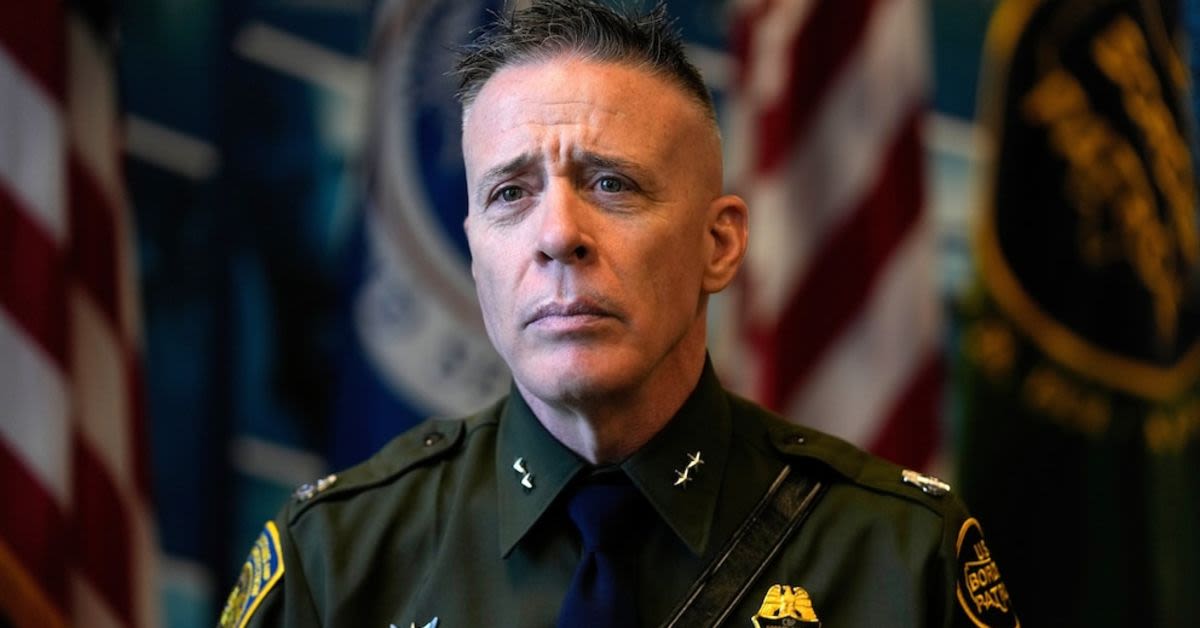
A senior Border Patrol official forcefully rejected CNNs framing of a deadly Minneapolis shooting on Sunday, insisting that the man killed by agents was a suspect who inserted himself into a volatile federal operation rather than a victim of law enforcement.
The clash unfolded on CNNs State of the Union with Jake Tapper and Dana Bash, where Border Patrol Commander-at-Large Greg Bovino defended his agents actions in the fatal shooting of 37-year-old Alex Pretti during a chaotic scene in Minneapolis.
According to the Daily Caller, the Department of Homeland Security (DHS) has alleged that Pretti was poised to massacre law enforcement with a firearm, while his parents and left-wing activists have portrayed him as a Good Samaritan aiding a woman on the ground and not threatening officers when he was shot.
Bash opened the exchange by challenging Bovinos description of Pretti as an assailant, pressing him on what evidence supported the claim that Pretti had attacked a federal officer. Where did he assault the federal officer in any of the video that you have seen? Bash asked Bovino.
Because it looked to us from every angle, sir, that he was approached by them when he was helping another individual who was pushed down. What evidence do you have that he was assaulting any law enforcement? she continued, echoing a narrative that casts law enforcement as aggressors and Pretti as a bystander caught in the crossfire.
Bovino pushed back, stressing that officers on the ground do not require civilian intervention in the middle of an operation and that Pretti had no business inserting himself into the scene. Dana, we dont need a suspects help in an active law enforcement scene. We dont need his help. We didnt ask his help, the Border Patrol commander-at-large responded, referring to Pretti.
Bash then seized on Bovinos terminology, interrupting to question the very premise that Pretti was a suspect at all. When you say suspect, what is he suspected of? the CNN host interjected, attempting to recast Pretti as an innocent helper rather than a potential threat.
Bovino underscored that the area was clearly an active enforcement zone and that Pretti, by approaching armed officers in the midst of a federal operation, knowingly escalated the risk. Thats an active law enforcement scene, Bovino said. He knew that was an active law enforcement scene, especially when the officers approached him and it was very evident he did not need to be where he was.
DHS, in a statement shared Saturday with the Daily Caller News Foundation, said law enforcement officers were conducting a targeted operation in Minneapolis against an illegal alien wanted for violent assault when Pretti allegedly intervened. The department asserted that the man later identified as Pretti approached US Border Patrol officers with a 9 mm semi-automatic handgun, a detail that sharply contrasts with the media narrative portraying him as unarmed and purely altruistic.
Bash, however, continued to suggest that Prettis actions were simply an instinctive response to seeing someone knocked down by officers. So, when somebody is pushed down and a persons instinct is to help that person, when somebody is pushed down by law enforcement, youre saying that you just stand back and let law enforcement do what theyre doing? Is that really human nature? the host pressed Bovino, framing compliance with police orders as somehow contrary to basic decency.
Bovino replied that while every situation is unique, the reality on the ground in Minneapolis has been one of chaotic, very difficult and violent situations where armed individuals have repeatedly confronted officers. You know, Dana, every situation is different. What our officers are faced with here in Minneapolis are chaotic, very difficult and violent situations in which individuals and this suspect is not the only one to bring a loaded weapon to a riot.
The situations are chaotic and ever-changing. Follow directions for law enforcement. Dont inject yourself knowingly beforehand into a law enforcement situation, the Border Patrol commander replied.
Bash then accused Bovino of shifting responsibility away from the agents who fired the shots and onto the man who died. With respect, it feels as though in some ways youre blaming the victim here, Bash replied, referring to Pretti.
Bovino firmly rejected that characterization and reiterated that, from his perspective, the true victims were the agents who had to make split-second decisions under threat. The victims are the Border Patrol agents, Bovino said. Im not blaming the Border Patrol agents. The victim[s] are the Border Patrol agents. The suspect put himself in that situation. The victims are the Border Patrol agents there.
Bash then introduced a screenshot from video of the incident, claiming it showed an agent disarming Pretti before shots were fired. You can see a screenshot of an agent in a green jacket approach Pretti, and then he appeared to take a gun away, Bash said, describing the image. When the agent took the gun away, which seems as though it was Prettis gun, that happened before Pretti was shot. Why was an unarmed man shot multiple times by law enforcement, by your Border Patrol agents?
Bovino cautioned against what he called freeze-frame adjudication, arguing that a single still image cannot capture the fluid danger of a live confrontation. Dana, you dont know he was unarmed. I dont know he was unarmed, he responded. Thats freeze-frame adjudication of a crime scene via a photo. Thats why we have investigators. Thats why we have an investigation that is going to answer those questions. How many shots were fired? Who fired shots? Where was the guns? Where were the guns located? All those questions are going to be answered in the investigation.
Us, were not going to adjudicate that here on TV in one freeze-frame there, he emphasized after Bash tried to interrupt him. As the investigation proceeds, the exchange highlights a broader divide: federal officers insisting on the primacy of law, order, and compliance in dangerous environments, and media voices quick to cast armed suspects as victims while second-guessing split-second decisions from the safety of a television studio.
Login