
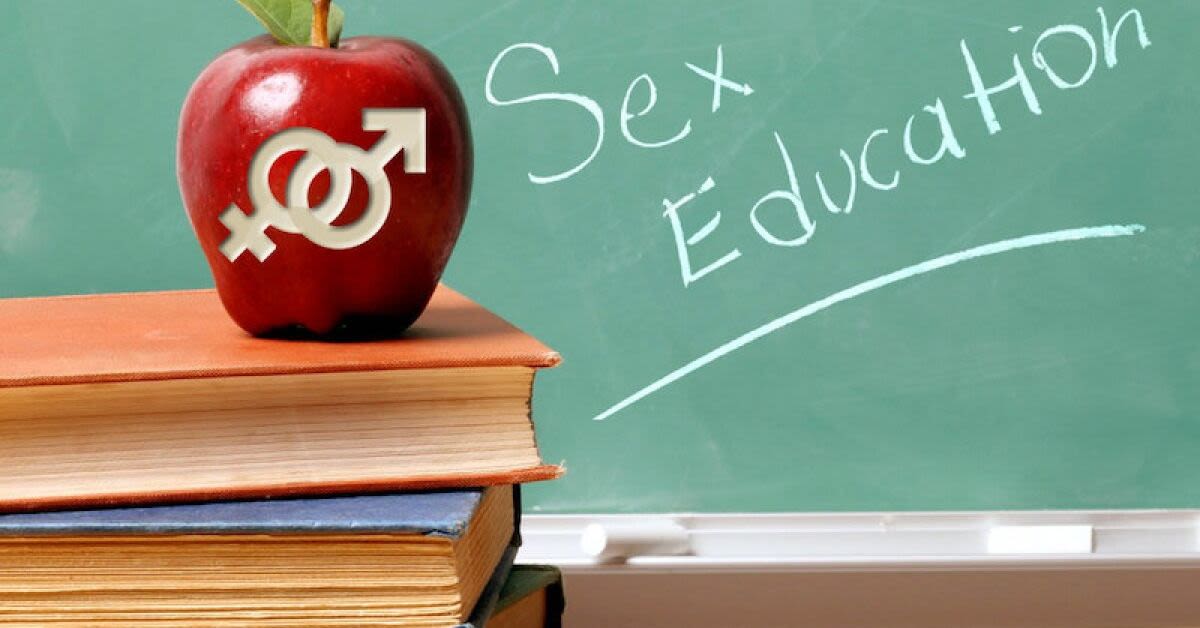
Americans have spent recent years battling radical gender ideology and critical race theory in the classroom, but another long-standing tool of the Left for undermining parental authority graphic, values-free sex education has quietly continued its march until the Trump administration moved decisively to stop it.
In a largely overlooked but highly consequential policy shift this summer, the administration redirected millions of taxpayer dollars away from controversial Teen Pregnancy Prevention initiatives and toward curricula that prioritize abstinence and the institution of marriage. As reported by Western Journal, this move represents a direct challenge to the progressive orthodoxy that has dominated sex education for more than a decade, particularly under the Obama and Biden administrations, and it signals a renewed respect for parents rights, traditional morality, and genuine public health standards.
The New York Times belatedly noticed the change, framing it as a hardship story about local nonprofits blindsided by the Department of Health and Human Services decision to terminate their funding. Yet no one paying attention to the administrations broader agenda should be taken aback, given that dozens of similar grants were cut during Trumps first term on the grounds that they existed primarily to sexualize children rather than equip them to make responsible, healthy choices. In total, 53 programs were eliminated, saving taxpayers $67 million that the presidents budget explicitly described as supporting radical leftist ideology, and the administration argued that the Biden- and Obama-era sex education models have only normalize[ed] sexual activity for minors.
For years, liberal activists and bureaucrats posing as neutral health experts have opened the schoolhouse doors to organizations like Planned Parenthood, effectively giving them a captive audience of future clients. The business model is obvious: if you normalize and encourage early sexual activity, you are cultivating the next generation of abortion and contraceptive customers, a strategy that has been lucrative for the abortion industry until now. The Office of the Assistant Secretary for Health (OASH) has now made clear that the department is under new management on these issues, publishing a set of priorities that should reassure parents who are tired of seeing their values undermined in the name of health education.
First, the agency has pledged to ensure that adolescent program materials are age-appropriate and do not promote harmful ideologies, such as gender ideology and discriminatory equity ideology. The OASH guidance further states that the office will focus on programs that do not promote material that depicts, describes, exposes or presents obscene, indecent, or sexually explicit content, including content that encourages, normalizes or promotes sexual activity for minors, and that OASH will prioritize OASH programs and funding that are in compliance with these priorities and applicable law.
Second, OASH has committed to defending the rights of mothers and fathers to guide their childrens moral and sexual development, promising to protect parental authority to the fullest extent of its authority under the law including parents right to protect their children from exposure to content that burdens the exercise of their religious beliefs. This is a direct rebuke to the progressive model that treats parents as obstacles to be circumvented rather than as the primary guardians of their childrens welfare and values.
Under these new criteria, the New York Times complains, any organization seeking federal dollars must teach abstinence, or sexual risk avoidance, as the only means to prevent teen pregnancy. According to the Times own description, Courses must stress the importance of marriage and procreation and instruct young people how to safeguard their fertility. They make scant reference to preventing sexually transmitted infections and virtually none to lesbian, gay and transgender sexuality.
For many parents and conservative advocates, that criticism reads more like an endorsement. As Quena Gonzlez of the Family Research Council told The Washington Stand, The fact that some professional sex ed providers who receive millions of dollars in federal funds are complaining that these priorities are now required to continue receiving taxpayer dollars should alarm parents and enrage taxpayers. He added that, We shouldnt be allowing, much less paying for, schools to tell students, We know youre going to experiment, wink wink, so heres how to derive the most sexual pleasure from underage sex.
Gonzlez praised the administrations overhaul as a long overdue correction to a deeply troubling status quo that treated children as sexual beings to be managed rather than as minors to be protected. Insisting that taxpayers pay adults to teach middle schoolers typically 11-14 years old about sexual consent, pleasurable condom use, or how adolescent girls can use intrauterine devices and implants to avoid pregnancy, is just plain creepy, he said. In his view, Kids need to be taught that sex is a wonderful gift and a powerful expression of adult love when it is exercised within the safety of a loving marriage covenant. Sex isnt a toy, and the harms of offering it to minors are well documented and not really debated; studies show that delaying sexual contact until marriage increases the chances of a stable marriage and decreases the chance of living in poverty.
Valerie Huber, president of The Institute for Womens Health and a veteran advocate for principled sex education, responded to the administrations pivot with a sense of relief. Mostly for the young people, she told The Washington Stand, noting that for years, sexual risk avoidance had to justify itself while the alternative was funded as though its results were settled. That was never a research question. It was a worldview question dressed up as one. Now, she explained, thanks to Trumps leadership, risk avoidance is being treated as a legitimate public health goal for adolescents, the way it already is for every other youth risk behavior. We do not teach teenagers to smoke carefully. We tell them the truth about risk, and we help them stay at no risk or move from high risk to low risk to no risk, she emphasized. Sexual health is the one place we abandoned that model, but now HHS is being consistent across all youth risk behaviors. Bravo!
Looking back over the last decade, Huber lamented the damage inflicted by the Lefts permissive if-it-feels-good-do-it ethic, especially when promoted by adults in positions of authority. When adults in authority signal that sexual activity is expected of a 14-year-old, that is not neutral information, she insisted. It is permission, and for many students it is pressure. Under the Obama and Biden administrations, she observed, These programs routinely positioned outside providers, including organizations whose business model depends on abortion, as the trusted adult in a young persons life and treated parents as an obstacle to be managed. A curriculum that teaches a 15-year-old how to obtain services without telling her mother is not a health program, Valerie argued.
With the exception of Trumps first term, Huber noted that Students have been offered risk reduction at best and rarely offered risk avoidance, even though only the latter is the only approach that eliminates risk rather than managing it. While teen pregnancy rates have declined over time, she argued that this apparent success masks a deeper crisis in adolescent well-being. We counted births. We counted birth control. We did not count infections, we did not count coercion, and we did not measure what happens when pregnancy prevention becomes a substitute for holistic health and thriving for young people, Valerie said. We called it a win. In those same years, the emotional, social, intellectual, and spiritual health of American adolescents all declined. If your scorecard shows success while the young people on it are falling apart, you are measuring the wrong thing.
Predictably, the nonprofits that have been cut off from this federal funding stream are decrying the new standards, with some claiming that the policy shift creates an existential dilemma for sex education as they define it. The New York Times reports that several of these groups are even suing HHS over the revised requirements, attempting to turn a political and moral disagreement into a legal entitlement. Yet there is no constitutional or moral right to taxpayer dollars, particularly not for programs that function as ideological indoctrination and that may be worsening the very problems they purport to address.
Beyond the legal wrangling, Huber argues that the country must reject the condescending assumption that teenagers are incapable of self-control or of meeting higher standards. Hand a young person a high standard and tell them you believe they can meet it, and most of them rise to it, she underscored. What they resent instantly is the adult who tells them they cannot be expected to control themselves. They hear that for exactly what it is, which is a low opinion of them. The Lefts prevailing model, she said, assumes every teenager is sexually active, a claim she flatly rejects: Most high school students are not. No one argues that because some teenagers will use drugs, prevention is unrealistic and we should teach safer use instead. We hold the optimal health standard, and we surround it with skills, support, and honesty about risk.
For those who insist that abstinence-centered education is unproven or ineffective, pediatrician Dr. Michelle Cretella offers a very different assessment. A rigorous review by the Institute for Research demonstrates that sexual risk avoidance education (SRAE) holds great promise. It aligns with the primary public health principle acknowledged by the CDC: abstinence is the only 100% effective way to prevent STDs and pregnancy, as condoms cannot guarantee absolute protection. Unlike the Planned Parenthood-style curricula that often blur the line between education and promotion, she explained, effective SRAE is medically accurate, as she told The Washington Stand while referencing a recent article she authored for an online medical journal. It discusses condoms and contraceptives and helps students commit to abstinence without decreasing contraceptive use among those who are already sexually active.
At its core, this debate is not merely about pedagogy or public health metrics; it is about who has the primary responsibility and authority to shape childrens moral and sexual development. Our schools were never intended to replace mothers and fathers, who bear the ultimate duty to raise their children in accordance with their faith, values, and cultural traditions. It is not the role of teachers or outside experts to contradict those beliefs or to usurp parental authority on intimate topics that, in many cases, are best addressed at home and at a time and manner chosen by the family.
By halting the flow of tens of millions of dollars to graphic, ideology-laden programs that often double as LGBT recruitment tools and abortion marketing campaigns, the Trump administration is reorienting federal policy toward research-based standards, parental rights, and common sense. The shift does not silence discussion of risk or contraception; rather, it restores abstinence and marriage to their rightful place as the gold standard for adolescent sexual health, while refusing to subsidize content that sexualizes minors or undermines family authority. For parents who have watched with growing alarm as schools stray further from core American values, this is a welcome course correction and one that underscores how much is at stake in the ongoing struggle over what, and whose values, are taught in the nations classrooms.
Login