
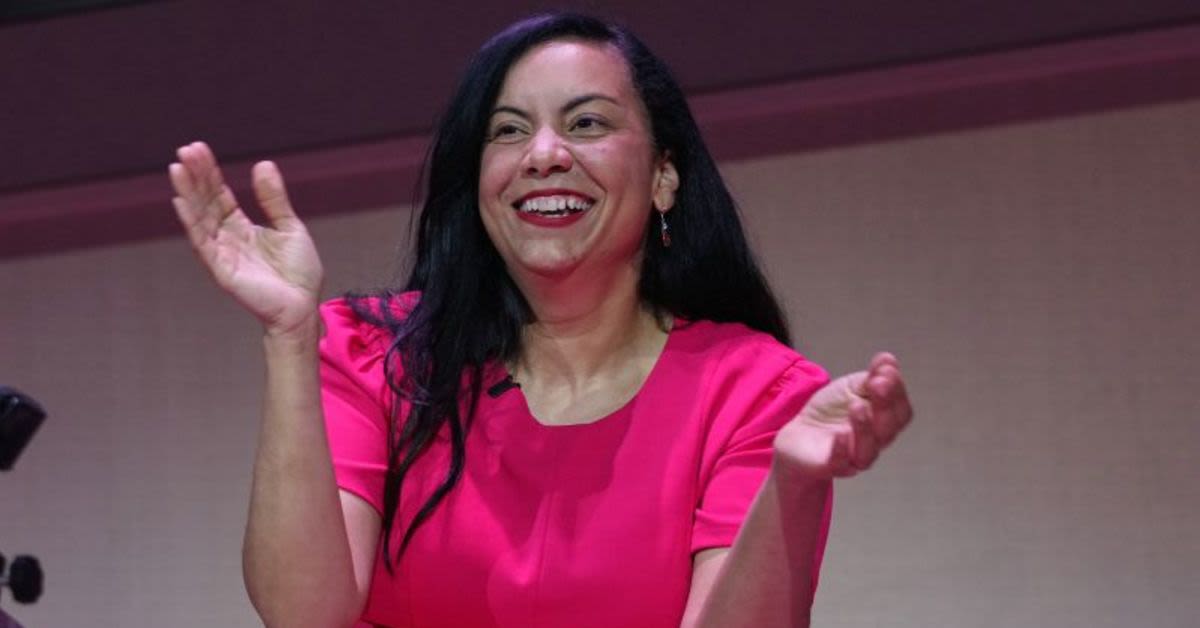
A newly elected Democrat from New Jersey is drawing national attention not for policy depth or legislative vision, but for a media rollout that underscores how far her partys leadership continues to drift toward an openly socialist identity.
According to Gateway Pundit, the chain of events began when Mikie Sherrill moved from Congress to the governors office, triggering a special election to fill her now-vacant House seat. That contest elevated Democrat Annelelia Mejia, a candidate widely portrayed as firmly rooted in the Socialist wing of the party and eager to embrace that label rather than distance herself from it.
Coverage from MSNOW has already cast Mejia as a political ally of Alexandria Ocasio-Cortez and Bernie Sanders, placing her squarely within the progressive bloc that has pushed Democrats leftward on spending, regulation, and federal power. By aligning herself with these figures from the outset, Mejia is signaling not moderation or bipartisanship, but a commitment to the same expansive-government agenda that has divided the country and strained the federal balance sheet.
Her nearly 20-point victory margin has been touted as proof of her personal political strength and the supposed popularity of her ideological stance. Yet that narrative glosses over a basic electoral reality: the district is overwhelmingly Democrat, making such a margin far more a reflection of partisan registration than a ringing endorsement of a socialist-leaning platform.
In other words, the outcome says more about the map than the message, a fact that is often downplayed when the media is eager to celebrate a progressive win. When a Democrat cruises in a deep-blue seat, it is treated as a mandate; when a Republican does the same in a red district, it is dismissed as routine.
What has been more revealing than the vote tally is Mejias conduct in the spotlight since the election. In a widely circulated MSNOW interview, she introduced herself as Congresss unbought, unbossed, sassy new member, a line that generated buzz for its attitude while offering little insight into how she intends to govern.
The segment leaned heavily on personality and branding, echoing the influencer-style politics that have become a hallmark of the progressive left. Rather than pressing for specifics on spending, regulation, or constitutional limits, the conversation revolved around image and identity, leaving viewers with slogans instead of substance.
This pattern is familiar to anyone who has watched the rise of figures like Ocasio-Cortez and Sanders, whose rhetoric often centers on moral posturing and class warfare while sidestepping the hard math of how to pay for sweeping promises. While Mejias ideological kinship with them suggests support for massive federal programs, higher taxes, and deeper regulatory control, those positions went largely unexamined in the interview. The result was a friendly platform that amplified her brand while sparing her the kind of detailed questioning conservatives routinely face.
The MSNOW exchange thus became another example of mainstream media choosing narrative over scrutiny, particularly when dealing with progressive Democrats. Tone and persona took precedence over policy, and critical questions about fiscal responsibility, economic growth, and the real-world consequences of a socialist-leaning agenda were left on the cutting-room floor.
The disparity in coverage becomes even more apparent when one compares how elections are framed across the political spectrum. Races in solidly Republican districts are often treated with suspicion or cast as warning signs if GOP margins tighten, yet safe Democrat seats that elect outspoken progressives are celebrated as historic or transformative with little critical context.
Mejias early posture raises broader concerns about where the Democrat Party is headed as its progressive faction gains influence. The growing prominence of candidates who proudly identify with the socialist wing signals a continued move away from centrist, pro-growth policies and toward a model of government that prioritizes redistribution, regulation, and centralized authority.
That shift carries serious implications for taxation, healthcare, and federal power, areas where progressive proposals frequently involve sweeping structural changes that expand Washingtons reach at the expense of individual liberty and local control. For voters who value limited government and free-market principles, the rise of figures like Mejia is not a benign development but a warning sign of more aggressive federal intervention to come.
At the very least, her first major media appearance offers an early glimpse into how she plans to operate in Congressplacing messaging, identity, and ideological alignment ahead of detailed policy articulation. For citizens seeking clarity on how their representatives will vote on spending bills, regulatory schemes, and national priorities, that approach provides more theater than transparency.
As new members arrive in Washington, their initial interviews often serve as a test of both their seriousness and the medias willingness to hold them accountable. In Mejias case, the spotlight illuminated a polished persona and a clear ideological camp, but left fundamental questions about costs, trade-offs, and constitutional limits unanswered, reinforcing the concern that in todays progressive politics, branding continues to outrun substantive debate.
Login