
Some stories do not merely test the news; they test the readers basic judgment.
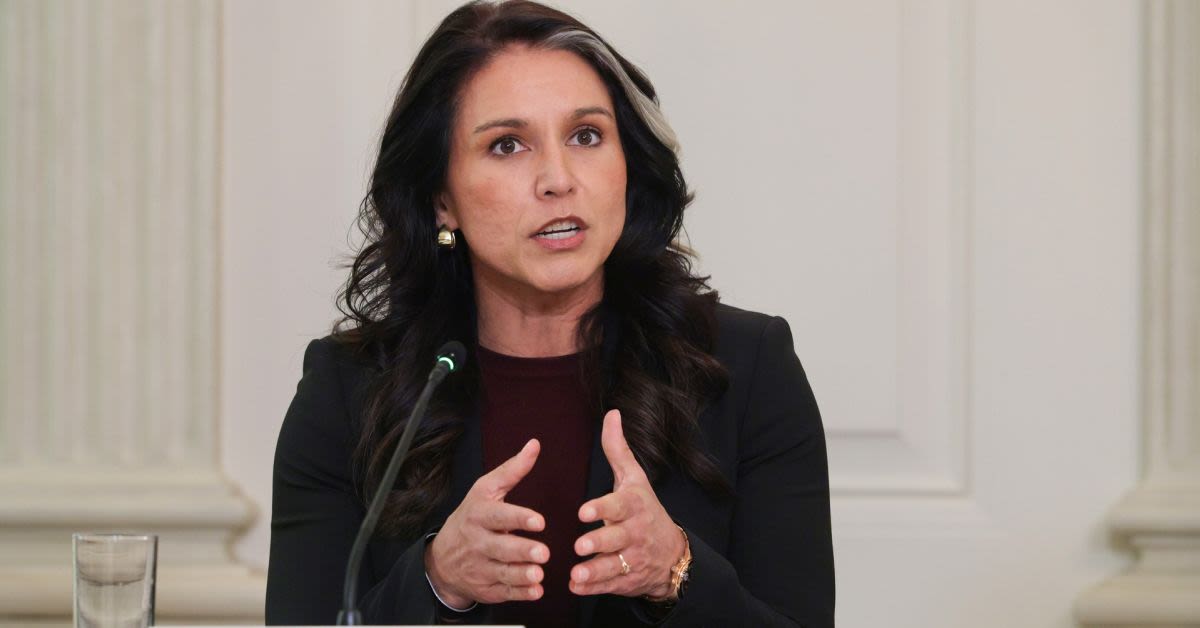
The latest example is a now-amended report alleging that Director of National Intelligence Tulsi Gabbard buried a supposedly explosive whistleblower complaint involving foreign intelligence and the Trump White House. As reported by RedState, the narrative was eagerly embraced by much of the left and its media allies, who treated it as the long-awaited sequel to the Russia-collusion saga.
The Guardian originally framed the matter as a potential scandal at the highest levels of government, only to later walk back its central claim in a clarification that reads more like a full-scale retreat than a minor edit.
The initial version of the story, published Saturday, carried a carefully worded allegation that did exactly what progressive activists and their media partners wanted it to do. Last spring, the National Security Agency (NSA) flagged an unusual phone call between an individual associated with foreign intelligence and a person close to Donald Trump, according to a whistleblowers attorney who was briefed on details of the call. That phrasing, later amended for clarity, was tailor-made to ignite speculation that someone in Trumps orbit had been caught coordinating with a hostile foreign power.
Predictably, the left-wing press and social media echo chambers erupted. A foreign intelligence figure on the line with a person close to Donald Trump was all they needed to declare the return of their favorite narrative: Trump-world entangled in shadowy dealings with foreign operatives. For many on the left, it was Russian collusion redux, a fresh pretext to revive impeachment fantasies and smear a political opponent without waiting for facts to catch up.
Even before the amendment, the story was riddled with glaring omissions that should have given any responsible editor pause. The report never specified which country this individual associated with foreign intelligence represented, a detail that is not incidental but central to any claim of wrongdoing. If, for instance, a British intelligence officer spoke with someone in or near the White House, that would be routine diplomatic and security business, not a scandal. The vagueness was the point: the whistleblower and the Democrats amplifying the claim clearly wanted readers to assume Russia, China, or another adversary, while avoiding the burden of proving it.
The second prong of the allegationthat Gabbard herself had suppressed the complaint for nearly a yearcollapsed just as quickly under scrutiny. The Office of the Director of National Intelligence responded by noting that Gabbard had only received the complaint two weeks earlier because it had been held by Biden-appointed Inspector General Tamara Johnson. That fact alone undercuts the insinuation that the DNI was engaged in some sort of pro-Trump cover-up, and it raises uncomfortable questions about why the IGs office sat on the material for so long.
Had the story ended there, it would already have qualified as a dud, another overhyped bombshell that fizzled on contact with reality. It did not end there, however, because Gabbards office had actually tried to stop The Guardian from running off a cliff. According to her team, they warned the outlet that it was being misled by the whistleblower and that both the story and the headline were inaccurate, but those warnings were brushed aside in the rush to publish.
Gabbard herself did not mince words when she publicly called out the papers conduct. Your story is false. This headline is not accurate. Your leaker lied to you. And you ignored our requests to give us time to get you accurate information and published your story before we could respond. You are a total loser being used by your sources (likely Congress) to she wrote, blasting the outlet for acting as a willing conduit for partisan spin. Her response underscored a broader conservative concern: that too many legacy media organizations now function less as watchdogs and more as megaphones for Democratic operatives.
Soon afterward, The Guardian issued what it labeled a clarification, though the substance of the change amounted to a wholesale rewrite of the core allegation. The paper cited whistleblower attorney Andrew Bakajs revised account: Whistleblower attorney @AndrewBakaj revised his previous statement to the Guardian, saying that The NSA picked up a phone call between two members of foreign intelligence involving someone close to the Trump White House. Updated for clarity -->https://t.co/BxXkQJofBd. That single revision transformed the story from a supposed direct link between Trump-world and a foreign intelligence asset into something far more mundane.
The outlet further acknowledged the shift in a note appended to the article. This story was amended on 7 February 2026 to clarify that the phone call was between two people associated with foreign intelligence who discussed someone close to Donald Trump, not between someone and a person close to Trump. The earlier version was based on multiple phone calls with a source who later said he misspoke and clarified the actual details of the call. In other words, the central insinuationthat someone close to Trump was on the linewas not merely unclear; it was wrong.
The difference is not a minor semantic tweak but a complete demolition of the original narrative. The story went from flagged an unusual phone call an individual associated with foreign intelligence and a person close to Donald Trump, which strongly implied direct coordination between a Trump insider and a foreign actor, to a call between two people associated with foreign intelligence who discussed someone close to Donald Trump. Once stripped of its insinuations, the tale becomes little more than a report that foreign intelligence figures talk about the U.S. administrationsomething that happens every day and is neither shocking nor inherently nefarious.
After that correction, there is scarcely a husk of news value left. Even if one generously accepts this latest version as accurateand given the shifting story, that generosity is hardly warrantedwhat remains is a banal fact dressed up as scandal: foreign intelligence personnel discussed American political figures. For conservatives who have watched this pattern repeat for years, the episode is less surprising than it is confirming: a media ecosystem so invested in damaging Trump and anyone associated with him that it repeatedly sacrifices precision, context, and basic skepticism.
The real embarrassment here is not for Gabbard or the Trump White House but for a press corps that appears incapable of learning from its own excesses. Id say this is embarrassing for The Guardian, but that would assume they and other left-wing outlets have any capacity to feel embarrassment at this point. And to be honest, Im not sure they do.
Login