
We will defend the Homeland and ensure that our interests in the Western Hemisphere are protected."
"We will deter China in the Indo-Pacific through strength, not confrontation. We will increase burden-sharing with allies and partners around the world. And we will rebuild the U.S. defense industrial base as part of the Presidents once-in-a-century revival of American industry, said Secretary of War Pete Hegseth in his opening message for the 2026 U.S. National Defense Strategy.
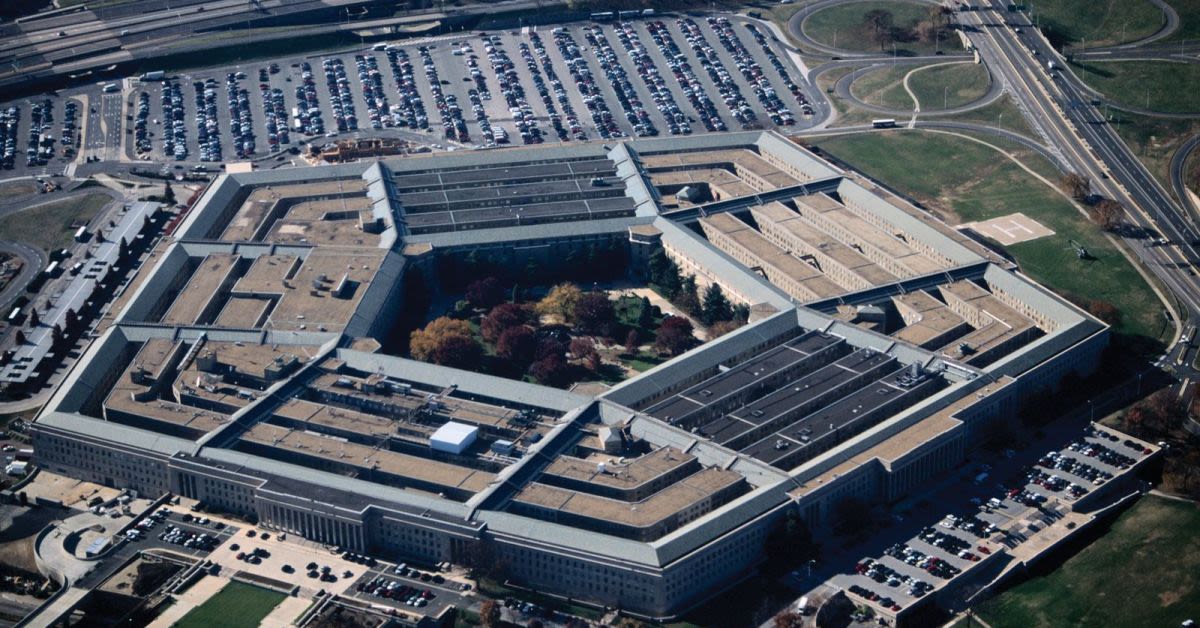
The Department of Wars 2026 National Defense Strategy lays out a 34-page blueprint that reorders U.S. military priorities around homeland defense, deterrence through strength, and a renewed insistence on allied burden-sharing. According to Gateway Pundit, the document reflects an unapologetically America First posture that rejects decades of bipartisan foreign policy orthodoxy.
Hegseth presents the strategy as a deliberate rupture with the interventionist habits of previous administrations, which he faults for diverting American power into open-ended nation-building and ideological crusades abroad. He criticizes those earlier approaches for elevating cloud-castle abstractions like the rules-based international order over the concrete safety and prosperity of American citizens.
In this framing, such projects did not merely distract Washington but actively undermined U.S. security and military readiness. By contrast, Hegseth contends that President Trump has refocused national power on Americans tangible interests and restored the U.S. armed forces as the worlds strongest and most capable.
At the heart of the strategy is a call to revive a traditional warrior ethos within the ranks and to rebuild the Joint Force so that no adversary doubts American resolve. The document insists that deterrence must rest on visible, credible warfighting capability and the political will to use it decisively when U.S. interests are threatened.
The strategy is organized around four principal lines of effort, with defense of the U.S. homeland and the broader Western Hemisphere placed explicitly at the top. This includes reinforcing border, airspace, cyber, and nuclear defenses; countering terrorism and emerging threats through the Golden Dome missile defense initiative; and maintaining the readiness to act swiftly and decisively when American interests are challenged.
It further pledges to secure U.S. land, maritime, and air approaches while aggressively targeting narco-terrorist networks across the hemisphere. The document underscores the need to guarantee U.S. access to key strategic terrain, explicitly citing the Panama Canal, Greenland, and the Gulf of America as non-negotiable interests.
This posture is described as the Trump Corollary to the Monroe Doctrine, signaling a return to a hard-edged hemispheric security concept long derided by globalists. To underscore that shift from rhetoric to action, the strategy references recent operations, including Operation ABSOLUTE RESOLVE against Venezuelas Maduro regime, Operation MIDNIGHT HAMMER strikes on Irans nuclear program, and Operation ROUGH RIDER operations against the Houthis.
China is singled out as the primary long-term strategic challenge in the Indo-Pacific, eclipsing other regional concerns. The strategy makes clear that Beijings ambitions must be checked, but it insists this be done through overwhelming strength rather than reckless brinkmanship.
To that end, the document calls for negotiations with China from a position of military superiority, not moral posturing or symbolic gestures. It also advocates improved military-to-military communication with the Peoples Liberation Army to reduce escalation risks, alongside stronger defenses along the First Island Chain.
The stated objective is to ensure that no single power can dominate the Indo-Pacific and that any negotiations occur from strength rather than through a policy of containment or humiliation. This approach seeks to avoid both appeasement and unnecessary provocation, while making clear that regional hegemony by Beijing is unacceptable.
Notably, the strategy omits any explicit mention of or security guarantee to Taiwan, a marked departure from the 2022 National Defense Strategy. That earlier document had pledged that the United States would support Taiwans asymmetric self-defense, a commitment now conspicuously absent.
The new framework places heavy emphasis on increased burden-sharing with U.S. allies and partners, arguing that durable peace requires shared responsibility rather than dependency on American protection. It asserts that allies must invest more in their own defense if they expect continued U.S. support, reflecting long-standing conservative criticism of free-riding.
At the NATO Hague Summit, President Trump established a new global defense spending benchmark of 5 percent of GDP, combining 3.5 percent for core military capabilities and 1.5 percent for security-related spending. European NATO members are expected to assume primary responsibility for Europes conventional defense, with the United States providing critical but more limited support.
Within this framework, Russia is treated as a persistent but manageable threat rather than the organizing principle of U.S. strategy. The document signals that Washington will back European defenses but will no longer underwrite them indefinitely at the expense of American taxpayers and domestic priorities.
In East Asia, South Korea is described as fully capable of taking primary responsibility for deterring North Korea, again with essential but more constrained U.S. backing. This reflects a broader push to transition long-standing security clients into mature partners that carry their own weight.
Israel is portrayed as a model ally that should be further empowered, a clear endorsement of its robust self-defense posture and close alignment with U.S. interests. Regional partners across the Middle East and other theaters are likewise expected to shoulder a larger share of collective security responsibilities.
Another central pillar of the strategy is the revitalization of the U.S. defense industrial base, which the document portrays as having been hollowed out by decades of offshoring and regulatory excess. It calls for reshoring production, expanding capacity, embracing advanced technologies such as artificial intelligence, and cutting outdated regulations that slow procurement and innovation.
The strategy urges large-scale reinvestment in domestic defense manufacturing and the removal of regulatory bottlenecks that impede rapid production. It also promotes coordinated production with trusted allies to restore the United States as the worlds primary arsenal, capable of high-volume, high-quality output for itself and its partners.
Overall, the 2026 National Defense Strategy marks a decisive pivot toward America First principles and a reduced emphasis on open-ended global engagement compared with prior defense blueprints. It portrays President Trumps second term as a corrective to what it describes as a degraded security environment inherited in January 2025, shaped by weak border enforcement, erosion of the Monroe Doctrine, hollowed-out alliances, and years of industrial outsourcing.
By stressing warfighting readiness, modernization, and a renewed warrior ethos, the document rejects what it characterizes as earlier neglect of military culture and preparedness. It leaves little doubt that, under this vision, U.S. power is to be used sparingly but decisively, in defense of clearly defined American interests rather than abstract global projects.
Login