
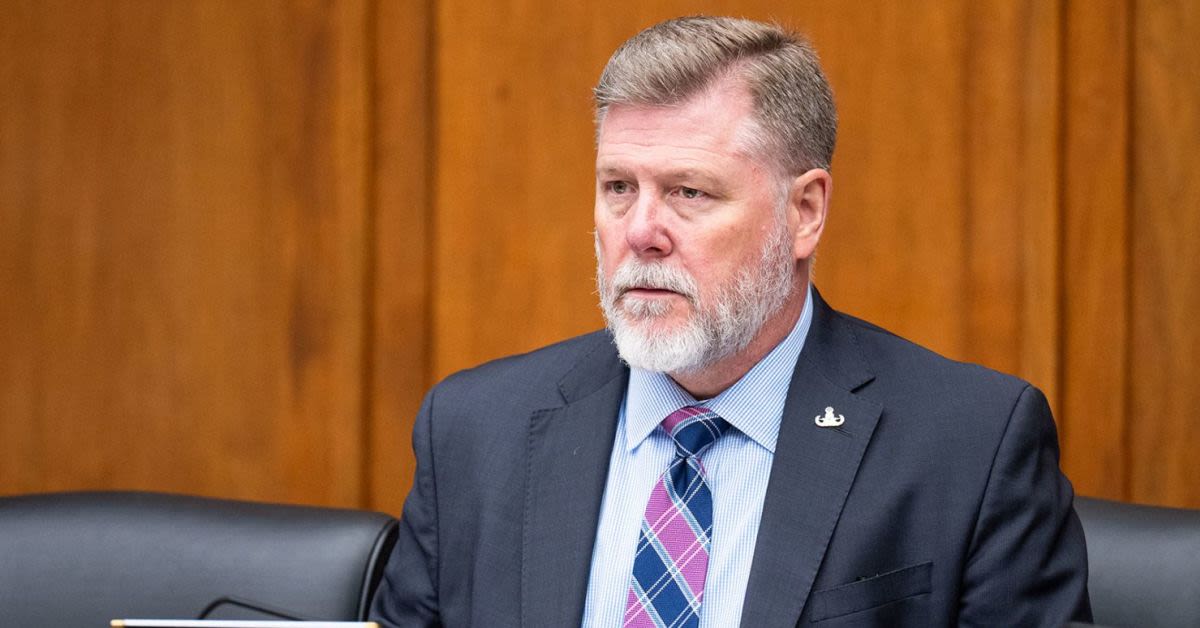
House Intelligence Committee Chairman Rick Crawford, R-Ark.
, is pressing the Biden administrations intelligence apparatus to withdraw a key 2023 assessment that downplays the likelihood of foreign involvement in mysterious ailments afflicting U.S. personnel, warning that the document has already inflicted damage on those who served.
According to Newsmax, Crawford is demanding that the 2023 Intelligence Community Assessment (ICA) on so?called anomalous health incidents, or AHIs, be recalled after it concluded it was "very unlikely" a hostile power was behind the events reported by affected officers and diplomats.
The assessment, led by the Central Intelligence Agency in coordination with six other intelligence agencies, asserted that "most IC agencies have concluded that it is 'very unlikely' a foreign adversary is responsible for the reported" incidents, a finding that has been widely used by the administration to tamp down speculation about foreign attacks.
Crawford, who now oversees the Houses primary intelligence oversight panel, argued that the ICA has been weaponized as a public relations tool rather than a sober, cautious intelligence product. "ICAs carry a great deal of weight, particularly when declassified as part of a public messaging effort, as was done with the AHI ICA," he wrote in a post on X on Sunday, adding that "This flawed document has caused serious harm to some of our nation's bravest."
The chairmans renewed push came in the wake of the death of former National Security Agency employee Mike Beck, whose case has long been cited by those who believe U.S. personnel were targeted by directed?energy or microwave weapons. Beck, who suffered from Parkinson's disease, told CBS News in 2019 that he was the subject of a microwave weapon attack while in a "hostile country," a claim that stands in stark contrast to the intelligence communitys current public posture.
Anomalous health incidents are unexplained medical events, typically reported by clusters of individuals in the same location and time, who suddenly experience symptoms such as dizziness, headaches, nausea, ear pain, ringing in the ears, pressure sensations, or cognitive "fog." They entered the public consciousness under the label "Havana syndrome," the term applied to a surge of reports beginning in 2016 from U.S. diplomats and intelligence officers stationed overseas, particularly in Cuba and later in other foreign capitals.
Since 2016, the U.S. government has acknowledged hundreds of reported incidents among American diplomats, intelligence officers, military personnel, and their family members. Multiple federal entities, including the State Department, the Department of Defense, and components of the intelligence community, have launched investigations, medical reviews, and technical studies in an effort to determine what is happening and who, if anyone, is responsible.
Those reviews have consistently confirmed that many of the affected individuals experienced real and often debilitating symptoms, along with measurable medical impacts. Yet despite years of inquiry, no single, consistent cause has been definitively identified that can explain all cases, a gap that critics say should have led to more humility from intelligence agencies rather than a sweeping dismissal of foreign culpability.
The 2023 ICA, however, leaned heavily toward exonerating foreign adversaries, a stance that aligns conveniently with an administration eager to avoid diplomatic confrontations with powerful rivals such as Russia or China. By declaring it "very unlikely" that a foreign adversary is responsible, the assessment effectively narrows the scope of official inquiry and, in the eyes of skeptics, risks leaving U.S. personnel vulnerable while providing political cover for inaction.
Crawford has made clear that his committee is not satisfied with the intelligence communitys handling of the AHI issue and is intensifying its oversight. He stated that his panels investigation into the ICs response to the AHI challenge "continues," signaling that lawmakers are prepared to challenge the bureaucracys narrative and demand accountability for past missteps.
"Over the last few months, our team has conducted an additional 17 transcribed interviews or depositions, met with senior administration officials, and issued the first criminal referral of the three-year investigation," Crawford said, underscoring the seriousness with which the committee is treating potential misconduct or negligence. "We will not stop until oversight has effectively corrected all issues identified pursuant to the investigation," he added, framing the effort as a long?term push to reform how the intelligence community treats its own people.
For conservatives, the controversy over Havana syndrome and AHIs fits a broader pattern in which large federal institutions appear more focused on managing narratives than on defending American personnel and interests. The reluctance to attribute these incidents to hostile actors, despite credible testimony from victims like Beck and years of unresolved cases, raises questions about whether political sensitivities and diplomatic calculations are being placed above the safety of those on the front lines.
The recall of the 2023 ICA, if achieved, would mark a significant rebuke to the intelligence bureaucracy and a victory for those who argue that the government has been too quick to dismiss the possibility of foreign aggression.
As Crawfords investigation advances, the central issue remains whether Washington will fully confront the potential role of adversaries in these incidents and provide justice and transparency to the Americans who believe they were targeted while serving their country.
Login